


Why Are Product Demo Animations Often Stuck at the Modeling Stage? What Is the Typical Delivery Time?
Product demo animation, in simple terms, is the use of 3D modeling and rendering techniques to create a dynamic video or interactive application that showcases a product's selling points based on its actual appearance, structure, and materials. Based on common project delivery practices in 2026, the experience range for delivering a final animation is 2–6 weeks, with the modeling stage often consuming more than half of that time. If source material accuracy is insufficient or the appearance is changed midway, the number of revision cycles will increase noticeably. The key to delivery quality lies not in how powerful the renderer is, but in whether the proportions, materials, and part relationships are locked down accurately during the modeling stage.
Production Timeline for Product Demo Animation: Experience Range and Key Variables
Based on enterprise project delivery habits, a standard product demo animation (30–60 seconds) has an experience range of 2–6 weeks. If interior/exterior scenes or interactive requirements are involved, the timeline may extend to 6–10 weeks. The timeline difference mainly depends on the following variables:
- Source asset completeness: If CAD or engineering models are already available, modeling time can be reduced by 20%–30%. If only photos and drawings exist, re-measurement and modeling are required, which increases the timeline.
- Number of appearance changes: Each round of appearance changes adds at least 1–2 days for modeling and material adjustments.
- Animation script complexity: Rotation showcases, exploded views, or assembly simulations each require very different frame counts.
- Rendering method: Offline rendering outputs frame by frame, while real-time engines record video; the time difference can be several times.
In a recent product demo project delivered by Xiyue Company, the client requested changes to the mold parting lines only after the model was finalized, forcing rework of materials and lighting and extending delivery from 3 days to 5 days. Subsequently, I required the client to review and confirm screenshots after each component was modeled, which significantly reduced revision cycles. If the modeling stage does not lock down proportions, structure, and material IDs accurately, the faster the later rendering, the higher the cost of rework.
Division of Labor in Modeling and Rendering: Why Rework Mostly Happens in Modeling
Modeling is building the skeleton; rendering is applying makeup. If the skeleton is wrong, the heavier the makeup, the more fake it looks. In the 2026 toolchain, product modeling often uses C4D, Blender, or 3ds Max; rendering can use V-Ray, Corona, or UE5; real-time interaction commonly uses Three.js or WebGL. Regardless of the toolchain, the dimensions, assembly relationships, and material IDs output during the modeling stage will directly affect the rhythm of subsequent animation and interaction.
It should be clear that modeling does not end when the shape is created. At least the following must be considered:
- Realistic proportions: Check against the physical object or three-view drawings to avoid distorted length-width ratios from eyeballing.
- Material ID separation: Assign independent IDs to areas such as metal, rubber, and glass, making it easier to adjust parameters later.
- Details like mold parting lines and gaps: Product demos often need close-ups; these determine credibility.
Many failed projects are caused by "looks about right." A 1 mm error in modeling becomes obvious when rendering magnifies it. Based on actual deliveries, common consequences of rough modeling are misaligned shadows, structure errors, and misplaced animation movement; while consequences of inappropriate rendering parameters are noise, distorted reflections, and grayish colors. The former requires rebuilding structure, while the latter only requires adjusting parameters, so modeling is the most common source of rework.
Still Rendering vs. Real-Time Engines: Choose Based on the Presentation Scenario
Product demo animation typically follows one of two final presentation paths: one is frame-by-frame output as video using offline renderers (which can be understood as an extension of still rendering), and the other is interactive presentation using real-time engines in a web page or mini-program. The two differ significantly in timeline, cost, and suitable audiences. A common practice in 2026 is to combine both: use offline rendering for close-up product shots to ensure texture quality, and use real-time engines for interactive parts.
- Video path: Suitable for 30–60 second presentations/advertisements, e-commerce detail pages; delivery format is usually MP4 or MOV; timeline experience range: 2–4 weeks; moderate modification cost, each change requires re-rendering.
- Real-time engine path: Suitable for interactive scenarios where users need to rotate, switch, toggle colors/configure; delivery is a WebGL link or mini-program package; timeline experience range: 4–8 weeks; low modification cost, but larger initial setup work.
Selection criteria can be quickly judged by the following dimensions:
- Does the user need to interact? If yes, choose a real-time engine; otherwise choose offline rendered video.
- Does it require highly realistic close-ups? If yes, choose offline rendering or UE5 with ray tracing; WebGL usually lags in material detail.
- Is the timeline tight? Real-time engines take longer to set up initially but are faster for later modifications; offline rendering is faster early on but more troublesome for later major changes.
Also note that real-time engines have strict budgets on face count and texture sizes; excessive face counts can cause page lag. Offline rendering has no such limit, but rendering a single frame may take dozens of seconds. In 2026 projects, many teams first use offline rendering to create still frames to lock the look, then simplify the model for real-time interaction. This order reduces the cost of trial and error.
Product Demo Animation Production Process Framework: Five-Step Alignment
To avoid rework, I use a "Five-Step Alignment" method at project start: define content → verify the model → check materials → test shots → validate format. Each step corresponds to a clear acceptance standard. This framework's value is to front-load rework risks. Common rework in projects is not about rendering errors, but about unverified model proportions or material IDs from step two.
- Define content: List the functions and shots to be demonstrated, and confirm with the client which are "must-have" and which can be omitted.
- Verify the model: Check proportions, part relationships, and material IDs against original engineering files or three-view drawings, and issue a model confirmation sheet.
- Check materials: Preview materials under HDR lighting to confirm reflection and roughness for metal/plastic/glass etc.
- Test shots: Render 3-5 still frames or low-resolution animation first, check camera movement and product pacing, then render at full quality only after feedback.
- Validate format: Determine resolution and encoding based on the distribution channel, such as Douyin, Bilibili, official website, or mini-program, and agree on output format in advance.
Note that in the 2026 workflow, steps 2 and 3 often require reserving more than two days for repeated confirmation. If the only source materials are design drawings, I recommend widening the modeling timeline by 30%. How do you know it's qualified? The model confirmation sheet must include at least three items: dimensions, material IDs, and part-splitting logic. Do not proceed to rendering if any of these is missing.
Applicable Scenarios and Boundaries
Product demo animation is suitable for the following situations:
- There is a need to clearly show the product's appearance and internal structure, such as home appliances, machinery, and electronic devices.
- There is a need to reuse content across different channels, generating both video and web interaction from the same model.
- The client has a complete product or high-precision drawings, so model accuracy is high and delivery value is significant.
The following situations are not recommended for starting product demo animation:
- The product appearance is not yet finalized and design is still being adjusted frequently.
- The budget and timeline are insufficient to support at least one round of modeling rework.
- It is for daily internal communication only; static images or live-action videos suffice.
Product demo animation is not a silver bullet. If the client does not even have basic drawings or a physical object, modeling based solely on verbal descriptions will likely produce results that deviate from expectations. In such cases, it is better to create concept art or still frames first to confirm direction before deciding whether to move into animation production.
Frequently Asked Questions
How long does product demo animation production typically take?
Based on the experience range, a 30–60 second finished video usually takes 2–6 weeks; interactive versions or those with complex scenes can take 6–10 weeks, mainly in the modeling stage.
Which stage, modeling or rendering, is more prone to rework?
Most rework occurs in the modeling stage because basic information such as proportions, parting lines, and material IDs, once wrong, is difficult to correct after rendering, and requires adjusting lighting and animation as well.
How do I choose between still rendering and a real-time engine?
If the user can interact, choose a real-time engine (UE5/WebGL). If the video will only be played to showcase selling points, offline rendering to MP4 offers better texture quality and a shorter timeline.
What format does product demo animation deliver in?
For video, common formats are MP4 (H.264) or ProRes. For interactive, delivery is a WebGL link or mini-program package. Also provide source project files for future modifications.
If you are about to start a product demo animation, the first step is not to ask about the renderer, but to sign off on the modeling assets and appearance confirmation sheet with the production team. Set the model first, then discuss rendering. Plan the timeline with modeling taking up half the schedule, and reserve at least two rounds of modification buffer. If the product is not yet finalized, or the need is only static display, think again about whether animation is necessary to avoid unnecessary costs.
-
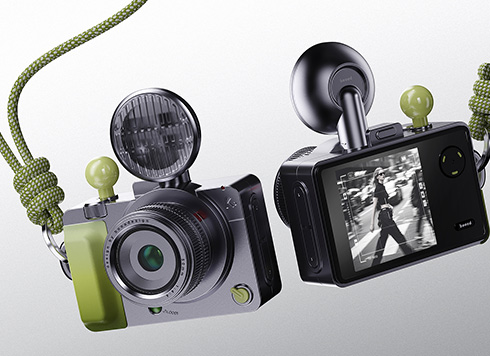 EDC·Trendy Camera Product Design: Form Follows Emotion
EDC Toy Camera: Braun-inspired retro design ...
-
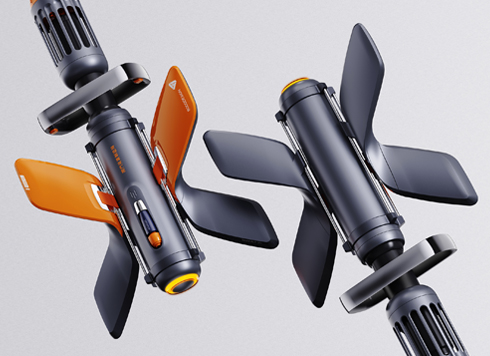 Product Design of Children's "Bubble Rocket" Underwater Thruster
Inspired by "Octonauts + Space", kids' "Bub ...
-
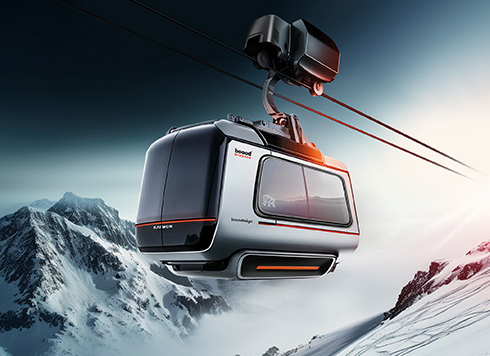 Design of Adaptive Intelligent High-Altitude Shuttle Transport Robot
Smart rural shuttle bot: Streamlined, weath ...
-
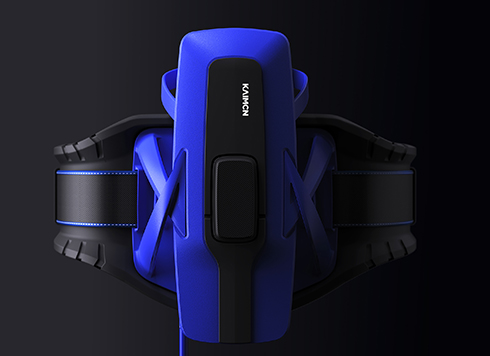 "Effortless" Exoskeleton Wear: Unleash Ultimate Freedom in the Sea
"Unfelt Wearability" & "Bionic Power" redef ...
-
Factory Building Landscape Planning 3D Modeling and Rendering: How Long Is Delivery? Where Does Rework Often Get Stuck?
Date: Aug 31, 2026 Read: 108
-
How Long Does a 3D Aerial View Rendering Take? Is Rework Usually Caused by Modeling Dimensions?
Date: Aug 29, 2026 Read: 93
-
Rendering Keeps Getting Revised: Is the Main Issue Modeling or Materials and Lighting?
Date: Aug 28, 2026 Read: 100
-
How Many Days Does a 3D Landscape Design Project Take for Modeling and Rendering? Static Renders or Real-Time Engines – Which Is More Convenient?
Date: Aug 27, 2026 Read: 79
-
VR Panorama Rendering: How Long and How Much for One Scene? Image Rendering or Real-Time Engine?
Date: Aug 25, 2026 Read: 94