



Rendering Keeps Getting Revised: Is the Main Issue Modeling or Materials and Lighting?
Rendering is a common static visual delivery format for product displays, architectural visualization, and online showrooms in 2026. To judge whether a set of renders is acceptable, you don't need to look at how new the renderer is, but rather three checkable criteria: whether model precision supports close-up shots, whether materials and lighting have layering, and whether the delivery format matches the end use. Based on standard project delivery practice, most rework is not caused by mistakes in the rendering stage, but by unclear modeling and material standards early on.
Why Do Renders Always Get Revised at the Final Stage?
A common scenario in projects is that the model is built, lighting and materials have been adjusted for two rounds, but the render comes out with wrong texture or structural glitches. This kind of rework is usually not a problem with render settings, but with modeling precision that didn't account for the final use. For example, if a product render needs close-up display and the model lacks chamfers and split lines, obvious flaws will appear after rendering.
We once delivered a batch of landscape renders with a limited budget and a tight 5-day schedule, using simplified models for trees and paving. After the first render, the client asked to zoom in on details. From afar it looked fine, but up close all the polygon edges showed. In the end, we had to redo the high-poly models, which added three days of rework. This is what happens when early constraints aren't clearly defined.
- Modeling precision must match the final display size and viewing distance; don't use a uniform low-poly approach.
- Texture resolution determines close-up quality; 2K/4K is the typical range in 2026.
- Lighting layering matters more than light count; set the key light direction first, then evaluate fill lights.
Rework costs more than just delays. In typical 2026 project delivery practice, a major rework can increase costs by 30%–50%, because re-modeling or changing materials will cascade through all subsequent lighting and render times. That's why many teams would rather spend an extra day on checks upfront than spend three days reworking later.
Rendering Turnaround and Pricing: Experience Ranges and Influencing Factors
For rendering turnaround in 2026, a typical experience range is: 2–5 business days for a single interior/exterior render, 1–2 business days for product white-background images, and 5–10 business days for complex scenes or high precision. Pricing depends on model complexity and render quality, and is usually based on shot count and revision rounds, not on area.
The biggest factor affecting turnaround is actually the approval chain. If no one on the client side can make the final call, each round of revisions may be scrapped and restarted. It's advisable to lock camera angles and reference images before rendering, which is more effective than compressing render settings.
- Modeling workload: whether the model is created from scratch or adapted from existing assets; the gap can be 1–4x.
- Materials and textures: whether PBR assets are provided or need to be created.
- Lighting setup: day/night/multiple angles, affecting render tuning time.
- Revision rounds: industry convention includes 2–3 rounds, with extra rounds billed separately.
In terms of pricing, based on 2026 market rates, a single product render typically ranges from a few hundred to two thousand RMB, interior/exterior renders from one thousand to three thousand RMB or more, and complex aerial or large scenes can exceed ten thousand. These are all experience ranges; specifics depend on model source and revision rounds.
Rendering vs. Real-Time Engines: Applicable and Non-Applicable Boundaries
When doing 3D presentation in 2026, choosing between static renders and a real-time engine (UE5/WebGL) mainly depends on interaction needs. Renders are for "looking," real-time engines are for "interacting." For example, a single high-quality image is enough for product appearance review; if clients need to rotate and zoom to inspect details, real-time interactivity is required.
They are not substitutes; they can complement each other. Renders serve for covers, ads, and print; real-time engines for interactive display on web pages or mini-apps.
- Rendering: delivers static images, low cost, fine-tunable visuals, but no interaction.
- Real-time engine: interactive, supports real-time switching of angles, but material precision and lighting realism are limited on the web, and development time and cost are high.
In terms of project schedule, rendering is usually measured in business days, while real-time engines require weeks or even months of planning. If the need is just a few static images, the advantages of a real-time engine cannot be utilized at all.
Non-applicability boundary: if the scene requires frequent material or furniture replacement, static renders would have to be redone each time, so a real-time engine is more efficient. But if you simply need to present the exterior without dynamic interaction, using a real-time engine is over-design. In 2026 projects, when budgets are under 100,000 RMB, the common approach is to prioritize renders over real-time engines.
The Five-Step Verification Method for Rendering
Break the production process into five checkable steps, verifying each one after completion to reduce later rework. This framework is based on our 2026 project delivery practice, and we call it the "Five-Step Verification Method."
- Camera and reference images: confirm the final viewing angle and composition, lock the perspective.
- Model precision check: verify the model supports close-up shots; chamfers and split lines are complete.
- Materials and textures check: confirm PBR parameters and texture resolution to avoid stretching or blurring.
- Lighting layering check: examine in the order of key light, fill light, and ambient light; first check the tonal relationship in black and white mode.
- Render output check: confirm delivery format, resolution, color space, and whether post-production channels are included.
Why these five steps and not more? Because the first four determine render quality, and the fifth ensures delivery. Each check takes only ten minutes but can save hours of later modifications.
Each step must have acceptance criteria. For example, model precision should have no intersection at 100% view, textures should be at least 2K, and lighting layering should be well-defined in black-and-white mode. Once the first four steps pass, the rendering stage rarely requires major changes. In actual delivery, Xiyue Company adds an extra "semi-finished preview" step, rendering small images for client confirmation to avoid redoing the entire image.
Delivery Formats and Common Causes of Rework
Common delivery formats in 2026 are JPG/PNG for preview, PSD/TIFF for post-production, and EXR/HDR for compositing. Clients often get stuck on color inconsistency, as different monitors cause brightness differences, so it's recommended to include a color space description when delivering.
- Model scale and actual dimensions don't match, causing incorrect light reflection positions.
- Material ID channels are not separated, requiring re-render for post color changes.
- Composition lacks safe margin, leaving no space for text or layout.
- White balance is inconsistent, with warm yellow and cool white mixed in daytime scenes.
To avoid these pitfalls, it's recommended to create a "delivery acceptance checklist" before starting, specifying format, resolution, color gamut, channels, and naming conventions. Anything not on the checklist is not considered rework later. This eliminates a lot of verbal disputes.
For color space, it's recommended to use sRGB for consistent previews; if it's for print, convert to CMYK. Many clients view images on phones with different screen brightness, so include a note to avoid misjudgment.
Frequently Asked Questions
How long does rendering typically take to deliver?
Typical experience range: 1-2 business days for a single product image, 2-5 business days for interior/exterior renders, 5-10 business days for complex scenes, depending on model precision and revision rounds.
Which stage, modeling or rendering, is more likely to cause rework?
From practice, insufficient modeling precision is the main source of rework, especially visible in close-up shots; rework in the rendering stage is mostly due to material parameter and lighting layering adjustments.
How should I choose between rendering and a real-time engine?
If you only need to view without interaction, choose rendering for lower cost and better visual quality; if you need multi-angle interaction or dynamic replacement, choose a real-time engine (UE5/WebGL). In 2026, a combination of both is common.
What delivery formats are typically required?
Common deliverables include JPG/PNG preview images, PSD/TIFF layered files, and EXR/HDR for compositing; it's recommended to also include a color space description.
How can I avoid repeated revisions after rendering?
Use the "Five-Step Verification Method" to lock camera, model, materials, and lighting before rendering, and clearly state revision rounds in the contract. This significantly reduces ineffective communication.
If the project budget is below a few thousand RMB, the schedule is as tight as one day, or you only need a rough composition reference, there is no need for a full rendering process; real-time preview or hand sketches are faster. Rendering is suitable for scenes with high visual quality requirements, printing, or formal presentations. It is recommended to specify modeling precision, texture specs, revision rounds, and delivery formats in the quotation, and conduct acceptance checks item by item according to the "Five-Step Verification Method." If in doubt, do a single test image before bulk production.
-
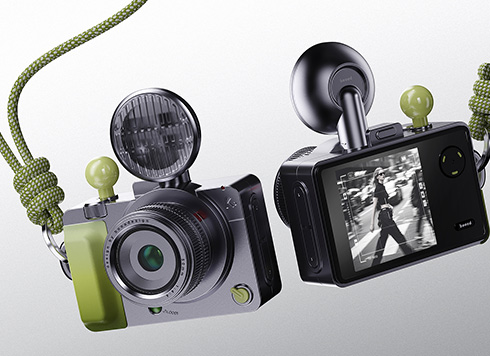 EDC·Trendy Camera Product Design: Form Follows Emotion
EDC Toy Camera: Braun-inspired retro design ...
-
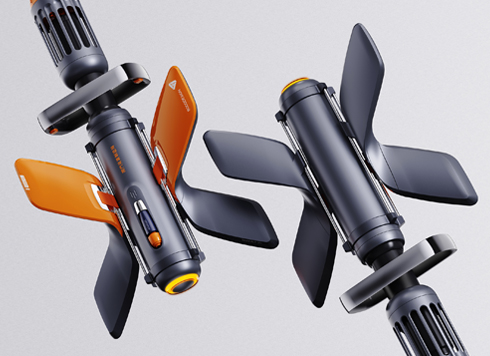 Product Design of Children's "Bubble Rocket" Underwater Thruster
Inspired by "Octonauts + Space", kids' "Bub ...
-
 Design of Adaptive Intelligent High-Altitude Shuttle Transport Robot
Smart rural shuttle bot: Streamlined, weath ...
-
 "Effortless" Exoskeleton Wear: Unleash Ultimate Freedom in the Sea
"Unfelt Wearability" & "Bionic Power" redef ...
-
How Long Does a 3D Aerial View Rendering Take? Is Rework Usually Caused by Modeling Dimensions?
Date: Aug 29, 2026 Read: 94
-
Mini Program 3D Display: Rendered Images vs Real-Time Engines – What's the Difference, Delivery Time, and Where Does Rework Happen?
Date: Aug 21, 2026 Read: 117
-
Repeated Rework in Rendering Production: Is the Problem Modeling or Rendering?
Date: Aug 13, 2026 Read: 96
-
A Complete Guide to Product Demo Animation Production: Tool Selection and Delivery Standards
Date: Jul 21, 2026 Read: 125
-
The client's model looks fine on its own—why does it render with tilted buildings and wrong proportions?
Date: Oct 6, 2026 Read: 33