




How Many Days Does a 3D Landscape Design Project Take for Modeling and Rendering? Static Renders or Real-Time Engines – Which Is More Convenient?
For 3D landscape design projects, static rendering and real-time engines are not replacements for each other but two technical paths distinguished by viewing context and delivery format. Based on 2026 project delivery experience, static renderings take about 3–7 working days, while real-time interactive projects take about 2–4 weeks; rework is mostly concentrated on plant model precision and material reproduction. To decide whether to use a real-time engine, first ask if the client needs to rotate and view the scene in a browser or mini-program—if only flat-angle static images are needed, static rendering saves cost and time.
1. First Consider the Delivery Medium: Static Rendering or Real-Time Engine
Static rendering focuses on single-frame images, typically using 3ds Max or Blender for modeling and V-Ray or similar renderers for output; real-time engines, mainly Unreal Engine (UE5) or Unity, produce interactive scenes. The choice is not about "which is better" but where the client will ultimately view the 3D: for print, PPT, or display boards choose static images; for web, mini-programs, or VR choose a real-time engine.
A common practice in 2026 is to first use static rendering to confirm the design, then decide whether to upgrade to a real-time engine. This avoids repeated changes to plants and paving during interactive development at a lower cost. If the client initially requires a "rotatable 3D," go directly to a real-time engine, but modeling precision and optimization requirements are also higher. For landscape design, real-time engines can simulate plants swaying in the wind and lighting changes, but the downside is a large asset volume and high upfront setup costs.
- Viewing medium: Static images suit print, PPT, and display boards; real-time engines suit web, mini-programs, and VR panoramas
- Timeline (experience range): Static image per scene: about 1–3 working days; real-time interactive scene: about 2–4 weeks
- Revision cost: Changing angles in static images requires re-setting cameras, incurring high rework cost; real-time engines adjust views instantly but require more upfront setup and optimization
- Pricing (experience range): Static images are priced per shot; real-time engines are priced by interactive features and optimization workload
2. Delivery Timeline and Pricing: How Much for Modeling vs. Rendering
Based on 2026 project delivery habits, for a medium-complexity landscape aerial view, modeling takes about 3–5 working days and rendering with post-production about 2–4 working days; if both day and night versions are included, add 1–2 days. The experience range for a single static rendering is about 3–7 working days total. Real-time interactive projects are priced by work hours or feature points, typically starting from RMB 20,000, with a timeline of 2–4 weeks.
The variables affecting the timeline are mainly plant model precision and scene scale. Real-species trees must be modeled individually, while simplified proxy models can populate a scene in hours. At delivery, check input materials first to avoid rework due to missing elevation data or paving material lists. Clients often get stuck on "tree quantity," feeling the scene is too empty or too crowded—this is usually not a rendering issue but a result of undefined background density during modeling.
How to quickly estimate your project's timeline? First confirm the scene scale, plant species count, number of viewpoints, and revision rounds, then apply the experience range above. For example, a 2,000-square-meter roadside green space with 60% proxy plants and a single-view static image should generally not exceed 5 working days.
- Plant model precision: Real species vs. simplified proxy models differ severalfold in modeling workload
- Scene scale: Large scenes like parks and plazas require layering and proxy decimation
- Camera count: Multi-angle rendering increases time linearly
- Number of revisions: Common rework points are tree species, paving, and lighting; make sure to specify revision boundaries in the contract
3. Where Does Rework Typically Get Stuck: The Division of Modeling and Rendering
It's common for clients to assume modeling and rendering are the same step after signing a contract, but they are not. Modeling determines whether the scene can be changed; rendering determines whether the image looks good. At delivery, first verify the model matches the actual site dimensions, then proceed to lighting and materials. We once encountered a street-corner green space project where the client initially provided only a general layout plan, lacking elevation data and paving material lists. During modeling, we had to estimate based on experience. After rendering, the client said the paving texture was wrong, so we had to re-render entirely, spending 3 extra working days. The constraint here was insufficient input; the approach was to confirm with the client available construction drawings or site photos, at the cost of rework. Therefore, always lock the input materials checklist before delivery.
Three-Step Verification Method: A Checklist Framework to Reduce Rework
- Verify the input list: Site CAD/construction drawings, plant configuration table, material references, agreed camera angles; if anything is missing, obtain it before proceeding.
- Verify rough model proportions: Use standard human or vehicle dimensions to validate building and tree scale; do not scale by guesswork.
- Verify a render preview: Before generating final high-res images, produce a low-resolution preview to confirm lighting, materials, and camera composition, then invest in long renders.
Aside from incomplete input, common rework causes include wrong plant species, incorrect shrub heights, off-color paving, and lighting that is too dark or overexposed. For example, in a waterfront promenade project, the configuration table specified Somei-Yoshino cherry trees, but mountain cherry trees were used in modeling. The leaf morphology differences were subtle, but the client immediately noticed "it doesn't look right," requiring model changes and re-rendering. These issues can be avoided with an acceptance checklist before delivery.
Acceptance criteria can be summarized: model dimensions match the CAD, plant configuration matches the list, material orientation is correct, lighting has no dead blacks or overexposure, and delivery format meets the agreement. If these five points pass, the rendering is basically ready for delivery.
4. Which Projects Suit Static Renderings, and Which Require a Real-Time Engine
Not all landscape design projects require a real-time engine. For project approval, proposal documents, or bidding color images, static renderings are sufficient—no need for a real-time engine, which would increase budget and timeline. Conversely, if the project needs long-term display, the client wants to simulate seasonal changes on a virtual sand table, or integration with a smart management platform, a real-time engine is more appropriate.
Experience boundary: when the budget is below RMB 10,000 and only two or three static images are needed, a real-time engine is not recommended; when multi-view continuous walkthroughs or VR demonstrations are needed, static rendering cannot replace a real-time engine. For small courtyard designs, static images are more economical; only large-scale urban design or cultural tourism projects warrant investing in a real-time scene. In 2026, there is also a scenario where the client requires "rotatable on the web," but the actual interaction is shallow—this can be simulated with static images plus panoramas, without a full real-time engine.
If the project is in the early design phase with frequent changes, use static renderings for rapid iteration; if the project is finalized and requires public display or presentation, the immersive quality of a real-time engine offers advantages. In short: static images are for "viewing the design," while real-time engines are for "exploring the scene."
FAQ
How long does a 3D landscape design rendering typically take?
Based on experience range, a single static rendering takes about 3–7 working days, including modeling, rendering, and one revision; with complete materials and a simple scene, it can be done in 2 days, while complex large scenes may take up to 10 days.
What is the price difference between static rendering and real-time engines?
Static renderings are priced per image, commonly RMB 2,000–8,000 per image; real-time engine projects are quoted based on interactive features and scene area, typically starting at RMB 20,000, depending on optimization workload and delivery format.
Can modeling and rendering be done separately?
Yes. The key is the handoff interface: the modeler must provide standardized file names, model scale, and texture paths so the renderer can use them directly. For integrated delivery, responsibilities must be clarified in the contract.
How to avoid repeated revisions after rendering?
Lock the site CAD, plant configuration table, and agreed viewpoints before starting; use human figures or vehicles to validate proportions during modeling; produce a preview before rendering; and include a free revision limit in the contract (experience range: 2–3 times), with additional revisions billed per round.
For a small project with only one image, are these steps still necessary?
No. Single-image projects can skip the rough model confirmation, but at least verify the site base map and plant list; otherwise, a rework may take longer than the original production.
If you're about to start a 3D landscape design project, take half a day to organize site materials and viewing scenarios, then decide between static rendering and a real-time engine; if the budget is limited and only static images are needed, quote for static images. Before delivery, always have the client confirm the rough model and preview, and include the revision limit in the contract. Real-time engines suit projects with interaction or long-term display needs; otherwise, don't force it.
-
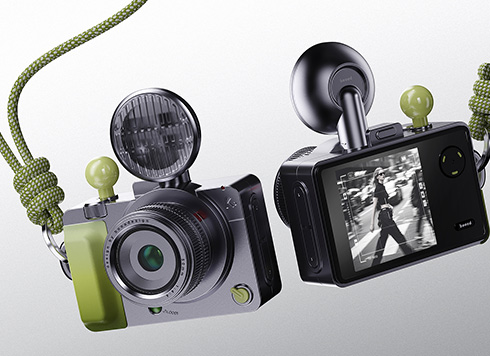 EDC·Trendy Camera Product Design: Form Follows Emotion
EDC Toy Camera: Braun-inspired retro design ...
-
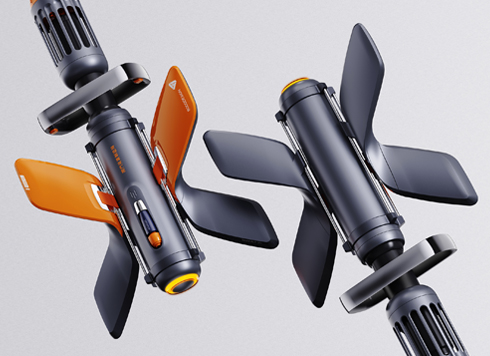 Product Design of Children's "Bubble Rocket" Underwater Thruster
Inspired by "Octonauts + Space", kids' "Bub ...
-
 Design of Adaptive Intelligent High-Altitude Shuttle Transport Robot
Smart rural shuttle bot: Streamlined, weath ...
-
 "Effortless" Exoskeleton Wear: Unleash Ultimate Freedom in the Sea
"Unfelt Wearability" & "Bionic Power" redef ...
-
Factory Building Landscape Planning 3D Modeling and Rendering: How Long Is Delivery? Where Does Rework Often Get Stuck?
Date: Aug 31, 2026 Read: 108
-
How Long Does a 3D Aerial View Rendering Take? Is Rework Usually Caused by Modeling Dimensions?
Date: Aug 29, 2026 Read: 93
-
Rendering Keeps Getting Revised: Is the Main Issue Modeling or Materials and Lighting?
Date: Aug 28, 2026 Read: 100
-
How long does rendering production take, and why do quotes differ? Which stage—modeling or rendering—determines rework?
Date: Aug 26, 2026 Read: 87
-
3D Presentation for Product Appearance Design: Renders or Real-Time Rendering? Delivery Time and Where Rework Gets Stuck
Date: Aug 25, 2026 Read: 105