


How Long Does a 3D Aerial View Rendering Take? Is Rework Usually Caused by Modeling Dimensions?
3D aerial view rendering is essentially the use of 3D software to simulate a bird's-eye view of buildings or terrain. It is commonly used for real estate presentations, landscape planning, and urban design. As of 2026, there are two mainstream approaches: one is 3D modeling followed by rendering to output static frames; the other is using real-time engines to generate interactive scenes. Delivery depends on three key factors: whether the model proportions and scale are accurate, whether materials and lighting are consistent, and whether the output format matches the intended use. Based on our delivery experience, for a moderately complex site, the typical production cycle is 3 to 10 working days. Rework is mostly concentrated on dimensional and proportional errors during the modeling phase, rather than in post-rendering.
What Problems Does a 3D Aerial View Rendering Actually Solve for the Client?
The core value of an aerial view is to clearly present the overall relationships among site, buildings, roads, and greenery from a bird's-eye perspective. Unlike plan views, it requires no training to read. Unlike human-perspective views, it simultaneously shows setbacks, sunlight, and traffic flows between buildings and their surroundings. In scheme presentations, planning approvals, and sales center displays, this holistic expression is hard to replace.
When producing an aerial view, always remember: it emphasizes overall relationships rather than fine textures of individual buildings. Therefore, during the modeling phase, confirm the overall plan dimensions, building heights, and setback distances first. Texture details can be slightly coarser, but relative positions must be correct.
- Suitable for presenting a project's master plan, community amenities, and landscape system
- Suitable for government planning submissions or review meetings as an overall planning schematic
- Suitable for park investment promotion to help enterprises quickly understand the spatial order after occupancy
When Is It Worth Doing, and When Should You Save Your Money?
If your core need is to help decision-makers understand the overall spatial relationships, a 3D aerial view is a safe choice. It is cheaper than 3D animation, more intuitive than CAD plans, and has a shorter production cycle. However, if you need ground-level roaming, detailed material joints, or interactive angle switching, an aerial view alone is not suitable. Consider a real-time engine or virtual tour instead.
Boundary statement: When the project requires a static, high-precision, printable overall view, rendering is the priority. When real-time operation and dynamic viewpoint switching are required, a static aerial view can only serve as a supplement and cannot replace an interactive solution.
- Suitable for: overall layout display of residential communities, industrial parks, parks and plazas, road and municipal works, farmland and water conservancy, etc.
- Not suitable for: interior spaces, close-ups of building facades, detailed product appearance, or scenes requiring multi-user collaborative editing
- Not necessary: if the budget is limited and only a schematic sketch is needed, exporting a SketchUp model and adding entourage may be more practical.
How Long Does a Project Take, Why Do Prices Differ, and Why Does Rework Always Happen in Modeling?
Based on 2026 project delivery practices, a medium-sized plot (e.g., a 50-mu residential community) typically takes 3–10 working days for modeling and rendering. Modeling usually accounts for about 60% of the total time, while rendering and post-production each account for about 20% (experience range). If the site is complex, with many floors or varied terrain, the cycle can extend to 15 working days (experience range). Pricing varies accordingly, typically from several thousand to tens of thousands of RMB, mainly depending on the level of detail and the number of revisions.
There are three common rework bottlenecks: first, inconsistency between building heights and master plan dimensions, causing distorted massing relationships; second, misplaced surrounding roads or landscape elements; third, inconsistent lighting and shadow directions across different angles. The common root cause is insufficient reference information in the early stages.
We once handled a park project with a limited budget and missing original CAD drawings. We first estimated dimensions from satellite images to build a rough model, then refined it progressively. However, because the building floor heights were not confirmed in advance, the client requested model changes after the first render, extending the schedule from 4 planned days to 7. Later, we moved the verification of key dimensions to the front, and rework decreased significantly. Therefore, verifying drawing accuracy and key dimensions before delivery can save most of the rework cost.
Rendering or Real-Time Engine? How to Choose in 2026?
The two approaches are not about replacing each other; they differ in delivery medium. Rendering outputs static frames, pursuing photorealistic quality, and is suitable for printing, reviews, and fixed-angle display. Real-time engines output interactive visuals, suitable for web pages, mini-programs, or large-screen interactivity, but realism is typically sacrificed to some extent, and production costs are higher.
The decision is simple: first ask the client whether they want a single image or an interactive product. If it's only for reporting, rendering is more efficient. If they need to click through different viewpoints or add dynamic weather, go with a real-time engine.
- Rendering: High realism, typical production cycle 3–10 working days (experience range), delivered as JPG/PSD, suitable for static display.
- Real-time engine: Supports interactivity and multi-viewpoint switching, typical development cycle 2–4 weeks (experience range), requires additional performance considerations, outputs WebGL, APK, or mini-program packages.
- Cost comparison: Rendering has low modification cost per scene; real-time engine changes may involve resource and performance adjustments, with the overall budget typically 2–3 times that of rendering (experience range).
Delivery Acceptance and Format Verification
Static renderings commonly use JPG, PNG, or TIFF formats, and layered PSD files can also be provided for later adjustments. Real-time engine projects output HTML5, APK, or WeChat mini-program packages, along with project files and management documentation. According to common acceptance criteria in 2026, static images should have a resolution no lower than 300 dpi, and real-time projects should maintain a frame rate of at least 30 fps (experience range).
During acceptance, in addition to visual appeal, check for distortion: whether the building's window-to-wall ratio, road width, and tree height are close to reality. It is recommended to overlay the master plan on the rendering to check proportions. If deviations are obvious, request rework. Additionally, the delivery package should clearly state software versions and plug-ins for future modifications.
- Static images: JPG + PSD, 300 dpi or higher, no obvious noise
- Real-time projects: runnable package + project files, specify engine version and optimization parameters
- Additional items: camera sequences and material libraries for easy angle replacements later
FAQ
How long does 3D aerial view rendering typically take, and how much does it cost?
Typically 3–10 working days; complex sites take about 15 days. Costs are based on scenes and revision count, with an experience range from several thousand to tens of thousands of RMB, subject to supplier quotes.
Which stage, modeling or rendering, has a greater impact on rework?
Dimensional and proportional errors during modeling are the main cause of rework. Material and lighting issues in rendering can be adjusted in post-production, but a wrong model often requires starting over, so modeling is more critical.
Rendering or real-time engine: which should I choose?
For static presentations and printing, choose rendering. For clickable interactions or multi-angle displays, choose a real-time engine, but note that a real-time engine involves a longer production cycle and higher costs.
What formats should I request upon delivery?
For static images, request JPG/PNG and PSD source files. For real-time projects, request a runnable package and project files, and confirm software version compatibility for future edits.
If your project is mainly about understanding overall relationships, we recommend prioritizing rendering and reserving at least one working day for model proportion checks. If online real-time viewing is essential, then switch to a real-time engine. These two options are not in conflict; many projects produce a rendering for approval first, then develop a real-time scene for display. Based on 2026 delivery practices, making dimension verification in the modeling phase a primary gate can save substantial rework costs. The specific solution depends on your materials and budget.
-
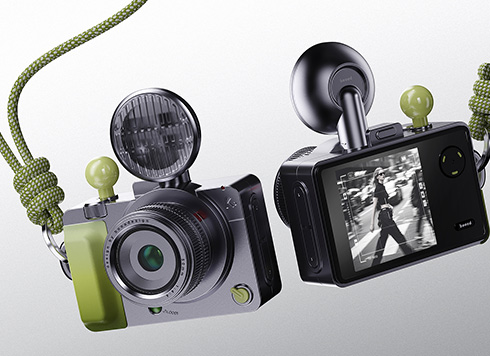 EDC·Trendy Camera Product Design: Form Follows Emotion
EDC Toy Camera: Braun-inspired retro design ...
-
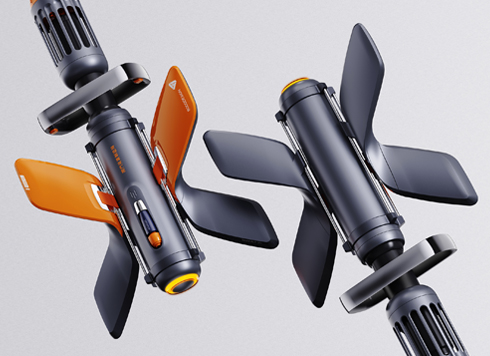 Product Design of Children's "Bubble Rocket" Underwater Thruster
Inspired by "Octonauts + Space", kids' "Bub ...
-
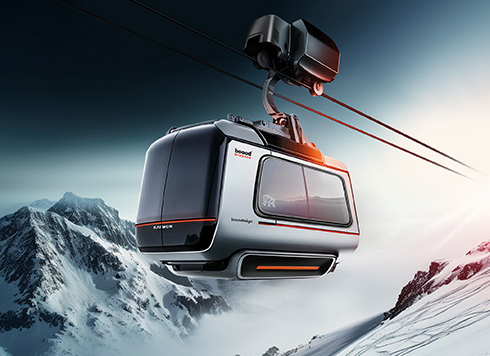 Design of Adaptive Intelligent High-Altitude Shuttle Transport Robot
Smart rural shuttle bot: Streamlined, weath ...
-
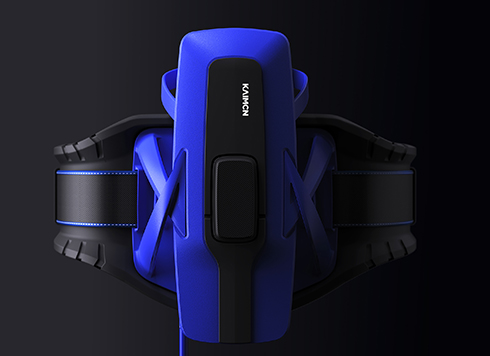 "Effortless" Exoskeleton Wear: Unleash Ultimate Freedom in the Sea
"Unfelt Wearability" & "Bionic Power" redef ...
-
Rendering Keeps Getting Revised: Is the Main Issue Modeling or Materials and Lighting?
Date: Aug 28, 2026 Read: 100
-
Mini Program 3D Display: Rendered Images vs Real-Time Engines – What's the Difference, Delivery Time, and Where Does Rework Happen?
Date: Aug 21, 2026 Read: 117
-
The client's model looks fine on its own—why does it render with tilted buildings and wrong proportions?
Date: Oct 6, 2026 Read: 33
-
Factory Building Landscape Planning 3D Modeling and Rendering: How Long Is Delivery? Where Does Rework Often Get Stuck?
Date: Aug 31, 2026 Read: 108
-
In 2026, How Many Days Should You Budget for UE5 Rendering? Are Reworks Mostly Stuck on Modeling and Materials?
Date: Aug 30, 2026 Read: 88