

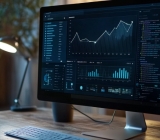



In 2026, How Many Days Should You Budget for UE5 Rendering? Are Reworks Mostly Stuck on Modeling and Materials?
In 2026, using UE5 to render architectural visualizations has become standard practice in architecture, product, and exhibition projects. Its strengths lie in multi-angle stills, aerial views, and real-time interactive confirmation; however, if only a single high-precision still frame is needed, traditional offline rendering is more stable. The mainstream workflow is modeling → materials and lighting → UE5 sequence frames or screenshot output, with key delivery metrics being resolution, lighting consistency, and file editability. In terms of scheduling, a medium-complexity scene typically takes 1-3 days (experience range) from organizing the model to the first batch of images, with rework points mostly concentrated on model units, texture paths, and lighting exposure. Based on years of UE5 project delivery experience, this article provides a five-step delivery method, acceptance criteria, and applicable boundaries, so that clients and production teams can align expectations before starting.
What's the difference between UE5 rendering and traditional offline rendering?
Many teams struggle with whether to use UE5 for stills—it's essentially a trade-off between real-time and offline rendering paths. Traditional offline rendering (e.g., V-Ray, Corona) prioritizes physical light accuracy, with single-frame render times ranging from minutes to hours; UE5 leverages a real-time engine, compressing single-frame output to seconds, but asset organization and debugging costs can be higher. Here's a comparison:
- Render time: Offline rendering typically takes 10 minutes to several hours per frame; UE5 typically takes 1-5 seconds per frame (experience range), but the upfront asset packaging time is non-negligible.
- Revision feedback: With offline rendering, changing a material may require re-rendering; UE5 allows you to see lighting and material changes immediately, reducing rework communication costs.
- Lighting and material logic: Offline rendering relies on physical cameras and radiosity; UE5 leans toward physically-based real-time lighting, with some material parameters requiring manual calibration.
- Hardware requirements: Offline rendering is CPU- and memory-intensive; UE5 real-time rendering is more GPU-intensive, and insufficient VRAM will automatically reduce precision.
- Suitable use cases: Offline rendering is better for single high-precision stills or animations; UE5 is better for multi-angle presentations, real-time walkthroughs, and projects requiring frequent revisions.
Here's a rule of thumb: if the project only requires one cover-level still, traditional offline rendering is usually more hassle-free; if the client is likely to request more than three angle changes or wants a real-time walkthrough later, UE5 offers better cost-effectiveness.
In 2026, how many days should you budget for UE5 rendering?
Based on 2026 project delivery habits, the schedule for UE5 rendering isn't counted from the moment rendering starts, but from when the model enters UE5. For a medium-complexity architectural scene, it typically takes 1-3 days (experience range) from model cleanup to the first batch of images; if custom materials, complex animations, or 3-screen surround setups are involved, the schedule extends to over a week. The core of the schedule lies not in GPU rendering but in model cleanup, material layering, and lighting previews.
- Model precision: Inconsistent model units or chaotic naming can cause scale corruption after import to UE5, potentially adding half a day to a day of rework.
- Material count: When there are more than 50 material slots, parameter tuning and texture organization time increases noticeably; it's advisable to manage layers by primary and secondary materials.
- Lighting iterations: For outdoor scenes, architectural lighting is relatively fixed, but indoor mixed lighting (skylight + artificial light) usually requires multiple test renders, each taking 5-10 minutes, accumulating significant time.
- Client feedback: It's common for a scene to go through 3-4 angle and composition revisions, each round taking half a day to a day, so at least one round of revision buffer should be included in the quote and schedule.
The execution recommendation here is: before quoting, confirm whether the first delivery round includes revisions, and allocate an additional 20%-30% of schedule time for material adjustments and camera revisions, to avoid last-minute rework squeezing other project resources.
Where do reworks mainly occur? How to avoid pitfalls during delivery?
Based on actual project delivery experience, rework often stems not from rendering itself but from incomplete closure of preceding steps. Common rework causes are concentrated in four categories: model scale, texture loss, light exposure, and output format. Checking these points before delivery can reduce rework by about half.
- Model dimensions and units: When importing from SketchUp, 3ds Max, or C4D into UE5, inconsistent units can turn a building into a giant object or a toy. Solution: unify to centimeters or millimeters before import, and check that the scene scale meets standards.
- Texture paths and materials: Texture loss is common in UE5, especially after switching computers. Solution: use relative paths for import, and package materials and texture folders together.
- Lighting and exposure: UE5's default exposure has a large dynamic range, which can easily cause overexposed window views. Solution: fix exposure and reserve color correction nodes, and verify using a reference monitor.
- Output format and resolution: Decide output based on the client's use case, commonly 2K/4K/8K. If only screenshots are output, later revisions require returning to the source file and re-rendering.
During a delivery, I encountered a model imported from 3ds Max into UE5 where the units were incorrectly set to millimeters, shrinking the building to an unrecognizable scale, requiring all lighting and materials to be readjusted. Although it was fixed within the day, the rework cost directly added half a day to a day. So verifying units before delivery is a bottom line for UE5 projects.
A production workflow that reduces rework: the five-step delivery method
To reduce UE5 rendering rework, follow the five-step delivery method. This framework progresses through asset preparation → scene setup → lighting adjustment → output confirmation → file archiving, with clear acceptance criteria at each step.
- Model cleanup: Keep the polygon count within a reasonable range, remove unnecessary objects and backfaces; acceptance criterion: the scene opens stably without crashing.
- Material layering: Separate primary, secondary, and emissive materials, and unify naming; acceptance criterion: no missing texture paths, and material slot count is trackable.
- Lighting preview: First use basic materials and a single light to confirm overall light feel, then add local lights; acceptance criterion: clear light-dark relationships, no dead blacks or overexposure.
- Output confirmation: Choose sequence frames or screenshots per client needs, confirm resolution, color space, and gamma; acceptance criterion: opens on target devices without color shifts.
- File archiving: Package the UE5 project files and assets, attach a delivery checklist; acceptance criterion: can be opened on another computer and continue modifications.
The key to this framework is pushing rework costs forward: the more solid the model cleanup and material layering, the less time lighting adjustment takes. In actual projects, many teams skip the cleanup step and go straight to lighting, leading to repeated material revisions and slower overall progress. When executing, it's advisable to take screenshots after each step for documentation, making it easier to align acceptance criteria with the client.
What projects are suitable for UE5 rendering? What projects shouldn't use it?
UE5 rendering has clear applicability boundaries. It's suitable for: projects needing multiple angles, real-time interactive experiences, short cycles with frequent revisions, or where the client wants to develop into walkthrough or VR later. It's not suitable for: still frames pursuing extreme physical light accuracy, projects requiring specific effects from many third-party plugin renderers, or situations where the client lacks a real-time viewing environment and only accepts static images.
A judgment that can stand alone: if the project only requires a single high-quality still and the angle is confirmed not to change, traditional offline rendering is more reliable; if you need to repeatedly compare viewpoints and lighting, UE5's real-time feedback can significantly reduce communication and rework costs. In 2026, many architectural projects use a division of labor like "UE5 for main views + traditional rendering for close-ups," which is also a pragmatic choice.
Frequently Asked Questions
How long does it take to render one image with UE5?
A single image typically takes 1-5 seconds to render (experience range), but including model organization, material and lighting adjustments, and revision feedback, a full scene usually takes 1-3 days from start to finish.
What mainly affects the cost of UE5 rendering?
It's usually affected by model precision, material count, lighting complexity, number of revisions, and output resolution; among these, the number of revisions often drives up the total price more than render time.
How are modeling and rendering divided in architectural visualizations?
Modeling is responsible for structure, proportion, and dimensions; rendering handles materials, lighting, and output. In UE5 projects, modeling must also consider the units and polygon count for engine import; otherwise, rework is likely during the rendering phase.
How to choose between still renders and real-time engines?
If you only need static images, either traditional renderers or UE5 screenshots work, but UE5 saves time when changing angles; if you need real-time walkthroughs or web interactivity, UE5 is the more appropriate path.
What formats are typically delivered for UE5 rendering?
Common deliverables include EXR sequence frames, PNG or JPG stills, and the original UE5 project file; for presentations, they may also be packaged as executable programs or web-embedded formats.
In terms of action, it's recommended that clients confirm three questions before ordering: do you need static images or interactive displays? How many angles are likely to change after the first round of renders? Should the delivery include the UE5 source project? Production teams, on the other hand, should reserve revision buffer in the schedule and include model units, texture paths, and output resolution in the acceptance checklist. If these conditions aren't met, UE5's advantages may be reduced, and sticking with traditional offline rendering might be more reliable.
-
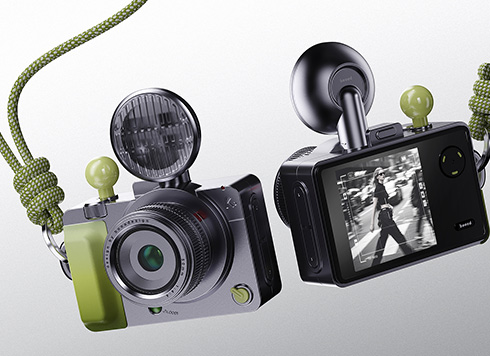 EDC·Trendy Camera Product Design: Form Follows Emotion
EDC Toy Camera: Braun-inspired retro design ...
-
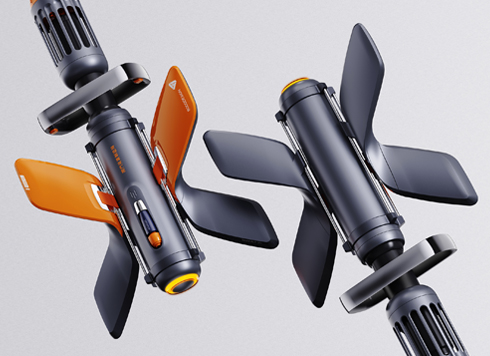 Product Design of Children's "Bubble Rocket" Underwater Thruster
Inspired by "Octonauts + Space", kids' "Bub ...
-
 Design of Adaptive Intelligent High-Altitude Shuttle Transport Robot
Smart rural shuttle bot: Streamlined, weath ...
-
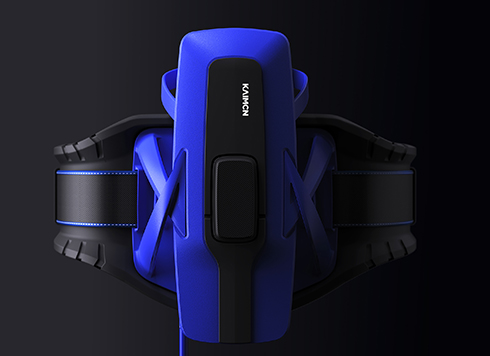 "Effortless" Exoskeleton Wear: Unleash Ultimate Freedom in the Sea
"Unfelt Wearability" & "Bionic Power" redef ...
-
How Long Does a 3D Aerial View Rendering Take? Is Rework Usually Caused by Modeling Dimensions?
Date: Aug 29, 2026 Read: 44
-
Rendering Keeps Getting Revised: Is the Main Issue Modeling or Materials and Lighting?
Date: Aug 28, 2026 Read: 58
-
Mini Program 3D Display: Rendered Images vs Real-Time Engines – What's the Difference, Delivery Time, and Where Does Rework Happen?
Date: Aug 21, 2026 Read: 67
-
UE5 Renderings in 2026: How Much Does the Delivery Cycle Differ from Traditional Rendering? Which Projects Should Avoid It?
Date: Aug 17, 2026 Read: 55
-
UE5 Rendering Full Workflow Guide: Practical Methods from Modeling, Materials to Delivery
Date: Aug 4, 2026 Read: 91