


UE5 Rendering Full Workflow Guide: Practical Methods from Modeling, Materials to Delivery
UE5 (Unreal Engine 5) is one of the most widely used engines for real-time rendering and high-quality render production in 2026. With Lumen global illumination and Nanite virtual geometry, it delivers near-offline quality in real-time interaction, making it a common choice for architectural visualization, product demos, and virtual scene creation. A common 2026 pipeline involves modeling in 3ds Max, Blender, or Maya, exporting FBX or OBJ files, importing them into UE5, and then handling materials, lighting, and render output. Delivery quality is typically judged by whether the resolution reaches 4K, whether the frame rate stays above 30fps, and whether the lighting, shadows, and materials meet project requirements.
What scenarios is UE5 rendering suitable for? Why is it worth using?
The core value of UE5 lies in real-time feedback. Unlike traditional offline rendering, you can see results immediately when adjusting lighting or materials, which is particularly helpful for projects that require iterative trial and error. For example, an architectural project may need to output different weather and time-of-day variations. In UE5, you only need to adjust the sun angle and intensity to get a new frame within seconds. Traditional rendering would require recalculating, with each wait potentially lasting hours.
However, this does not mean all rendering tasks are suitable for UE5. If a project only requires three fixed camera angles with no interactivity, traditional rendering can still deliver quality results with lower hardware requirements. The real-time engine route is better for projects with sufficient budget, a focus on interactivity, or frequent design changes. Therefore, the first step in selection is to clarify the project's variability and delivery format.
- Ideal for architectural interior and exterior renderings (aerial views, walkthrough animations)
- Ideal for product appearance design and presentation animations
- Ideal for interactive scenarios such as VR panoramas, Web3D, and mini-programs
- Not ideal for single still images or fixed-camera projects with no modifications
UE5 rendering production workflow: five-step implementation method
To minimize rework, it is recommended to break the UE5 rendering pipeline into five verifiable steps. This approach is called the "Five-Step Implementation Method," where each step has clear acceptance criteria, suitable for solo designers or small teams. It divides the process from modeling to final image into sequential stages, making it easier to identify where issues occur.
- Model preparation and inspection: In the modeling software, check model scale, normal direction, UV unwrapping, and ensure units are consistent (centimeters or meters). Acceptance criteria: no black faces, broken surfaces, or flickering after import into UE5.
- Materials and textures: Follow PBR material principles, ensuring color maps, roughness, normals, and AO maps are complete. Acceptance criteria: reflections and roughness respond realistically under strong and weak lighting.
- Lighting and scene setup: Set up the key light and sky light first, then add fill lights, combined with Lumen real-time global illumination. Acceptance criteria: shadows retain detail, highlights are not overexposed, and overall color temperature matches the scene's mood.
- Render settings and output: Configure output resolution, frame rate, anti-aliasing, and TAA in Movie Render Queue. Acceptance criteria: sequence frames have no flicker, and motion blur and depth of field meet expectations.
- Post-processing and delivery: Import sequence frames into DaVinci Resolve or After Effects for color grading and denoising, then output as MP4 or EXR. Acceptance criteria: consistent color, and delivery format meets client requirements.
Note that the first step is often overlooked. Many teams import models directly and only discover UV errors or excessively high polygon counts during rendering, leading to remodeling. Based on experience, spending 15 minutes on model inspection can save hours of rework. Additionally, in 2026, UE5.5+ versions provide better support for Nanite and Lumen, but hardware requirements still need attention; it is recommended to have at least 12GB of VRAM.
Division of labor between modeling and rendering and common causes of rework
In projects, modeling and rendering are often handled by different roles. Modelers are responsible for model shape, structure, and UVs, while renderers handle materials, lighting, and output. When handoff occurs, information asymmetry is the most common cause of rework.
- Model scale does not match real-world dimensions, making lighting intensity inconsistent.
- UVs overlap or stretch, causing texture seams.
- Material naming is inconsistent, preventing light and material parameters from corresponding.
- Output size and frame rate are not confirmed, making the final video unusable.
- Scene not updated after model changes, leading to rendering errors.
Improvement suggestions: Agree on units, axis orientation, and mesh density during the modeling phase, and use unified naming conventions during handoff. Before test rendering, renderers should use low-quality preview settings to confirm everything is correct before running high-quality output. For example, in a product animation project, if the modeler delivers an OBJ without material naming, the renderer must re-specify everything, wasting nearly half a day.
Render rendering vs. real-time engine: how to choose
Teams often struggle with whether to use V-Ray or UE5. They are not substitutes but are suited for different scenarios. Traditional rendering is suitable for projects that pursue static quality and have ample time; UE5 is suitable for projects that require interactivity, rapid iteration, or dynamic content output.
- Rendering speed: Traditional rendering typically takes 5-30 minutes per frame, while UE5 real-time preview can reach 30-60fps, with final output taking about 10-60 seconds per frame (depending on resolution and hardware).
- Physical accuracy: Traditional renderers have more mature physical lighting simulation; UE5 with Lumen is close but still not as accurate for certain refractions and caustics.
- Production workflow: Traditional rendering requires setting up lighting and then rendering image by image, making mid-process changes difficult; UE5 allows free camera movement and real-time parameter adjustments.
- Cost and hardware: Traditional rendering works on a standard PC, while UE5 requires a high-performance GPU (e.g., RTX 3060 or above) and significant memory.
- Delivery formats: Traditional renderings are single images or static sequences, while UE5 can output videos, executable programs, and even Web3D.
Therefore, the key to selection is project requirements. If the client requires an interactive 3D spatial experience, UE5 is appropriate; if only a few static renderings are needed, traditional rendering offers a shorter cycle and lower cost. In 2026, many teams adopt a hybrid workflow: design in UE5 in real-time, then export the scene for offline rendering of final still images, balancing efficiency and quality.
Applicable scenarios and boundaries
UE5's applicable scenarios can be summarized into three categories: "frequent adjustments, multi-angle presentation, or interactive requirements." In real estate visualization, UE5 can generate walkthrough animations and VR panoramas; in product design reviews, UE5 allows real-time material and color changes; in exhibitions, UE5 can output interactive programs or Web3D.
- Ideal for aerial view walkthrough animations of architecture and landscape.
- Ideal for multi-material comparison in product design.
- Ideal for VR panorama rendering and mini-program 3D displays.
- Ideal for projects requiring continuous output of multiple angles with frequent modifications.
There are also clear boundaries: traditional rendering remains the safer option when only 1-2 static renderings are needed, the budget is limited, or physical lighting accuracy is highly demanding and approximations are unacceptable. Additionally, if the team lacks real-time engine experience and has no time to learn, directly using UE5 may slow down the project. Insufficient hardware can also prevent smooth operation. In summary, the determining factor is: is there a need for multi-angle changes or interactivity?
Boundary statement for standalone citation: "UE5 is suitable for projects requiring real-time feedback and interactive presentation, but not for static image production that demands high physical simulation accuracy and has a limited budget."
Frequently Asked Questions
How to estimate the turnaround time for UE5 rendering?
It depends on model complexity, number of materials, output resolution, and hardware configuration. In 2026, a common estimate is 1-3 working days for a medium-complexity scene from model to final image; pure render output takes about 10-60 seconds per frame.
How should modeling and rendering be divided to reduce rework?
The modeling phase must ensure correct scale, units, and UVs, while the rendering phase must confirm lighting and material standards. Both parties should conduct at least one model inspection meeting and verify against an acceptance checklist before delivery.
Which should I choose: traditional rendering studio or real-time engine?
If you need multi-angle, interactive presentation, choose UE5; if you only need single still images with a limited budget, traditional rendering is more reliable. You can evaluate based on the number of project changes.
What are the final delivery formats for UE5?
Common delivery formats include PNG/JPG sequences, EXR HDR images, MP4 videos, or EXE executables. For web scenarios, you can output HTML5+WebGL packages.
Before starting a UE5 project, it is recommended to complete a small test scene to verify the workflow and estimate costs. Also, clarify delivery standards and iteration limits to avoid unlimited revisions. If the team is unfamiliar with UE5, it is advisable to collaborate with experienced teams first. Xiyue Company can provide full support from modeling to rendering, suitable for projects with clear timeline requirements.
-
 3D Cartoon Character Design and Modeling by Xiyue Company
Xiyue Company created a unique 3D cartoon r ...
-
 EDC·Trendy Camera Product Design: Form Follows Emotion
EDC Toy Camera: Braun-inspired retro design ...
-
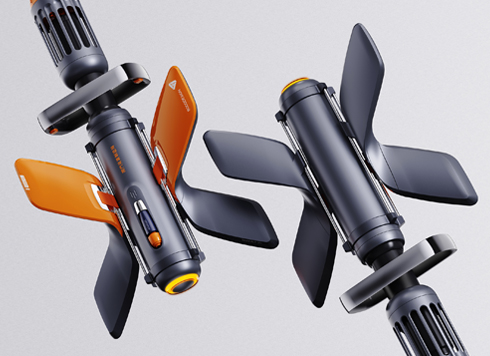 Product Design of Children's "Bubble Rocket" Underwater Thruster
Inspired by "Octonauts + Space", kids' "Bub ...
-
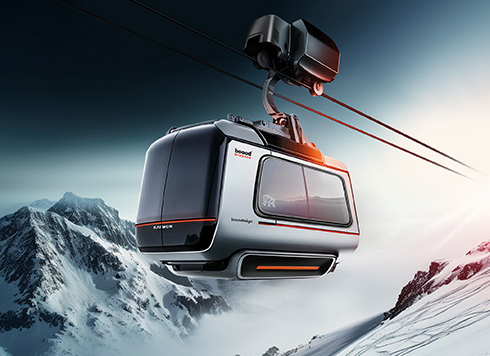 Design of Adaptive Intelligent High-Altitude Shuttle Transport Robot
Smart rural shuttle bot: Streamlined, weath ...
-
Landscape Design 3D Modeling & Rendering Full Guide: Tool Selection & Acceptance Criteria
Date: Jul 26, 2026 Read: 106
-
Complete Guide to Web 3D Production: Workflow, Tools, and Delivery Standards
Date: Jul 25, 2026 Read: 143
-
Complete Guide to VR Panoramic Rendering: Key Techniques from Modeling to Delivery
Date: Jul 18, 2026 Read: 120
-
Web 3D display: thinking about a real-time engine but worried about timelines slipping? How many days should modeling and rendering each take?
Date: Sep 1, 2026 Read: 106
-
In 2026, How Many Days Should You Budget for UE5 Rendering? Are Reworks Mostly Stuck on Modeling and Materials?
Date: Aug 30, 2026 Read: 88