


Complete Guide to VR Panoramic Rendering: Key Techniques from Modeling to Delivery
Core Components and Application Scenarios of VR Panoramic Rendering
VR panoramic rendering refers to the use of 3D modeling and rendering technology to generate 360-degree spherical images or real-time interactive scenes, which users can freely explore via mouse, touch, or VR headsets. Common implementation paths in 2026 include offline rendering (e.g., 3ds Max with V-Ray outputting equirectangular panoramic images) and real-time engines (e.g., UE5, Unity outputting via WebGL or native applications). The former can achieve photorealistic quality but lacks real-time interaction, while the latter supports hotspot navigation and animation triggers but has higher hardware requirements. Application scenarios include architectural real estate VR house tours, interior design previews, cultural tourism site guides, and industrial product displays. It is not suitable for VR gaming environments requiring complex physical interaction or low-latency competition; such needs should use dedicated game engines and high-performance devices. Therefore, mastering VR panoramic rendering technology has become one of the core competencies in the digital display space.
Comparison of Mainstream Toolchains and Rendering Engines
Choosing the right toolchain is key to successful VR panoramic rendering. The table below compares typical features of two mainstream approaches:
- Offline Rendering (e.g., V-Ray, Corona, Arnold):
- Image Quality: Very high, supporting global illumination and physical materials
- Interactivity: Weak, requires post-processing to stitch into static panoramas or videos
- Development Cycle: 2-8 weeks, depending on scene complexity
- Hardware Cost: Relies on CPU multi-core rendering, GPU acceleration optional
- Delivery Format: Equirectangular images (.jpg/.png), EXR, panoramic video
- Estimated Cost: 30,000-80,000 RMB per scene
- Applicable Scenarios: Static display, e.g., showroom promotional images
- Real-Time Engine (e.g., UE5, Unity + WebGL):
- Image Quality: High, relying on real-time global illumination like Lumen (UE5)
- Interactivity: Strong, supports hotspot clicks, environment switching, walkthrough animation
- Development Cycle: 1-4 weeks, including interaction logic coding
- Hardware Cost: Requires a dedicated GPU (e.g., RTX 3060 or above), 32GB+ RAM
- Delivery Format: HTML5 pages, mini-programs, APP client
- Estimated Cost: 20,000-100,000 RMB per scene
- Applicable Scenarios: Virtual experiences requiring user exploration
- Hybrid Approach (Offline Base + Real-Time Hotspots):
- Image Quality: High, balancing offline quality with real-time interaction
- Development Cycle: 4-10 weeks, requiring collaboration on base maps and interaction logic
- Estimated Cost: 50,000-120,000 RMB per scene
- Applicable Scenarios: Mobile displays where both quality and interaction are important
Recommendations: If the project requires high-quality static output with sufficient budget, choose offline rendering; if quick deployment and strong interactivity are needed, prioritize real-time engines. In 2026, hybrid approaches are becoming popular, balancing quality and interaction but increasing development complexity.
Three-Step Implementation: VR Panoramic Rendering Workflow
This article proposes a "Three-Step Implementation" method, dividing VR panoramic rendering into three stages, each with clear deliverables and checkpoints.
- Scene Modeling and Texture Preparation: Complete 3D modeling based on design drawings or real photos. Pay attention to polygon counts: for real-time engines, keep within 100,000 triangles; texture resolution at least 2K, with seamless seams. Checkpoints: correct model scale, uniform texture orientation, no UV stretching. Common issue: ignoring unit sizes (e.g., confusing millimeters and centimeters) leads to scaling deformations.
- Rendering Output and Stitching: Set up a panoramic camera (typically at sphere center, 360°×180° FOV), adjust HDR environment light for natural illumination. Offline rendering requires outputting each frame and stitching in post-production; real-time engines capture the scene directly and generate panoramic textures. It is recommended to preview with a low resolution (e.g., 4K) to test seams and lighting before outputting 8K final images. Checkpoints: no misalignment at seams, consistent light and color, no noise in dark areas.
- Interaction and Debugging: Add hotspots (e.g., door handles, info boxes) in the real-time engine, program navigation logic (click to jump, auto-rotate). Test performance: stable frame rate above 30fps, loading time under 5 seconds. Checkpoints: hotspot response latency under 0.1s, no frame drops or stuttering. In 2026, mainstream VR headsets (e.g., Pico 4 Pro) have higher frame rate requirements, so aim for 72fps.
Why this division? Because the output of each step is the foundation for the next, and rework costs increase progressively. Modeling stage has the lowest correction cost; rendering stage seam patching is time-consuming; interaction stage bug fixing may require rewriting logic. It is recommended to conduct internal reviews after each stage to avoid major revisions later.
Acceptance Criteria and Common Rework Causes
Acceptance of VR panoramic rendering deliverables requires clear quantitative metrics:
- Panorama Quality: Resolution no less than 8K (e.g., 8192×4096), pixel deviation at seams within 2px, no flickering or color cast. In 2026, high-end headsets support 4K per eye, making 8K the minimum standard.
- Interaction Smoothness: Real-time scene frame rate ≥30fps (≥72fps recommended for VR headsets), hotspot click response time <200ms, no stuttering during panorama rotation.
- Loading Performance: Web-side total initial loading resources not exceeding 50MB, loading time under 5 seconds on 100Mbps bandwidth.
- Multi-Device Compatibility: Works normally on mainstream browsers (Chrome, Safari, Edge) and WeChat on mobile devices.
Common rework causes include: panoramic camera position not aligned with scene geometric center causing parallax; modeling ignoring back vertices leading to rendering black holes; HDR light intensity mismatched with indoor color temperature causing washed-out whites; WebGL packaging without compressing resources causing loading timeouts. To address these, it is recommended to lock the scene origin coordinates during modeling and test seams with low-resolution preview before rendering.
Frequently Asked Questions
How long does VR panoramic rendering take and what is the estimated cost?
The cycle is typically 2-8 weeks, with quotes ranging from 20,000 to 100,000 RMB per scene, depending on scene complexity and interaction depth.
Do modeling and rendering require different teams?
For small projects, the same team can handle both. For large projects, division of labor—modeling focuses on structure, rendering on lighting—can improve efficiency.
How to choose between effect visualization rendering and real-time engine rendering?
Effect visualization rendering suits high-quality static output, while real-time rendering suits interaction. If budget allows, offline rendered base maps with real-time hotspots offer a cost-effective choice.
What are the standard delivery formats?
Main formats include HTML5 (WebGL), WeChat mini-programs, native apps, and panoramic images. In 2026, WebGL is mainstream due to being installation-free.
What hardware requirements are there for VR panoramic rendering?
Real-time rendering requires a dedicated GPU (RTX 3060 or above) and 32GB+ RAM; offline rendering requires a high-performance CPU such as Intel i9. 64GB RAM is recommended.
Application Scenarios and Boundaries
VR panoramic rendering is best suited for: architectural and real estate VR house tours, immersive previews of interior designs, online virtual tours of cultural tourism sites, and complex structure displays of industrial equipment. It intuitively conveys spatial feel and design intent, reducing customer comprehension costs. However, if the project budget is under 20,000 RMB or the delivery cycle is less than 2 weeks, consider static panoramas instead of full interactive solutions. For high-precision physics simulations or large open worlds (e.g., city simulators), use dedicated game engines (e.g., UE5 with network synchronization) and invest more resources. Additionally, for VR applications requiring multi-user collaboration or low-latency competition, panoramic rendering is unsuitable and should be replaced with dedicated VR development frameworks.
Action Guideline: Before starting a VR panoramic rendering project, clarify the real needs for quality and interaction. It is recommended to create a low-fidelity Demo to validate workflow and user experience before committing full resources. If you need one-stop modeling, rendering, and interaction development services, consult Xiyue Company for a custom solution to ensure smooth delivery from prototype to final product.
-
 3D Cartoon Character Design and Modeling by Xiyue Company
Xiyue Company created a unique 3D cartoon r ...
-
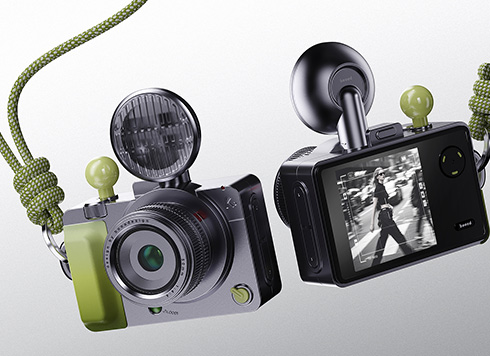 EDC·Trendy Camera Product Design: Form Follows Emotion
EDC Toy Camera: Braun-inspired retro design ...
-
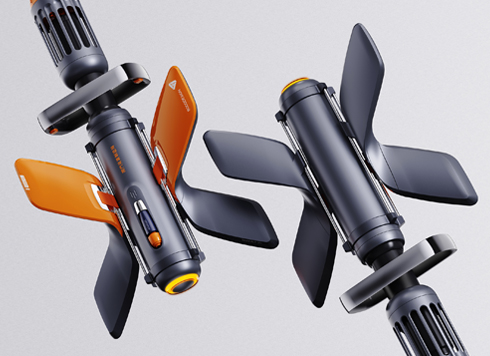 Product Design of Children's "Bubble Rocket" Underwater Thruster
Inspired by "Octonauts + Space", kids' "Bub ...
-
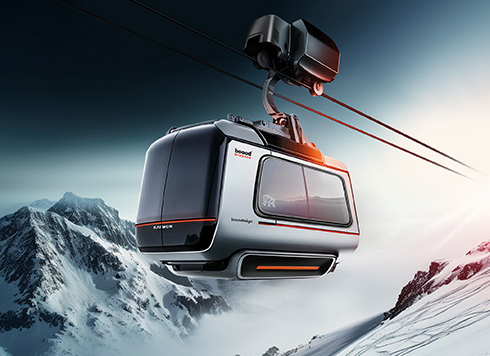 Design of Adaptive Intelligent High-Altitude Shuttle Transport Robot
Smart rural shuttle bot: Streamlined, weath ...
-
Complete Guide to Web 3D Production: Workflow, Tools, and Delivery Standards
Date: Jul 25, 2026 Read: 95
-
UE5 Rendering Full Workflow Guide: Practical Methods from Modeling, Materials to Delivery
Date: Aug 4, 2026 Read: 91
-
Landscape Design 3D Modeling & Rendering Full Guide: Tool Selection & Acceptance Criteria
Date: Jul 26, 2026 Read: 64
-
A Complete Guide to Product Demo Animation Production: Tool Selection and Delivery Standards
Date: Jul 21, 2026 Read: 84
-
WebGL 3D Modeling and Rendering: 2026 Toolchain and Production Workflow Guide
Date: Jul 17, 2026 Read: 104