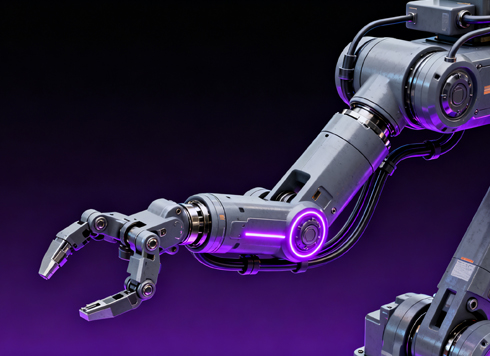
WebGL 3D Modeling and Rendering: 2026 Toolchain and Production Workflow Guide
WebGL is based on OpenGL ES and, by 2026, has been widely used in product showcases, architectural walkthroughs, and more. Core delivery metrics: first-screen load < 3 seconds, frame rate ≥ 30 fps, model size < 10 MB. The common practice is Blender modeling + Three.js rendering, with model lightweighting and material optimization being key.
The Value Boundaries of WebGL
WebGL requires no plugins, works cross-platform out of the box, and is suitable for design reviews and marketing showcases that need frequent updates and sharing. However, rendering quality is constrained by GPU and bandwidth, making it unsuitable for photorealistic cinematic visuals or large-scale real-time scenes. The 2026 industry consensus: WebGL is a lightweight display tool, not a full-production pipeline tool.
Production Workflow Framework: Four-Step Delivery Method
- Modeling Standards: Use Blender or Maya, model to scale, with even topology and face count ≤ 200k. Merge objects with the same material before export, with vertex merge tolerance < 0.01 units.
- Model Lightweighting: Reduce faces to under 50k, compress textures to 1024×1024, and use .glb format. Preserve normal maps to compensate details.
- Material and Lightmap Baking: Set PBR materials and bake lighting into textures; use Three.js’s PMREMGenerator for environment maps. Acceptance criteria: no light leaks, no UV stretching, color deviation < 5%.
- Interaction and Deployment: Write interaction logic with Three.js and deploy via CDN. Test mobile frame rate ≥ 24 fps, draw calls ≤ 200.
Technical Points and Quality Standards
Model Loading Optimization
Using the Draco compression algorithm can reduce .glb file size by over 60%; use LOD techniques to load different levels of detail based on distance. First-screen load ≤ 3 seconds, total model + texture size ≤ 10 MB.
Material and Lighting Realism
Three.js r150+ supports PBR; using .webp textures can reduce volume by 30%. Bake lighting with HDR environment maps to avoid pure black or overexposure.
Interaction Smoothness
Merge meshes, use instanced rendering, limit the number of materials. Drive animations with requestAnimationFrame; in Chrome DevTools, JS execution time should account for < 30%.
Applicable Scenarios and Boundaries
Applicable: Product appearance reviews, architectural scheme presentations, garden walkthroughs, educational courseware. Require quick feedback and multi-device access.
Not Applicable: Cinematic video ads (require offline rendering); complex factories with over 1 million faces (recommend UE5); high-security models (local client); extremely poor network environments.
Option Comparison: Offline Rendering vs Real-Time Engine
- Rendering Cycle: Offline: 10 min to several hours per frame; WebGL: overall development 2-4 weeks.
- Visual Quality: Offline: photorealistic; WebGL: detail loss of 20-30%, but PBR + baking can compensate.
- Interactivity: Offline: static images; WebGL: real-time interaction.
- Cost (2026): Single product WebGL showcase (excluding modeling) approx. 3000-8000 RMB; offline rendering per image 500-2000 RMB; panorama 1500-4000 RMB.
Frequently Asked Questions
How long is the production cycle?
Single product showcase: about 5-10 business days; complex scenes (e.g., architectural walkthroughs): 3-6 weeks.
How to divide modeling and rendering work?
The modeler handles the model and UVs; the frontend engineer implements interactions with Three.js. Both sides need to align on export specifications.
Which is more suitable: renderings or real-time engine?
For static display, choose renderings; for interactivity, choose real-time engine. If budget allows, do both.
What is the final delivery format?
Recommended: .glb (supports PBR, animation), and provide .usdz for iOS. Textures: .webp or .jpg, size ≤ 2048.
How to determine if WebGL is suitable?
If users mainly use mobile, model face count < 500k, no extreme lighting/shadow requirements, WebGL is efficient; otherwise, prefer offline rendering.
Action guide: Before starting a project, confirm model complexity and target devices, and create a 'Lightweighting Specification'. For first attempts, start with a single product small project with a cycle of 2 weeks. Note: For scenes involving extensive real-time physics simulation, consider switching to Unity or UE5.
-
 3D Cartoon Character Design and Modeling by Xiyue Company
Xiyue Company created a unique 3D cartoon r ...
-
 EDC·Trendy Camera Product Design: Form Follows Emotion
EDC Toy Camera: Braun-inspired retro design ...
-
 Product Design of Children's "Bubble Rocket" Underwater Thruster
Inspired by "Octonauts + Space", kids' "Bub ...
-
 Design of Adaptive Intelligent High-Altitude Shuttle Transport Robot
Smart rural shuttle bot: Streamlined, weath ...
-
WebGL for 3D Display: How Much Do Rendered Images and Real-Time Engines Differ? 2026 Delivery Timelines and Rework Points
Date: Aug 23, 2026 Read: 53
-
Mini Program 3D Display: Rendered Images vs Real-Time Engines – What's the Difference, Delivery Time, and Where Does Rework Happen?
Date: Aug 21, 2026 Read: 67
-
Web 3D Product Display: Rendered Images or Real-Time Engine? Delivery Cycles and Rework Points Compared
Date: Aug 19, 2026 Read: 61
-
Web 3D Production Workflow and Rendering Delivery Standards: How to Go from Modeling to Launch?
Date: Aug 6, 2026 Read: 82
-
Complete Guide to 3D Aerial View Rendering: Workflow and Delivery Standards
Date: Jul 28, 2026 Read: 69