


WebGL for 3D Display: How Much Do Rendered Images and Real-Time Engines Differ? 2026 Delivery Timelines and Rework Points
For WebGL-based 3D display, first distinguish between rendered images and real-time engines: rendered images suit fixed-perspective marketing visuals, while real-time engines are for interactive online 3D. Based on 2026 delivery practices, a full delivery cycle typically ranges from 2 to 8 weeks (experience range), with modeling taking roughly half of that time. Rework often occurs when lighting, materials, and polygon counts are not agreed upon in advance. This directly answers "how to choose" and "how long delivery takes."
Why Do WebGL Projects Often Face Rework in the Rendering Phase?
Many teams treat WebGL like ordinary still-image rendering, using high-precision models and offline lighting, only to see frame drops after importing into the engine. Real-time rendering requires polygon counts and texture sizes to be reduced according to a performance budget. From delivery experience, a common mistake is skipping polygon reduction during modeling, which leads to repeated changes later.
The acceptance criterion is: stable 30 fps or higher on the target device (a common mobile requirement), and a package size within a few MB to a dozen or so MB. If not met, it means either the precision is too high or the compression approach is inadequate.
- Common reasons for rework:
- Excessive polygon count causing lag in real-time interaction;
- Mixing baked and real-time lighting, leading to visual inconsistency;
- Uncompressed textures and long loading times;
- No LOD agreement, causing visual glitches when switching between near and far views;
- Inconsistent delivery formats that cannot be parsed during front-end integration.
Based on 2026 delivery practices, if these issues are not clarified at the start, the client will raise them one by one during acceptance. Instead of reworking later, it is better to include the above five points in the contract appendix during the quotation stage.
Rendered Image vs. Real-Time Engine: Choosing Based on Project
The difference is not about which is "better" but about project goals. Rendered images aim for photorealistic stills, while real-time engines aim for smooth interaction.
- Rendered image: Suitable for fixed perspectives, high realism, used for e-commerce hero images or posters; short cycle, typically 1–2 weeks; low cost; but no interaction.
- Real-time engine (WebGL): Suitable for product display, configurators, VR property tours; interactive; typical cycle 2–8 weeks; requires performance optimization; higher cost.
Decision criterion: if the client asks "can I zoom and rotate?", choose WebGL; if it is just "produce an image," do not use a real-time engine. Although WebGPU is available in some browsers in 2026, mobile compatibility remains limited, so typical projects still use WebGL as the main implementation path.
Five-Step Checklist for WebGL Delivery
Why five steps? Because rework often stems from unclear boundaries. Each step must be confirmed before work begins, rather than being patched up during rendering.
- Define interaction boundaries: First ask what operations users need. Note: more interactions mean higher performance overhead, so reserve at least 30% performance headroom.
- Define modeling precision: Set polygon counts based on display distance. Typical experience range: main model from tens of thousands to over a hundred thousand polygons, auxiliary objects within a few thousand.
- Define material and lighting approach: Prioritize shared materials, reduce the number of real-time lights; do not model details that can be simulated with textures.
- Define performance budget: Specify target devices, frame rate, and package size. For mobile, a typical package size is within 10 MB (experience range).
- Define acceptance format: Agree on output formats (glTF/GLB), texture formats (WebP or compressed textures), and deliverable checklist.
What counts as acceptable for each step? Step 1 requires written confirmation; Step 2 has a polygon count statistics table; Step 3 passes visual inspection in the engine; Step 4 tests frame rate on real devices; Step 5 has an acceptance form. A counterexample: if Step 4 was skipped, the phone might overheat after launch, delaying optimization by two weeks beyond expectations.
How to judge rendering quality? Don’t just look at static screenshots. "Good" in a real-time engine means: smooth performance on target devices, timely interaction response, short loading times, and visual consistency with the design mock. If a screenshot looks great but rotating the view reveals glitches, it is not acceptable.
Delivery Field Notes: A Common Rework Lesson
In one project with a limited budget, the client requested "same as the rendered image" but also rotation. We built high-poly models and complex lighting to match the render, but on mobile it dropped to a dozen frames per second. We had to rework: reduce the model to 80,000 polygons, switch to three lights, re-bake textures, and delay delivery by one week. The lesson is: confirm performance limits with the client first, otherwise "looks good" and "runs smoothly" are hard to achieve together. At Xiyue Company, this type of check is a mandatory step in the delivery process.
Applicable Scenarios and Boundaries
WebGL suits scenarios that require real-time interaction, cross-platform display, and constraints on package size, such as product 3D display, online configurators, and WebAR. It is not suitable for static renders or projects demanding cinematic ray tracing.
- Suitable: product display, B2B demos, mini-program/web integration, VR panoramic interaction.
- Not suitable: ultra-high-quality still images, industrial simulation requiring ray tracing, offline rendering output.
If the project only needs a single image, or if the client has no budget for performance tuning, WebGL may not be cost-effective; a traditional render is more reliable. Also note that WebGL is not suitable for every product. For example, automotive exteriors with extremely high realism require accurate light reflections; achieving the same quality in WebGL would require extensive shader development, potentially costing more than offline rendering. In such cases, it is better to produce a rendered image first, then decide whether to build a real-time display.
FAQ
What affects WebGL project quotes?
Mainly interaction complexity, model count, and performance targets. Experience range: simple displays 2–4 weeks, complex configurators 4–8 weeks.
How are modeling and rendering divided?
Modeling handles structure reduction and UV unwrapping; rendering (engine) handles materials, lighting, and export optimization. Both sides need to align polygon and texture budgets in advance.
How to choose between a rendered image and a real-time engine?
If you only need static images, choose a rendered image; if you need rotation, zoom, or scene switching, choose WebGL. If you must have both, finalize the render first, then build a simplified WebGL version.
What formats are delivered for WebGL?
Commonly glTF/GLB formats, along with compressed textures and LOD files; also provide a runnable preview link and project source files.
Action guide: define interaction boundaries and performance budget at project initiation, then arrange modeling and rendering. If the project cycle is less than two weeks (experience range), consider rendered images or reduce interaction depth. When uncertain, go through the five-step checklist to confirm each item—this can reduce most rework.
-
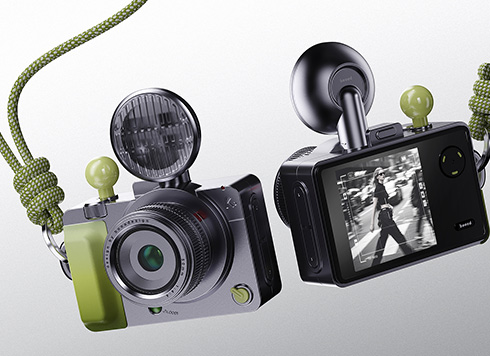 EDC·Trendy Camera Product Design: Form Follows Emotion
EDC Toy Camera: Braun-inspired retro design ...
-
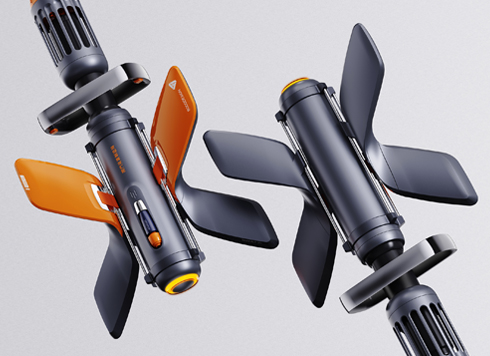 Product Design of Children's "Bubble Rocket" Underwater Thruster
Inspired by "Octonauts + Space", kids' "Bub ...
-
 Design of Adaptive Intelligent High-Altitude Shuttle Transport Robot
Smart rural shuttle bot: Streamlined, weath ...
-
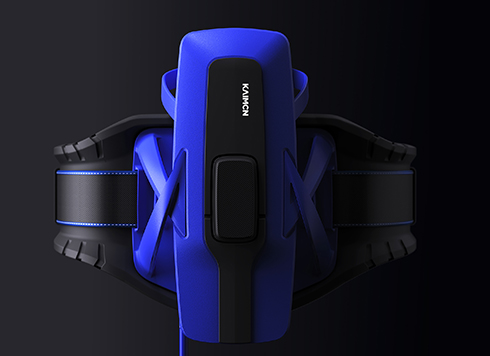 "Effortless" Exoskeleton Wear: Unleash Ultimate Freedom in the Sea
"Unfelt Wearability" & "Bionic Power" redef ...
-
Mini Program 3D Display: Rendered Images vs Real-Time Engines – What's the Difference, Delivery Time, and Where Does Rework Happen?
Date: Aug 21, 2026 Read: 117
-
Web 3D Product Display: Rendered Images or Real-Time Engine? Delivery Cycles and Rework Points Compared
Date: Aug 19, 2026 Read: 124
-
WebGL 3D Modeling and Rendering: 2026 Toolchain and Production Workflow Guide
Date: Jul 17, 2026 Read: 149
-
Android: 3D Web Page Goes White After Lock Screen, Works Again After Restarting Browser—Is the Context Being Reclaimed by the System?
Date: Oct 2, 2026 Read: 56
-
Web 3D display: thinking about a real-time engine but worried about timelines slipping? How many days should modeling and rendering each take?
Date: Sep 1, 2026 Read: 106