


AI Digital Human 3D Modeling: How Long from Modeling to Delivery and Where Do Rework Points Usually Occur?
The delivery cycle for AI digital human 3D modeling is typically in the experience range of 2 to 6 weeks, depending on modeling precision, rigging requirements, and rendering method. Rework most often occurs during the modeling phase, especially in facial expressions, hand proportions, and cloth simulation, rather than in rendering. This means that to avoid project delays, the focus should not be on rendering, but on aligning references, topology, and precision standards right from the start of modeling.
Why does AI digital human 3D modeling always have rework during the modeling phase?
From project delivery experience, the modeling phase determines the subsequent rigging, animation, and rendering results. If the facial topology of the model does not support expression controllers, or the edge flow of the hands is unreasonable, issues such as clipping and deformation will appear after rigging, which are almost impossible to fix in the rendering phase and can only be corrected by redoing the model. In addition, insufficient reference assets are a major source of rework. For example, if the client only provides a front-view photo and the side view is all speculation, when the complete reference images arrive, the model proportions may already need major changes.
In 2026 projects, a common practice is to conduct a one-week model pre-review: have the modeler quickly create a low-poly model to establish proportions and pose, and only after approval proceed with detailing. This step may seem slow, but it actually saves at least one round of rework later.
- Common rework reason 1: References consist of only one front-view photo, lacking side, back, and expression close-ups.
- Common rework reason 2: Expectations for the digital human's precision are not aligned; some clients expect cinematic quality directly, but their budget is only at a typical product display level.
- Common rework reason 3: The model's polygon count is not planned according to the intended use; a polygon count meant for web 3D may cause lag in a real-time engine, and the modeler gets blamed in return.
A real delivery case: We once created an AI digital human for a VTuber company with tight budget and schedule. The client only provided a front-view video and asked us to reconstruct the head modeling from it. As a result, the side proportions deviated from the angles in the video, and the client required adjustments during acceptance, leading to a full model rework and nearly a week of delay. After that, we added the asset requirements of "front, side, back, looking up, looking down" to the project kickoff form, and this type of issue never occurred again.
What is the delivery time difference between offline rendering and real-time engines?
Where the AI digital human 3D model will ultimately be used directly determines the rendering method. Offline rendering (static images) typically uses offline renderers such as V-Ray, Corona, or Octane to generate high-precision images, with materials and lighting adjusted at a leisurely pace, and a single image taking from a few hours to a day. Real-time engines (such as UE5, Unity, Three.js/WebGL) need to consider runtime performance, requiring model decimation, LOD, and baked or optimized lighting, which makes the cycle longer than static rendering.
Based on common practices in 2026, the cycle difference between the two is roughly as follows: For a mid-precision AI digital human, taking only for static display, from modeling to final image is about 2 to 3 weeks. If real-time engine presentation is required (such as web 3D or mini programs), additional optimization and adaptation time is needed, bringing the total to about 3 to 6 weeks. If action interaction is also required, the cycle will be longer.
- Offline rendering: Suitable for posters, promotional videos, and static frames for product display. Short cycle, low cost, but no interaction.
- Real-time engines: Suitable for VR, web 3D, mini programs, and Unity animations. Interactive, but require additional optimization, with higher cycle and cost.
- Selection criterion: If you just need to show the client "what the digital human looks like," use offline rendering. If the client wants to rotate, change clothes, or trigger actions themselves, use a real-time engine.
A key viewpoint: Offline rendering and real-time engines are not better or worse than each other; it only matters whether the use case matches. With limited budgets, a common path for many projects is to first create offline renders to validate the design, then decide whether to move to a real-time engine.
Delivery formats and acceptance criteria: the three-step verification method
Delivery formats are often a point of contention between the client and the producer. In the modeling phase, the model source files, textures, and material files are typically delivered; in the rendering phase, images, videos, or real-time project packages are delivered. To avoid disputes like "I thought it would be this format," you can use a "three-step verification method" to check item by item.
Why three steps? Because from modeling to rendering is a linear chain; if the previous step is not verified clearly, the subsequent step is wasted. First confirm the model itself, then confirm the rendering effect, and finally confirm the delivery format. Each step has a clear acceptance target.
- Step 1: Verify the model and textures. Check whether the polygon count meets the intended use (e.g., for web, within 50,000 polygons is recommended; for cinematic, it can be higher), whether the UVs are properly unwrapped, and whether the texture resolution and format match. Acceptance criteria: The front, side, and expressions all match the references, and the model has no holes or intersecting geometry.
- Step 2: Verify materials and lighting. Confirm that the look of skin, hair, and clothing matches expectations, and that the lighting environment reproduces the reference scene. Acceptance criteria: Render a test frame in a standard environment, and the client can confirm that the colors and materials look right.
- Step 3: Verify animation and output format. If rigging is involved, check whether the facial and body controllers show no jittering or clipping. Output file formats should be agreed upon in advance, with common ones including FBX, GLB, OBJ, etc.; for rendered images, use PNG/JPG; for video, use MP4. Acceptance criteria: The target platform opens without crashing or obvious bugs.
This verification method is often used in Xiyue Company's project deliveries. It helps both parties align on acceptance standards before starting work, and is especially suitable for clients who are doing AI digital human work for the first time.
Which projects are not suitable for AI digital human 3D modeling? Applicable scenarios and boundaries
Not all digital human needs require 3D modeling. If you only need a 2D image, dynamic stickers, or simple voice broadcasting, 2D image generation or live-action shooting is faster. The value of 3D modeling lies in reusability, rotation, outfit changes, and subsequent integration with animation and interaction.
Suitable situations: when a unified digital human image is needed for long-term reuse (such as virtual streamers, customer service agents, or training instructors); when the same image needs to be displayed across multiple platforms (web, mini programs, VR); when motion or facial animation is required.
- Unsuitable case 1: Very limited budget, and only a single avatar or half-body static image is needed; 3D costs far more than 2D.
- Unsuitable case 2: The deadline is only 3 days, but cinematic quality is required, which does not conform to production norms.
- Unsuitable case 3: No plans for future maintenance; the model will be used only once, so the reuse value of 3D modeling cannot be realized.
The boundary should be clear: AI digital human 3D modeling is not "one-click generation." It requires collaboration among modelers, material/lighting artists, and riggers. Although 2026 tools have accelerated the pipeline, the project timeline and quality still depend on human experience and discipline.
FAQ
How much does AI digital human 3D modeling roughly cost?
The cost mainly depends on precision, use case, and whether motion is included. For static offline rendering, the experience range is from several thousand to tens of thousands, while real-time engine with interaction usually doubles that, depending on the labor-hour quote.
Which should I choose: offline rendering or a real-time engine?
If you only need to display a few promotional images, choose offline rendering. If you need an interactive web page or mini program, choose a real-time engine. Decide the purpose first, then the method, not the other way around.
What delivery formats are available?
Common model source files are FBX, OBJ, and GLB; textures use PNG or TGA; rendered images are in JPG/PNG; animation videos use MP4. For real-time engine projects, a runnable project package must be delivered.
Can modeling and rendering be done by different people?
Yes, but problems are likely to occur in between. The modeler and the rendering team need to coordinate on model formats and material specifications. It is recommended that at least the same party handle the model pre-review, otherwise rework responsibility is hard to determine.
Why does my digital human look fake?
Common reasons are incorrect skin materials and lighting, or insufficient model precision. First check whether the textures have detail and whether the lighting uses three-point lighting, then consider upgrading the model.
If you are evaluating an AI digital human project, it is recommended to first clarify: is the final use static display or interactive application? What are the budget and timeline ranges? How many angle views of assets can you provide? These three questions directly determine the modeling precision and rendering method. Including the three verification steps as acceptance milestones in the contract can avoid most rework. If you are unsure about your requirements, you can first create a low-poly sample and spend a week validating it, which is more reliable than directly starting full production.
-
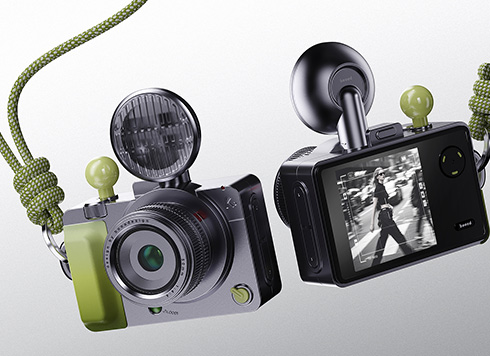 EDC·Trendy Camera Product Design: Form Follows Emotion
EDC Toy Camera: Braun-inspired retro design ...
-
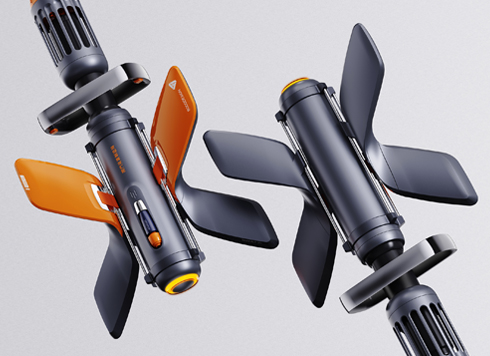 Product Design of Children's "Bubble Rocket" Underwater Thruster
Inspired by "Octonauts + Space", kids' "Bub ...
-
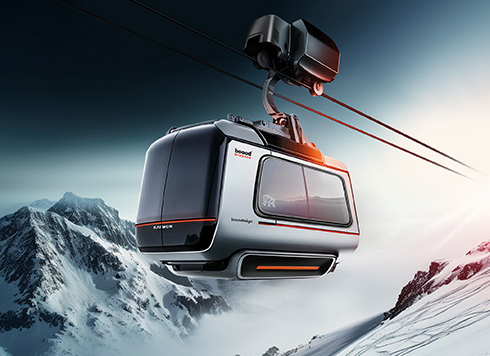 Design of Adaptive Intelligent High-Altitude Shuttle Transport Robot
Smart rural shuttle bot: Streamlined, weath ...
-
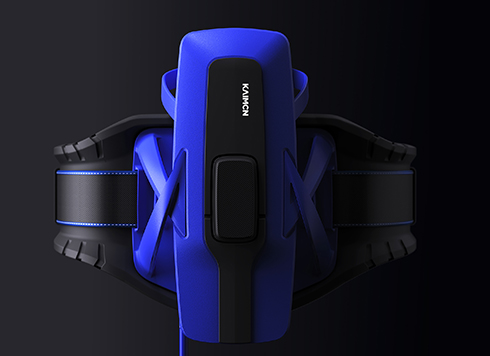 "Effortless" Exoskeleton Wear: Unleash Ultimate Freedom in the Sea
"Unfelt Wearability" & "Bionic Power" redef ...
-
For AI digital human 3D modeling, when the client only provides phone photos and one talking-head clip, if we start with a half-body talking-head tier, will adding livestream shots later cause rework?
Date: Sep 27, 2026 Read: 80
-
Why does AI digital human 3D modeling have a waxy look? Which step is the problem?
Date: Sep 9, 2026 Read: 141
-
How Long Does a 3D Aerial View Rendering Take? Is Rework Usually Caused by Modeling Dimensions?
Date: Aug 29, 2026 Read: 94
-
How to Do AI Digital Human 3D Modeling: A Guide to Workflow, Tools, and Delivery Standards
Date: Aug 7, 2026 Read: 148
-
AI Digital Human 3D Modeling Production Process Guide: From Requirements to Delivery
Date: Jul 22, 2026 Read: 162