


VR Panorama Rendering: How Long and How Much for One Scene? Image Rendering or Real-Time Engine?
In 2026, VR panorama rendering mainly splits into two paths: static panorama images and real-time interactive engines. Based on our team's delivery experience, the typical production cycle for static panoramas is in the range of 3–7 working days, with costs roughly one-third to one-half that of real-time engines. Real-time engines usually take more than 10 working days and suit projects that require free movement and interaction. To choose, ask three questions: Does the user need to move? Do they need to click? Do they need frequent content updates? If all answers are no, choose a static panorama.
When our team works on panorama projects for sales centers, exhibitions, and product displays, we often get the same type of question: Why do renderings look so beautiful but change for the worse inside the panorama? Let’s explain the common causes of rework below.
1. First, distinguish: static panoramas and real-time interactive engines are two different paths
A static panorama is essentially six cube faces stitched into one spherical texture, suitable for single-point viewing around. A real-time interactive engine is a freely movable 3D scene that supports multiple viewpoint jumps and trigger interactions. In 2026, a common practice is to use static panoramas with hotspot jumps for property viewing, which is sufficient; only when demonstrating actions like "walking" or "opening a cabinet door" is a real-time engine worth it.
The criteria are simple: as long as users stay at a fixed point to look around, a static panorama is sufficient; once continuous viewpoint movement or object interaction is needed, it must go to a real-time engine. Otherwise, you may face rework where "the picture is beautiful, but it drops frames and lags during interaction."
- Static panorama: experience range 3–7 working days, low cost, deliverables in JPG/PNG plus web page
- Real-time engine: cycle more than 10 working days, requires model and texture optimization, deliverables in WebGL page or mini-program package
- Common pitfall: forcing static panoramas into "fake interaction" by using video clips to mimic real-time, causing slow loading and poor user experience
2. How rework typically happens at VR panorama rendering delivery
A common pitfall in projects: the client uses a high-precision rendering as a reference and demands "every detail be preserved," so the modeling stage includes chairs, plants, and everything down to millimeter-level details, but then the real-time engine lags when running it. Based on our delivery habits for sales center projects, when encountering such constraints, we first confirm with the client whether the end goal is a "panorama image" or a "walkable scene," and then decide the polygon budget. In one sales center project, the budget and schedule only allowed a static panorama, but the client insisted on real-time roaming. It caused two reworks, extending the cycle from 5 to 12 working days and significantly exceeding the budget. This lesson prompted us to clearly define the "interaction depth" boundary in the contract from then on.
This case shows that rework often stems not from poor rendering technology, but from failing to align early on "what the scene can do" and "what it cannot do". Modeling, lighting, and materials have different acceptance criteria across different paths; setting standards early can help avoid unnecessary detours.
- Common rework cause 1: Copying lighting parameters from the rendering leads to overexposed or underexposed panoramas.
- Common rework cause 2: Overlapping UVs or oversized textures cause black lines at seams.
- Common rework cause 3: Slow loading on mobile, and blurry quality after compression.
- Key point: At each completed stage, export a test version for the client to preview on their phone; confirm it’s fine before moving forward.
3. Based on project delivery habits, a five-step verification method to reduce rework
To avoid discovering the need for rework late in the delivery process, we follow a "five-step verification method" to control milestones: scene organization, modeling and UV, lighting/material tests, rendering or engine packaging, and panorama compositing and compatibility testing. Each step has clear acceptance criteria before moving on.
The division into five steps is based on a fact: rework points in VR panorama rendering usually concentrate on "incomplete information," "incorrect proportions," "misaligned seams," and "slow loading." Each step addresses only one type of problem, so checking individually is far cheaper than reworking everything at the end. What counts as qualified? Static panoramas should load within 3 seconds on mainstream phones; real-time engines should run at no less than 20 fps on low-end devices; all interactive hotspots should jump correctly without dead links.
- Scene organization and asset confirmation: Define the display area, number of viewpoints, and interaction actions; output a project boundary checklist.
- Modeling and UV: Derive the polygon count from the output size. For static panoramas, keep it under one million polygons; for real-time engines, control it to 100,000–300,000 triangles.
- Lighting and material tests: Render or bake a 1:1 sample to check exposure, color temperature, and reflections; don't wait until the entire scene is finished to adjust.
- Rendering or engine packaging: For static panoramas, export six-face images and ensure seamless stitching; for real-time engines, pre-compress for target platforms (WebGL/mini-program).
- Panorama compositing and compatibility testing: Actually open in browsers, WeChat on mobile, mini-programs, etc., and check load time and touch sensitivity.
4. Image rendering vs. real-time engine: differences and how to choose
Image rendering and real-time engines are not the same thing. Image rendering uses offline renderers to output high-quality images and then composites them into a panorama; real-time engines calculate frames in real time, allowing interaction but usually with some visual compromise. In 2026 project delivery habits, the choice depends on "whether anyone needs to walk inside the scene."
If you only need to look around and zoom, a static panorama is low cost and fast to deliver; if you need to simulate walking from the living room to the balcony, opening doors and drawers, only a real-time engine can do it. There is also an intermediate approach: render several static panorama viewpoints with image rendering and connect them via hotspots to form a "pseudo-walkthrough," suitable for projects with limited budgets and simple interaction needs.
Below is a verifiable comparison, all based on typical ranges in our projects:
- Cost: Static panorama production costs typically range from one-third to one-half of real-time engines; prioritize it when budget is limited.
- Cycle: Static panoramas take 3–7 working days; real-time engines usually take more than 10 working days, and complex projects can reach 20 working days.
- Interaction effects: Static can only jump via hotspots; real-time allows free movement and triggering animations.
- Device requirements: Static panoramas can be viewed on any phone; real-time engines demand high compatibility with low-end devices and both iOS/Android, requiring real-device testing.
- Maintainability: Changing one spot in a static panorama requires re-rendering; in a real-time engine, a change takes effect instantly, but model optimization costs are higher.
Selection advice: No brand preference. Only consider "whether users need to stand still and look, or move around." This determines the technical path.
5. Suitable scenarios and boundaries: not every panorama needs a real-time engine
Scenarios suitable for static panoramas: online property viewing, model rooms in sales centers, small booths, and 360-degree displays of standardized products. Scenarios suitable for real-time engines: those that need to simulate operation procedures, show internal product structures, gamified tours, and digital twin projects that require continuously updated content.
Scenarios where it is not applicable or unnecessary: if it's only for flat paper or poster display, just produce renderings; for temporary solutions that only go live for a few days without interaction requirements, there's no need to invest in a real-time engine; if the client doesn't have high-spec devices or an optimization budget, forcing a real-time engine will lead to a worse experience.
Boundary statement: Before starting VR panorama rendering, ask users three questions: Do they need to move? Do they need to click? Do they need to change content frequently? If all three are no, choose a static panorama.
FAQ
How long does a VR panorama rendering project take?
Experience range: static panoramas take 3–7 working days, real-time interactive walkthroughs take 10–20 working days, depending on modeling complexity, number of scenes, and modification cycles.
Which produces more realistic results: image rendering or real-time engine?
Static renderings usually have more refined lighting and reflections, while real-time engines excel in interactivity. If only looking at static screenshots, image rendering is more likely to be considered photorealistic.
What formats are delivered for VR panorama rendering?
Common delivery formats include six-face images (JPG/PNG), spherical panorama images, and versions loadable in web pages/WeChat mini-programs; real-time engines also deliver packaged WebGL projects or mini-program packages.
Why do panorama images have misaligned seams?
In most cases, it's because the UVs of the six cube faces are not aligned or the camera node coordinates are off. Based on experience, locking the camera position before rendering and using the same set of coordinates for all six images can avoid this.
What polygon count should be controlled during modeling?
Static panoramas should stay under one million polygons; real-time engines are recommended to use 100,000–300,000 triangles. High-poly models are only for offline rendering; they must be retopologized and baked before being used in a real-time engine.
Action guide: Break the project into four conditions: planar dimensions, number of viewpoints, interaction actions, and target platforms. Then go through the five-step verification method above. Remember, VR panorama rendering doesn't need to be as complex as possible—it needs to just meet the display goals. If you have needs for panorama delivery or real-time interaction, align with the production team using the standards above to reduce rework costs.
-
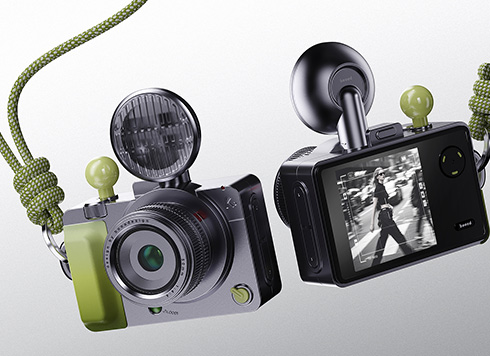 EDC·Trendy Camera Product Design: Form Follows Emotion
EDC Toy Camera: Braun-inspired retro design ...
-
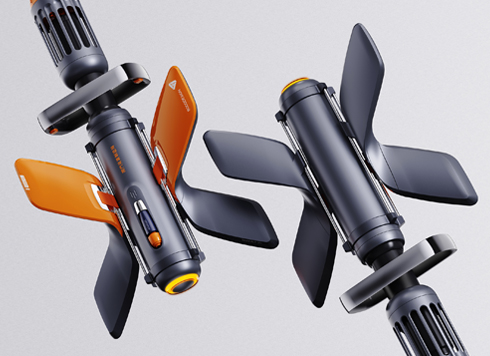 Product Design of Children's "Bubble Rocket" Underwater Thruster
Inspired by "Octonauts + Space", kids' "Bub ...
-
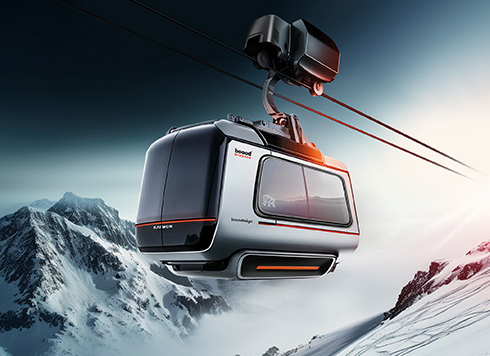 Design of Adaptive Intelligent High-Altitude Shuttle Transport Robot
Smart rural shuttle bot: Streamlined, weath ...
-
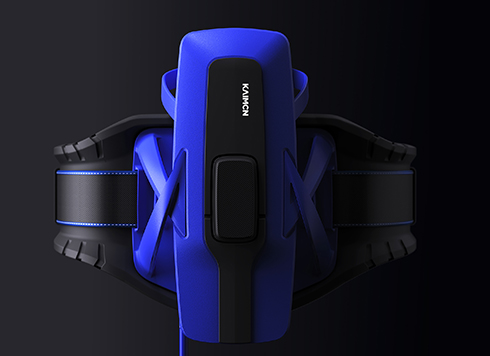 "Effortless" Exoskeleton Wear: Unleash Ultimate Freedom in the Sea
"Unfelt Wearability" & "Bionic Power" redef ...
-
VR panorama rendering: the client stares at the zenith and says it's stretched — is it more reliable to change the projection format or the content layout?
Date: Oct 4, 2026 Read: 41
-
After VR panorama delivery, why does the mobile view drift and why do hotspots misalign—which step usually hides the problem?
Date: Sep 20, 2026 Read: 62
-
Factory Building Landscape Planning 3D Modeling and Rendering: How Long Is Delivery? Where Does Rework Often Get Stuck?
Date: Aug 31, 2026 Read: 108
-
How Long Does a 3D Aerial View Rendering Take? Is Rework Usually Caused by Modeling Dimensions?
Date: Aug 29, 2026 Read: 94
-
Rendering Keeps Getting Revised: Is the Main Issue Modeling or Materials and Lighting?
Date: Aug 28, 2026 Read: 101