




3D Presentation for Product Appearance Design: Renders or Real-Time Rendering? Delivery Time and Where Rework Gets Stuck
For 3D presentation of product appearance design, render visualization and real-time engines have distinct roles: renders produce static frames, ideal for publishing, printing, and appearance reviews; real-time engines produce interactive visuals, ideal for online display and iterative design. Based on 2026 project delivery practices, typical cycles range from 3 days to 3 weeks, with rework concentrated on modeling accuracy, materials, and delivery formats. Clarifying these three points can prevent most failures in advance.
Render Visualization vs. Real-Time Engines: More Than Just Visuals
Many clients debate whether to use render visualization or a real-time engine, but the two serve different purposes. Render visualization pursues detail in lighting and materials—a single image can be refined for hours; real-time engines prioritize interactivity and instant feedback, requiring trade-offs between performance and visual fidelity.
- Output time: For a single render, typical range is 0.5-2 days per image; for real-time engine scene setup, typical range is 3-10 days (excluding modeling)
- Change cost: Changing angles or lighting in renders may require re-rendering, with each rework taking 2 hours to 1 day; real-time engines allow real-time material and lighting changes, reducing rework costs
- Deliverables: Renders deliver JPG/TIFF, sometimes with PSD layers; real-time engines deliver interactive web pages, mini-programs, or installation packages, requiring front-end integration
- Use cases: Renders suit e-commerce detail pages, product manuals, and appearance review meetings; real-time engines suit website 3D displays, exhibition screens, and virtual showrooms
The criterion is simple: if only a few static images are needed, a real-time engine is overkill; if online interactivity is required, static renders alone are insufficient. A common 2026 approach is to combine both: first produce renders to finalize appearance, then use the same model for a real-time engine.
Variables Affecting Delivery Time and Pricing
Pricing and timelines for product appearance design 3D projects typically depend on four factors: model precision, number of materials, render resolution, and number of revisions. Experience range: low-precision product models (e.g., daily items) take 1-3 days; medium-to-high precision (e.g., home appliances) take 3-7 days; ultra-high precision (e.g., car interiors) take 1-2 weeks. Each render adds 0.5-2 days.
- Model source: With CAD/STEP files for reference, timelines can be halved; with only photos and dimensions, add 1-2 days for measurement
- Number of materials: Compared to a single material, multiple mixed materials (metal + plastic + soft touch) can make render time 3-5 times longer
- Revision count: Common contracts include 2-3 revisions, with additional revisions charged at 10-20% each; clarify this in advance
To assess whether a quote is reasonable, use the typical breakdown of "modeling accounting for 60-70% and rendering for 30-40%". If a quote deviates significantly, it may indicate hidden requirements or additional services.
Why Is the Modeling Phase the Biggest Source of Rework?
In projects, most rework—seven out of ten times—is stuck in modeling. The reason is usually not lazy modelers, but misaligned acceptance criteria for "product appearance design." The difference between what a client imagines as "this surface should be rounder" and a 0.1mm fillet in the model is amplified in the final render.
Before delivery, check three things: Is the model built to real product dimensions? Are parting lines, screw holes, and silk-screen positions included? Are materials assigned according to actual processes (matte, glossy, brushed)? If these are not confirmed, no matter how beautiful the render, it will fail when zoomed in. Based on enterprise project delivery habits, we first produce a low-poly white model for the client to confirm proportions, then proceed to the high-poly model—this reduces rework rates by about half.
In projects, it's common for clients to provide appearance images without CAD or real dimensions. In such cases, we rely on calipers to measure samples or estimate from reference images. It is essential to state in the contract: "Modeling from reference images, a dimensional deviation of ±2mm is considered acceptable." Otherwise, even a 1mm deviation can cause disputes. Under such constraints, we spend an extra half-day in early measurement to avoid later remodel and re-render, which typically costs an additional two days.
Three-Step Verification: How to Accept Modeling Through Rendering
Break the delivery of product appearance design into three checkpoints, each with clear pass criteria, suitable for joint acceptance by producers and clients.
- Modeling accuracy check: Use orthographic views or wireframe mode to inspect contours and proportions, and key dimensions. Pass: When placed alongside reference images or samples, visual proportions match, and details like parting lines are not missing.
- Material and lighting check: Render one white model and one gray model under standard environmental lighting to confirm material textures resemble actual processes, then set up lighting. Pass: Matte surfaces are not glaring, glossy surfaces have no dead black highlights, and brushed textures show direction.
- Delivery format check: Output according to final use. For renders, confirm resolution, color space (sRGB), and layered PSDs; for real-time engines, confirm the optimized model's triangle count (experience range: 50,000-200,000 triangles) can run at 60 fps.
Why this division? Because modeling errors have significant impact and high correction cost; material and lighting can be remedied through render parameters, but a wrong model must be redone; format issues directly affect whether the client can seamlessly take over. Passing each checkpoint significantly reduces rework rates.
Applicable Scenarios and Boundaries
Render visualization suits appearance reviews, launch promotions, and exhibition posters; real-time engines suit interactive scenarios where users rotate, change colors, or view assembly demonstrations. If only a static image is needed, a real-time engine is unnecessary; if the product appearance will change frequently, a real-time engine saves repeated render waits.
Not suitable: When model precision is extremely high (e.g., for CNC machining), real-time engines lack sufficient precision—use CAD software instead of 3D modeling; for static single images with tight budgets and timelines, a real-time engine is not worth it. In 2026, real-time engines are widespread, but they remain a high-investment option.
We (Xiyue Company) often use real-time engines for bird's-eye walkthroughs when delivering large scenes like hotels and campuses. However, for product appearance design, I prefer to first use renders to finalize appearance, then decide whether to expand into interaction. Because during the appearance review stage, static images offer strong detail expression and efficient communication.
FAQs
How long does a 3D render for product appearance design take? How is cost estimated?
Simple products (e.g., phone cases, cups) typically take 2-3 days; medium complexity (e.g., small appliances) takes 5-8 days; large appearance (e.g., automotive parts) takes 2-3 weeks. Cost mainly depends on model precision, number of materials, and revisions. Typical range per image is from a few hundred to several thousand yuan.
Are modeling and rendering billed separately? How are they typically divided?
Usually modeling and rendering are billed separately, with modeling about 60-70% and rendering 30-40%. However, a packaged quote is also possible. The key is to clarify the number of revisions and delivery formats in advance to avoid later surcharges.
For display on a website or mini-program, should I use renders or a real-time engine?
If interaction is needed, choose a real-time engine; for static display, use renders. A real-time engine typically takes 2-3 times longer to produce than renders, but supports rotation, zoom, and material changes, making it suitable for online product display.
What are the typical delivery format requirements?
For renders, common deliverables are JPG/TIFF with resolution based on use (300dpi for posters, 72dpi for web), plus PSD source files. For real-time engines, deliver HTML/WebGL packages or mini-program code, along with raw models (e.g., FBX/OBJ).
Why does rework keep happening in the modeling phase? How to avoid it?
The main cause is misaligned early-stage proportions and details. A common solution is to first produce a white model for confirmation, then refine to a high-poly model. Both producers and clients should verify key dimensions—not just look at render images.
Before acting, clarify the purpose: for static reviews, go directly with renders; for interactive display, add a real-time engine. When communicating with producers, provide reference images, dimensions, and material/process descriptions in advance to shorten timelines. If you're troubled by rework, start from the first step of the "Three-Step Verification" method to pinpoint the issue.
-
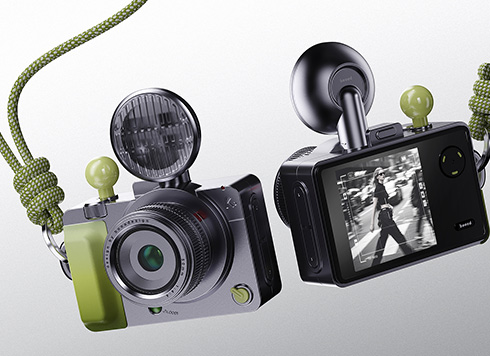 EDC·Trendy Camera Product Design: Form Follows Emotion
EDC Toy Camera: Braun-inspired retro design ...
-
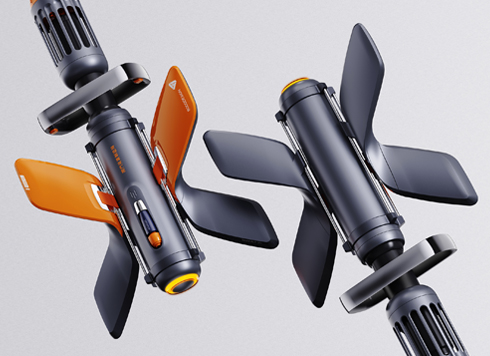 Product Design of Children's "Bubble Rocket" Underwater Thruster
Inspired by "Octonauts + Space", kids' "Bub ...
-
 Design of Adaptive Intelligent High-Altitude Shuttle Transport Robot
Smart rural shuttle bot: Streamlined, weath ...
-
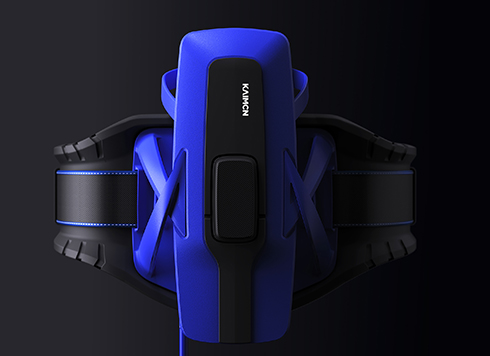 "Effortless" Exoskeleton Wear: Unleash Ultimate Freedom in the Sea
"Unfelt Wearability" & "Bionic Power" redef ...
-
Product Appearance Design Looks Fine, So Why Does Engineering Say It Can't Be Molded?
Date: Sep 11, 2026 Read: 99
-
How Many Days Does a 3D Landscape Design Project Take for Modeling and Rendering? Static Renders or Real-Time Engines – Which Is More Convenient?
Date: Aug 27, 2026 Read: 79
-
How long does rendering production take, and why do quotes differ? Which stage—modeling or rendering—determines rework?
Date: Aug 26, 2026 Read: 88
-
Product Appearance Design: Modeling Workflow, Rendering Options, and Delivery Standards
Date: Aug 9, 2026 Read: 96
-
Comprehensive Guide to Product Appearance Design: 3D Modeling and Rendering Workflow
Date: Jul 24, 2026 Read: 117