


Product Appearance Design: Modeling Workflow, Rendering Options, and Delivery Standards
Product appearance design is the process of turning concepts into visual solutions. In 2026, common practice involves using subdivision surface or parametric modeling tools to create the form, then outputting renderings or interactive models via offline renderers or real-time engines. Key delivery metrics include: editable models, textures without stretching, lighting and shadows that follow physical rules, and output resolution that meets usage scenarios. Applicable scenarios include industrial design review, e-commerce product pages, product crowdfunding showcases, and design patent submissions.
Core Workflow of Product Appearance Design
A complete product appearance design workflow typically consists of five stages: requirements analysis, sketching and references, 3D modeling, materials and rendering, and delivery and validation. Based on 2026 project delivery practices, modeling accounts for about 40% of the total cycle, while rendering and post-processing account for 30%, with the remainder spent on communication and revisions.
- Requirements Analysis: Clarify product type, usage environment, target cost, and manufacturing constraints to avoid misdirected modeling.
- Sketching and References: Gather design language from similar categories, sketch 2-3 directions, and define proportions and surface flow.
- 3D Modeling: Choose a modeling method — subdivision surface for organic forms, parametric modeling for hard surfaces and assembly constraints.
- Materials and Rendering: Adjust roughness, metalness, and refractive index according to physical material properties, and set environmental lighting.
- Delivery and Validation: Export multiple file formats, check dimensions, chamfers, and parting lines, and print prototypes for verification when necessary.
Each step has different acceptance criteria: the modeling stage requires continuous surfaces and reasonable control points; the rendering stage requires clean lighting without abnormal noise; and the delivery stage requires standardized file naming. Skipping sketches and going directly to modeling typically significantly increases the chance of rework.
How to Choose a Modeling Method: Subdivision Surface vs. Parametric Modeling
Product appearance design modeling is not about choosing the most expensive tool, but matching shape complexity and downstream use. Subdivision surface modeling suits free-form surfaces like mice, headphones, and automotive exteriors; parametric modeling suits phone frames, mechanical housings, and parts with assembly relationships.
- Subdivision Surface: Use Blender, Maya, or ZBrush to sculpt smooth organic forms, then convert to subdivision surfaces or NURBS for easy adjustments.
- Parametric Modeling: Use SolidWorks, Rhino + Grasshopper, or Fusion 360, driven by dimensions and constraints, making it easy to modify parameters and coordinate structures.
- Hybrid Workflow: Start with a parametric framework, then import into subdivision tools for surface refinement — balancing efficiency and precision. This is a common approach for product appearance design in 2026.
Criteria for adopting a hybrid workflow: if exterior surfaces dominate and structural coordination is needed, use a parametric main body + subdivision details; if it is purely for visual presentation without internal structure, subdivision surface alone is sufficient.
Rendering vs. Real-Time Engines: Comparison and Selection
Product appearance design final presentation typically falls into offline rendering or real-time rendering. Offline renderers such as KeyShot, V-Ray, and Corona aim for photorealistic results; real-time engines such as UE5 and WebGL/Three.js aim for interactivity and fast multi-angle display.
- Renderings (Offline): High quality with controllable lighting and material detail, but each image takes minutes to hours. Suitable for static posters, launch materials, and e-commerce hero images.
- Real-Time Engines (UE5/WebGL): Allow rotating viewpoints and real-time switching of colors and materials, but lighting and physical accuracy are generally slightly lower, and model polygon count and textures need optimization. Suitable for web 3D display, mini-program 3D, VR panoramic interaction, and online configurators.
Selection criteria: if only 1-2 high-end display images are needed, choose offline rendering; if users need to rotate and switch colors themselves, choose a real-time engine. In 2026 project deliveries, the two methods are often combined: offline rendering for hero visuals and real-time engines for interactive display.
Acceptance Criteria for Product Appearance Design
Acceptance cannot rely solely on "looks good"; it must be checked against clear metrics. Per industry practice, product appearance design deliverables should meet the following basic requirements:
- Model Accuracy: The shape deviation from approved sketches/references is within reasonable tolerance, with key dimensions allowing assembly clearance.
- Correct Materials: Material properties such as metal, plastic, and rubber match expectations; roughness, reflection, and transparency are physically plausible.
- Render Resolution: E-commerce hero images at least 1920px wide; print materials need 300dpi; web display can be compressed to 1024px.
- File Formats: Provide native source files and universal formats such as STEP, STP, OBJ, FBX, or glTF for downstream structure or animation work.
Common causes of rework include inconsistent chamfers, unreasonable parting line locations, wrong material parameters, and overexposed or color-shifted scene lighting. To avoid rework, fix units and scale during modeling, and calibrate surface flow against reference images before rendering.
FAQs
How long does product appearance design usually take?
Simple exteriors (such as small appliance housings) take about 5-10 business days; complex surfaces (such as automotive interior parts) may take 20-30 business days, depending on revision rounds and modeling precision.
What factors affect the quotation for renderings?
It is mainly affected by model complexity, number of renderings, material complexity, revision count, and delivery time. Prices typically range from a few hundred to several thousand yuan; project-based quotes are more reasonable.
Are modeling and rendering done by the same person?
Small projects are usually done by one person for both modeling and rendering, but large projects split into modelers and renderers — the former focuses on surface quality, the latter on lighting and materials.
What software is good for rendering?
KeyShot or V-Ray are commonly used for static images; UE5 or Three.js for interactive display. Choose based on output purpose, not software popularity.
What formats should be provided upon delivery?
It is recommended to provide native source files, universal exchange formats (STEP/OBJ/FBX), and final renderings for downstream structural design or development.
Applicable Scenarios and Boundaries
Product appearance design via 3D modeling and rendering is suitable for phases requiring visual review, e-commerce and marketing asset production, design patent submission, and crowdfunding or launch event previews. In 2026, with the popularity of Web3D and real-time rendering, online configurators and VR product viewing are also becoming standard deliverables.
Cases where it is unsuitable or unnecessary: if only simple 2D line drawings are needed to confirm a concept, 3D modeling is not required; if the product structure is extremely complex and requires simulation of mechanical performance, it should be handled by CAE analysis rather than ordinary appearance design; if budget and timeline are extremely tight, you can assemble existing model libraries, but quality and modification flexibility will be significantly limited.
Action guide: first determine the delivery purpose (static/interactive), then choose the modeling method and rendering path; keep revisions within 2-3 rounds during production, and check against a standard acceptance checklist. For teams needing full-process delivery, Xiyue Company has mature experience in product appearance design modeling and multi-platform rendering delivery, and can evaluate solutions based on specific projects.
-
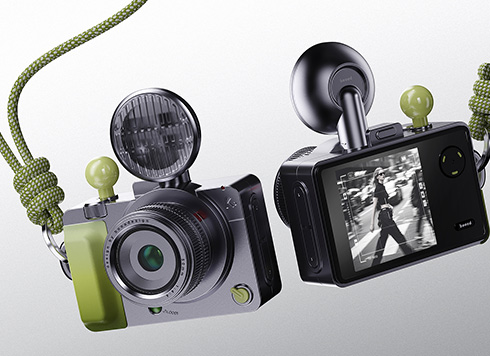 EDC·Trendy Camera Product Design: Form Follows Emotion
EDC Toy Camera: Braun-inspired retro design ...
-
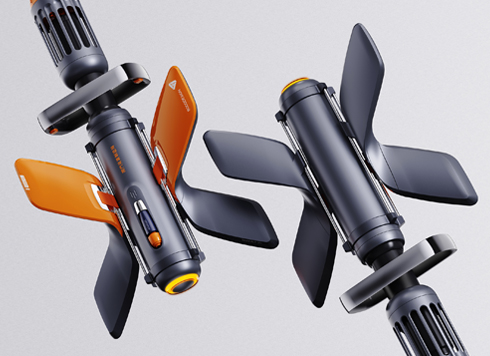 Product Design of Children's "Bubble Rocket" Underwater Thruster
Inspired by "Octonauts + Space", kids' "Bub ...
-
 Design of Adaptive Intelligent High-Altitude Shuttle Transport Robot
Smart rural shuttle bot: Streamlined, weath ...
-
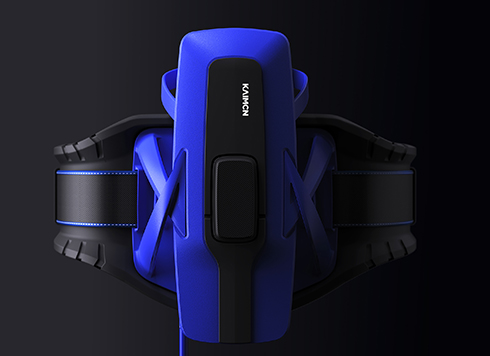 "Effortless" Exoskeleton Wear: Unleash Ultimate Freedom in the Sea
"Unfelt Wearability" & "Bionic Power" redef ...
-
How to Do 3D Modeling and Rendering for Landscape Design? 2026 Complete Workflow and Delivery Standards Guide
Date: Aug 11, 2026 Read: 99
-
AI Digital Human 3D Modeling Production Process Guide: From Requirements to Delivery
Date: Jul 22, 2026 Read: 162
-
Product Appearance Design Looks Fine, So Why Does Engineering Say It Can't Be Molded?
Date: Sep 11, 2026 Read: 99
-
3D Presentation for Product Appearance Design: Renders or Real-Time Rendering? Delivery Time and Where Rework Gets Stuck
Date: Aug 25, 2026 Read: 105
-
WebGL Rendering Workflow and Delivery Standards: A Guide from Modeling to Web-based 3D Deployment
Date: Aug 10, 2026 Read: 127