


WebGL Rendering Workflow and Delivery Standards: A Guide from Modeling to Web-based 3D Deployment
WebGL is a technical standard for running 3D rendering in the browser, suitable for interactive web scenarios such as product display, park planning, and digital humans. In 2026, the common production path is to complete modeling and sculpting in Blender, then export WebGL assets via Three.js or UE5. Key delivery metrics include keeping the triangle count under 100,000, total texture size below 4 MB, and first-screen load time within 3 seconds. This article provides a complete workflow and acceptance criteria from modeling to rendering.
Why WebGL Is Suitable for 3D Rendering Delivery
The advantage of WebGL is that it requires no plug-in or client installation. Users can interactively browse by simply opening a link, which is practical for proposal presentations and remote communication. Unlike static renderings, which only show fixed angles, or local rendering engines, which rely on high-performance computers, WebGL runs directly in the browser.
However, WebGL is not suitable for all rendering needs. Its rendering capability is limited by the browser and hardware, making it difficult to achieve film-quality global illumination and caustics. Therefore, when a project requires photorealistic visuals and no interaction, traditional render output remains a more reliable choice.
- Interactivity: Rotate, zoom, and switch floors to improve communication efficiency.
- Cross-platform: Accessible on mobile, tablet, and computer without installation.
- Limitations: Not recommended for high-precision physics simulation or extremely large-scale scenes.
Five-Step WebGL Production Workflow: From Modeling to Launch
According to 2026 project delivery practices, a moderately complex WebGL scene (such as a factory or campus) typically takes 2–4 weeks to produce. Here is a reusable five-step workflow with clear acceptance criteria for each step.
- Scene Planning and LOD Strategy: Determine display areas and interaction hotspots, and plan model hierarchy. Note: Define viewing distance and navigation path first to avoid repeated adjustments later.
- Modeling and Polygon Reduction: Complete the main modeling in Blender or 3ds Max, and reduce polygons for non-critical parts. Acceptance criteria: total triangle count not exceeding 100,000, and per-object triangle count below 20,000.
- UV Unwrapping and Texture Baking: Bake lighting information into textures to reduce real-time computation. Note: A baking resolution of 2048×2048 is recommended; higher values increase loading burden.
- Material and Lighting Adaptation: Use PBR materials and convert properties like metalness and roughness into WebGL-readable formats. Common pitfall: directly using offline renderer materials that WebGL cannot recognize.
- Export and Performance Optimization: Export to glTF or GLB format, use Draco compression, and merge textures into multi-channel maps. Acceptance criteria: model loading time under 3 seconds, frame rate stable above 30 fps.
Among these five steps, rework is often caused by insufficient polygon reduction in step 2 and export format errors in step 5. It is recommended to regularly check the polygon budget during modeling.
Mainstream Toolchains and Selection Comparison
In 2026, two technical routes are commonly used for WebGL projects: Blender + Three.js and 3ds Max + UE5. These two routes differ in modeling tools, engines, and applicable scenarios. The choice should consider team skills and project complexity.
- Blender + Three.js: Open-source and free, covering the entire workflow of modeling, sculpting, and materials. Three.js is lightweight and flexible, suitable for web and mobile projects requiring custom interactions. Typical use cases: product display, single building models, and mini-app 3D.
- 3ds Max + UE5: 3ds Max is widely used in architecture and industrial design, and UE5 offers excellent real-time rendering, but the WebGL package size is larger. Typical use cases: large campuses and complex scenes requiring high-quality lighting and shadows.
Comparison dimensions: Cost: Blender is free, 3ds Max requires a subscription. Development cycle: The Three.js path has a shorter development cycle, while the UE5 path requires more optimization time. Visual quality: UE5 has more realistic lighting, but is heavily affected by browser performance. Applicability boundary: If the project is mainly for display and requires rapid iteration, prefer Blender + Three.js; if high visual quality is required and user devices have good performance, UE5 is an option.
Delivery Standards and Acceptance Metrics
WebGL project delivery should not only check whether it opens. According to industry practice, acceptance should include three parts: loading performance, interaction smoothness, and visual fidelity.
- Loading performance: First-screen load time (no more than 5 seconds on 3G, 3 seconds on 4G/5G). Check the network panel; the glTF file size should be less than 5 MB.
- Interaction smoothness: Frame rate should not drop below 30 fps when rotating and zooming. Use Chrome's rendering panel to verify.
- Visual fidelity: Compare with the design renderings; color and lighting differences should be within acceptable limits. Some deviation is allowed, but material quality must not be lost.
Rework is mostly caused by slow loading due to uncompressed textures or stuttering due to excessive polygon count. It is recommended to run a performance test after each module is completed during development.
Applicable Scenarios and Boundaries
WebGL is suitable for scenarios where 3D content needs to be displayed in a web page or mini-program, and users cannot or are unwilling to install a client; where interaction with business logic is required (e.g., clicking to view product parameters); and where cross-team sharing of proposals is needed. Specific examples include: online preview after 3D modeling of digital humans, remote presentation of landscape design proposals, and walkthrough displays of factory buildings.
Unsuitable scenarios: full-scene dynamic simulation (e.g., fluid animation); extremely high-precision rendering (e.g., film-level VFX); and static renderings that are better served by offline rendering. Additionally, WebGL should be used with caution if users mainly access from low-end mobile devices.
FAQ
What are the factors affecting WebGL rendering production cycle and pricing?
The cycle is typically 2–4 weeks. Pricing depends on scene complexity, interactive features, and texture requirements. Advanced projects typically range from several thousand to tens of thousands of yuan.
How are modeling and rendering divided?
Modeling handles geometry and UVs, while rendering handles materials, lighting, and the final image. In WebGL, rendering requires real-time computation, so performance optimization must be considered during modeling.
How to choose between WebGL and traditional rendering?
Traditional renderings are suitable for static display with high image quality but no interaction; WebGL suits interactive scenarios with rotation and viewing. If the project requires customers to browse on their own, choose WebGL.
What file formats are delivered for WebGL?
Typically, model files in glTF or GLB format are delivered, along with texture maps, interaction configuration files, and usage instructions. Source code and engine projects should also be provided.
If you need to launch a moderately complex WebGL display project within one month, follow the five-step workflow above. Step one: define the scene scope and interaction list. Step two: strictly control the polygon count during modeling. Step three: place optimization early. If the project leans toward photorealistic static images without interaction, stick to the traditional rendering path. Xiyue Company often adopts this workflow in similar projects involving campus navigation and product display to control cost and schedule.
-
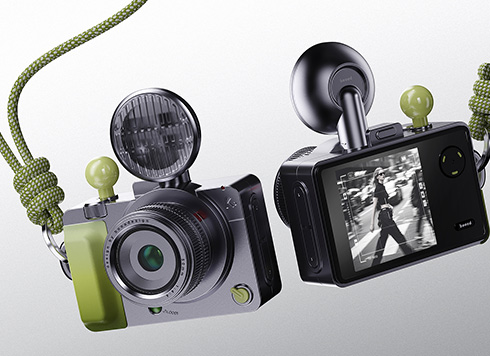 EDC·Trendy Camera Product Design: Form Follows Emotion
EDC Toy Camera: Braun-inspired retro design ...
-
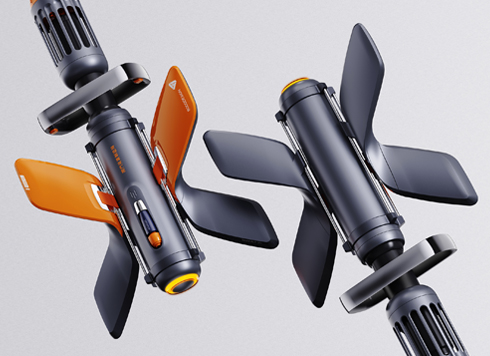 Product Design of Children's "Bubble Rocket" Underwater Thruster
Inspired by "Octonauts + Space", kids' "Bub ...
-
 Design of Adaptive Intelligent High-Altitude Shuttle Transport Robot
Smart rural shuttle bot: Streamlined, weath ...
-
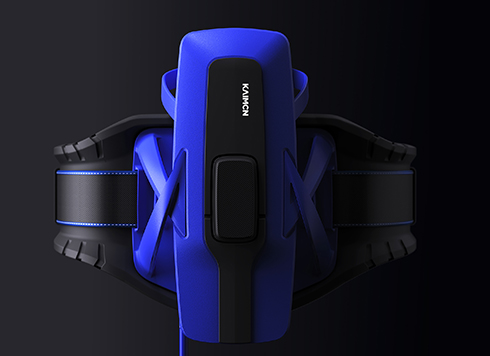 "Effortless" Exoskeleton Wear: Unleash Ultimate Freedom in the Sea
"Unfelt Wearability" & "Bionic Power" redef ...
-
Web 3D Production Workflow and Rendering Delivery Standards: How to Go from Modeling to Launch?
Date: Aug 6, 2026 Read: 135
-
Android: 3D Web Page Goes White After Lock Screen, Works Again After Restarting Browser—Is the Context Being Reclaimed by the System?
Date: Oct 2, 2026 Read: 56
-
Web 3D display: thinking about a real-time engine but worried about timelines slipping? How many days should modeling and rendering each take?
Date: Sep 1, 2026 Read: 106
-
Rendering Keeps Getting Revised: Is the Main Issue Modeling or Materials and Lighting?
Date: Aug 28, 2026 Read: 101
-
WebGL for 3D Display: How Much Do Rendered Images and Real-Time Engines Differ? 2026 Delivery Timelines and Rework Points
Date: Aug 23, 2026 Read: 94