




Web 3D Production Workflow and Rendering Delivery Standards: How to Go from Modeling to Launch?
Web 3D refers to three-dimensional content that runs in the browser. It is essentially real-time rendering of models using WebGL or WebGPU, with no plugin installation required. By 2026, it will be used in scenarios such as product display, digital twins, online house viewing, and education/training. If you want to display models on a webpage or create lightweight interactive experiences, Web 3D is a more suitable technical path than static renderings. What it delivers is not a still image, but a real-time scene that can be rotated, zoomed, and interacted with. Core metrics are frame rate, loading size, and interaction smoothness. The mainstream tool pipeline is: 3D modeling software (such as Blender, 3ds Max, C4D) handles modeling and UV mapping, then reduces resource overhead through mesh decimation and texture baking, and finally exports to glTF/glb format, which is rendered and made interactive in engines like Three.js or Babylon.js.
Applicable Scenarios and Boundaries
Web 3D delivers exceptional value in the following scenarios: product display (e.g., automobiles, home appliances, furniture), digital twins (industrial equipment monitoring, building management), marketing interaction (online product launches, glasses-free 3D H5), and e-commerce product inspection. It is particularly suited for scenarios that require user operation, because interaction itself can increase dwell time and conversion rates.
- Suitable for: displays that require interaction, such as rotation, disassembly, and color changes.
- Suitable for: scenarios where users need to control the viewpoint, such as viewing houses or cars.
- Suitable for: lightweight applications embedded in H5, mini-programs, or official websites.
However, Web 3D is not suitable for all cases. If your goal is simply to output a high-precision rendering for print or reporting, traditional renderers (such as V-Ray, Corona) offer better control over lighting and material details. It is also not recommended to use Web 3D for extremely large scenes or physics simulations, as performance bottlenecks become obvious. In addition, if the target platform is low-end phones or older browsers, WebGL compatibility can limit the effects, so evaluation should be done in advance. The visual quality of Web 3D depends on the balance between model polygon count and rendering performance, rather than pursuing high precision unilaterally.
Web 3D Production Workflow: A Five-Step Implementation Method
For Web 3D projects, we have summarized a 'Five-Step Implementation Method' that breaks the process from requirements to launch into clear stages, each with verifiable deliverables. This workflow helps teams control budget and timeline while avoiding unproductive rework in modeling or rendering.
- Step 1: Define requirements and scenarios. Clarify user operation flow, determine viewpoints and interaction points. Note: writing requirements as 'clickable areas' rather than 'I want 3D' can avoid later adjustments.
- Step 2: Modeling and UV unwrapping. Build low-poly models with Blender or 3ds Max. It is recommended to control the triangle count between 10,000 and 50,000 (adjust according to target devices). UVs must be unwrapped, and normal and AO maps must be baked to reduce the number of real-time lights.
- Step 3: Asset export. Export in glTF/glb format and check material and node settings. Note: avoid exporting the model as multiple node trees, as it increases engine overhead.
- Step 4: Real-time rendering development. Load the scene in Three.js or Babylon.js, add lights and post-processing. Use Draco compression for meshes, and compress textures with WebP or Basis to control download size.
- Step 5: Performance testing and delivery. Test frame rate and memory usage in Chrome, Safari, and WeChat's built-in browser, and deliver after meeting acceptance criteria.
The reason this workflow is divided this way is to separate 'modeling' and 'rendering' so as to avoid over-pursuing high-poly models while ignoring rendering performance. Each step has an acceptance threshold, such as checking polygon count and material count before export, and trying to keep the asset package within 2MB (depending on project complexity).
Web 3D Rendering vs. Static Rendering: Key Comparison
Many people confuse Web 3D with static renderings. In fact, the output format and production logic are completely different. Rendering a still image is essentially 'simulating a camera,' aiming for extreme quality in a single frame; Web 3D is 'real-time computation,' aiming for stable frame rates during user interaction.
- Output format: Static rendering outputs still images or videos; Web 3D outputs interactive real-time scenes.
- Production cycle: A simple rendering takes 1-2 days; a medium-complexity Web 3D prototype takes about 5-10 days.
- Performance requirements: Static rendering can compute indefinitely; Web 3D is limited by device and network.
- Applicable context: Static rendering suits design reviews, bidding, and printing; Web 3D suits online display, product pages, and digital twins.
If you need photorealistic realism and no user operation, choose static rendering; if users need to rotate, zoom, or change colors on the webpage, choose Web 3D. A common practice in 2026 is the 'rendering + Web 3D' combination: first use a rendering for visual confirmation, then use Web 3D for an interactive version. The value of a rendering lies in accurately presenting the design, while the value of Web 3D lies in providing a participatory experience.
Delivery Standards and Acceptance Metrics: How to Judge a Good Result?
A qualified Web 3D deliverable should meet both visual and performance metrics. Based on 2026 delivery practices, we recommend the following checklist for acceptance:
- Frame rate: At least 30 fps in mainstream desktop browsers, and at least 20 fps on mobile.
- Loading size: The initial asset package (compressed) should be within 1-3MB, and may be relaxed to 5MB for complex scenes.
- Interaction response: Feedback time after a click should not exceed 100ms.
- Compatibility: Should cover at least Chrome, Safari, Edge, and WeChat's built-in browser.
To judge whether it is done well, you should not only look at the visual appeal of the rendering, but also operate it on-site 'spin it around' to see if there is obvious stuttering or flickering. The pass line is that all core interactions have no visible frame drops on target devices. If loading time and frame rate metrics are not met, even a good-looking result can only be considered a prototype, not a deliverable.
Common Reasons for Rework and How to Avoid Them
According to project retrospectives, Web 3D rework mostly stems from unclear requirements or wrong technology selection, rather than pure modeling or rendering proficiency issues. There are four common reasons:
- Requirements only state 'want 3D display' without clearly defining the operation flow, leading to repeated adjustments.
- High-poly models are used during modeling without polygon reduction or baking, resulting in insufficient frame rate.
- Target browsers and devices are not considered, causing conflicts between touch events and mouse events.
- Export format is non-standard, resulting in material loss or incorrect model scale.
Avoidance methods include: using wireframes to describe interactions during the requirements phase; setting strict polygon limits during modeling; checking with a previewer before export; and testing on real devices before launch. Most rework is not an art problem, but a process problem.
FAQ
How long does a typical Web 3D development cycle take?
Simple display projects take about 3-5 working days. Medium-complexity interactions and digital twins usually take 1-2 weeks. High complexity or custom interactions may extend to more than 1 month.
Does Web 3D require a 3D modeler?
Yes. Model polygon count control, UV unwrapping, and material baking directly affect rendering performance. These require modelers to output according to WebGL specifications, rather than directly using high-poly models.
Which is better: static rendering or real-time engines?
There is no fixed standard. Static rendering pursues photorealistic still output, while Web 3D pursues real-time interactive experiences. If the project requires user operation, choose Web 3D; if it is for printing or reporting, static rendering is more appropriate.
What format should be delivered to the development team?
It is recommended to use the glTF/glb format with Draco compression. If using Three.js for development, you may also provide texture atlases and material descriptions.
Action recommendation: First use a static rendering to confirm the visual direction, then start Web 3D prototype development. If the project timeline is short or the target audience uses older devices, you can first create a static rendering with simple hotspot interactions. Applicability boundary: the team needs basic modeling and front-end capabilities, and should have the conditions for real-device performance testing. For temporary reports or offline presentations, investing in Web 3D is not recommended. In the implementation phase, you can also hand it off to a team with experience in WebGL delivery (such as Xiyue Company). The key is to align the acceptance checklist internally first. The man-hours and metrics mentioned in this article are based on common project practices in 2026; the actual details depend on real devices and requirements.
-
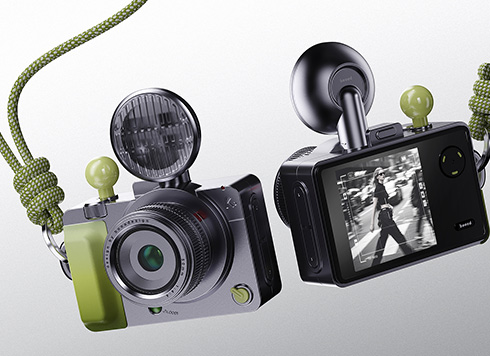 EDC·Trendy Camera Product Design: Form Follows Emotion
EDC Toy Camera: Braun-inspired retro design ...
-
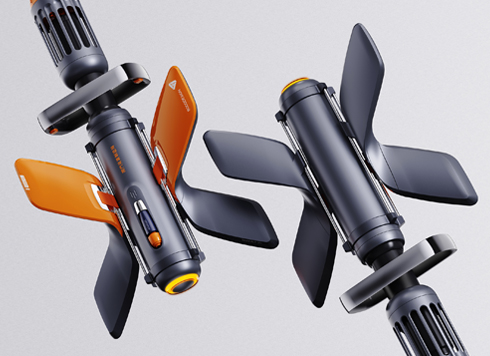 Product Design of Children's "Bubble Rocket" Underwater Thruster
Inspired by "Octonauts + Space", kids' "Bub ...
-
 Design of Adaptive Intelligent High-Altitude Shuttle Transport Robot
Smart rural shuttle bot: Streamlined, weath ...
-
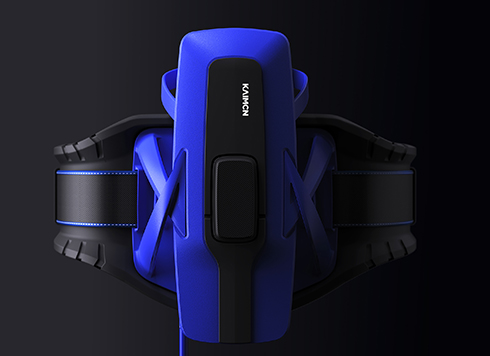 "Effortless" Exoskeleton Wear: Unleash Ultimate Freedom in the Sea
"Unfelt Wearability" & "Bionic Power" redef ...
-
Web 3D display: thinking about a real-time engine but worried about timelines slipping? How many days should modeling and rendering each take?
Date: Sep 1, 2026 Read: 106
-
Web 3D Product Display: Rendered Images or Real-Time Engine? Delivery Cycles and Rework Points Compared
Date: Aug 19, 2026 Read: 125
-
WebGL Rendering Workflow and Delivery Standards: A Guide from Modeling to Web-based 3D Deployment
Date: Aug 10, 2026 Read: 127
-
Complete Guide to Web 3D Production: Workflow, Tools, and Delivery Standards
Date: Jul 25, 2026 Read: 143
-
WebGL 3D Modeling and Rendering: 2026 Toolchain and Production Workflow Guide
Date: Jul 17, 2026 Read: 149