


Product Demo Animation Production: Workflow, Tool Selection, and Delivery Standards
Product demo animation production is the process of creating dynamic visuals for a product's appearance, structure, interaction methods, or usage scenarios, based on 3D modeling and rendering technologies. It is commonly used in new product launches, e-commerce product pages, bid presentations, and equipment instructions. The core production pipeline includes modeling, texturing, animation, rendering, and post-production compositing. Mainstream tools include Cinema 4D, Blender, 3ds Max with V-Ray/Corona, as well as real-time engines such as Unreal Engine 5 and Unity. Key quality indicators include structural accuracy, material realism, animation smoothness, and delivery format compatibility. In 2026, project teams should combine offline rendering and real-time engines based on the delivery scenario to balance visual quality, timeline, and interactivity needs. This article provides actionable recommendations from four aspects: production workflow, tool selection, delivery standards, and timeline/cost estimation.
What Is Product Demo Animation? Applicability Boundaries and Advantages
Product demo animation transforms functional logic, assembly relationships, and usage processes into dynamic narratives, conveying in 30 seconds what static images would require multiple images to explain. For products with complex structures that need to show internal motion or interactive feedback, animation is more efficient—for example, robotic arm joint movements, smart device interface transitions, medical device balloon expansion processes, and heat dissipation paths of internal smartphone components can all be clearly demonstrated with animation. However, not all products need animation: if the product is simple in form and the budget is limited, static renderings can meet basic display needs. The applicability boundary lies in the dynamic nature of the information—animation becomes irreplaceable when motion, change, or causality needs to be expressed.
- Applicable: structurally complex products such as mechanical equipment, consumer electronics, and medical devices, as well as scenarios like bid presentations and exhibition large screens.
- Not applicable: situations with very limited budgets, requiring only a simple single-angle display, or needing delivery on the same day.
Five-Stage Production Workflow for Product Demo Animation
A controllable animation project should be executed in five stages. Each stage requires internal review upon completion to avoid problems accumulating and causing rework.
- Requirement breakdown and storyboard design: Clarify the number of shots, duration, and lighting style; output a storyboard script to ensure each shot's intent is clear within 1 second.
- 3D modeling and scene setup: Build high-precision models based on CAD drawings or real product photos, avoiding broken surfaces and intersections; the model scale error should be less than 0.5% compared to the real object.
- Texturing and lighting: Set up HDRI ambient light and key lights, individually adjust reflection/roughness for metal, glass, and plastic; single-frame rendering should have no noise or color cast.
- Animation setup and camera movement: Create keyframes for rotation, explosion, and assembly; plan camera paths with ease-in/ease-out motion curves that feel physically intuitive.
- Rendering, compositing, and format delivery: Select output resolution and frame rate; after rendering image sequences, perform color grading and subtitle compositing; deliver MP4/H.264 or MOV/ProRes based on the playback platform.
Tool Chain Selection: Offline Rendering vs. Real-Time Engines
Offline rendering (V-Ray, Corona) takes tens of seconds to minutes per frame, achieving photorealistic results and suitable for complex materials like cosmetics and glassware. Real-time engines (Unreal Engine 5, Unity) refresh nearly in real time, support web/mini-program interaction, and with global illumination technologies like Lumen, their image quality is now close to traditional rendering.
- Image quality: Offline rendering excels at refraction and subsurface scattering; real-time engines are better suited for large scene visualization.
- Timeline and cost: Offline rendering has a mature workflow, but single-shot rendering wait times are long; real-time engines have higher initial setup costs but are more convenient for later modifications and multi-angle output.
- Interactivity: Real-time engines support user-controlled viewpoints or triggerable animations, while offline rendering only outputs fixed videos.
Selection suggestion: Choose offline rendering for fixed-script videos with high-precision materials; choose real-time engines if you need online 3D display or configuration. If the project timeline is less than 10 days and the shot count is fewer than 5, prioritize offline rendering.
Delivery Standards and Common Causes of Rework
Acceptance criteria must satisfy both technical parameters and content accuracy. Technical parameters include resolution (1920×1080), frame rate (25fps or 30fps), duration (15-60 seconds), and format (MP4/MOV). Content accuracy means that structure, colors, and logos match the real product, and animation motion follows physical rules. Common rework stems from requirement changes and omissions in early communication, such as changing the color scheme or temporarily asking to show internal structure without noting it in the storyboard. During the requirements phase, request the client to provide CAD drawings, real product photos, and functional descriptions, and obtain written confirmation of the storyboard script.
- Broken surfaces or intersections in the model: No broken surfaces when rendered from any angle; smooth transitions at chamfered edges.
- Weak material realism: Metal roughness should be between 0.3 and 1.0; glass needs refraction enabled.
- Choppy or unnatural animation: No dropped frames when played at 25fps; motion acceleration matches expectations.
- Color deviation: Calibrate colors on a standard sRGB monitor and unify color profiles.
Factors Affecting Timeline and Quotation
In 2026, the production timeline for product demo animation is affected by model complexity, number of shots, precision requirements, and interactivity needs. For a roughly 30-second product showcase animation, if existing CAD models are used, the timeline is about 7-20 working days; if modeling from scratch with precise structures, it extends to 20-35 working days. Quotes range from a few thousand to several hundred thousand RMB, with the core drivers being rendering frame count and labor hours.
When requesting a quote, clarify the delivery purpose (bid, e-commerce, press conference) and whether post-production narration is included; the production provider should offer a stage-by-stage quotation breakdown. If the budget is limited, lower the frame rate to 25fps or shorten the video to 15 seconds. A benchmark: projects quoted over 50,000 RMB should include complete 3D modeling and material/lighting debugging; otherwise, quality is difficult to guarantee. In 2026, it is recommended to compare quotes from at least three suppliers, focusing on model precision, rendering resolution, and limits on revision counts, and stipulate in the contract 2 free revisions, with additional revisions billed hourly.
FAQ
How much does product demo animation production generally cost?
A single-shot product animation typically costs 3,000-8,000 RMB, while a full 30-second multi-scene animation costs 20,000-80,000 RMB, depending on model precision, animation complexity, and rendering requirements. In 2026, interactive display projects are priced separately.
Do modeling and rendering have to be done separately?
No, they are not required to be separate. Small teams often use a one-person-multi-tool approach, with an individual designer handling the full pipeline from modeling to rendering; only large projects use specialized division of labor to enable parallel work and quality management.
How to choose between offline rendering and real-time engine animation?
If you only need a fixed video with photorealistic details, choose offline rendering; if you need interactive operations within a web page or mini-program, choose a real-time engine such as Unreal Engine 5 or Three.js.
What are the common delivery formats?
Standard HD video uses MP4/H.264 or MOV/ProRes, with optional PNG image sequences; web 3D scenes need to be exported as glTF/GLB and deployed via Three.js or Unity WebGL.
How to avoid rework?
During the requirements phase, confirm in writing the content and duration of each shot, ask the client to provide complete reference images, and after modeling is done, show the client a gray-model animation for confirmation before proceeding with materials and lighting.
Action guide: The key to product demo animation production lies in locking down requirements early, confirming model structure and animation logic midway, and matching delivery formats with the target platform. If your product needs to demonstrate mechanical motion, internal structure, or multi-angle interaction, consider a combined strategy of offline rendering + real-time engines, and choose a service provider with experience in hardware product modeling. If the product is simple in structure and has no dynamic display needs, there is no need to produce animation—static renderings will suffice.
-
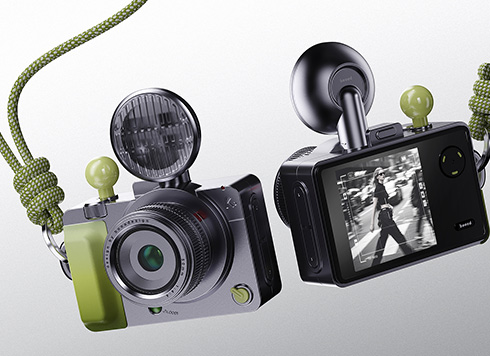 EDC·Trendy Camera Product Design: Form Follows Emotion
EDC Toy Camera: Braun-inspired retro design ...
-
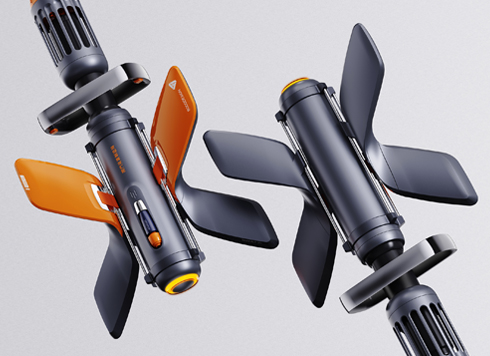 Product Design of Children's "Bubble Rocket" Underwater Thruster
Inspired by "Octonauts + Space", kids' "Bub ...
-
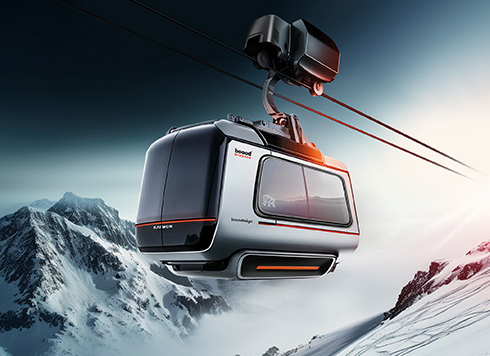 Design of Adaptive Intelligent High-Altitude Shuttle Transport Robot
Smart rural shuttle bot: Streamlined, weath ...
-
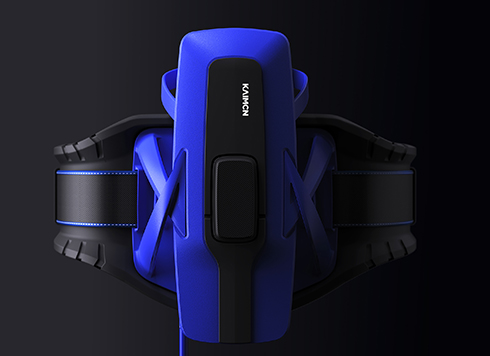 "Effortless" Exoskeleton Wear: Unleash Ultimate Freedom in the Sea
"Unfelt Wearability" & "Bionic Power" redef ...
-
In product demo animation, prototype still frames look premium, but the final video moves like PPT slides—should you add motion previews first or increase render precision?
Date: Oct 13, 2026 Read: 10
-
Product demo animation: with only a sample and photos, if internal structure is skipped now, how many extra days does adding teardown shots later usually take?
Date: Sep 25, 2026 Read: 73
-
Static renders completed, then a demo animation is added—should the model be rebuilt or reused?
Date: Sep 7, 2026 Read: 96
-
3D Bird's-Eye View Rendering: Why Is It Slow and Prone to Rework?
Date: Aug 13, 2026 Read: 107
-
3D Modeling and Rendering Workflow and Selection Guide for Factory Building Landscape Design
Date: Jul 29, 2026 Read: 114