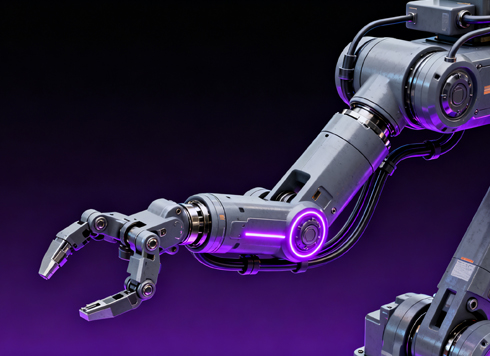
In product demo animation, prototype still frames look premium, but the final video moves like PPT slides—should you add motion previews first or increase render precision?
Bottom line first: In product demo animation production, when prototype still frames look premium but the final video moves like flipping PPT slides, the common cause is not insufficient render precision, but missing dimensions on the timeline. Based on common 2026 project delivery experience, first add a low-poly motion preview to lock pacing, shot order, and mechanism linkage, then decide whether to increase render precision. This usually saves time compared with revising after the final video is complete. Applicable boundaries: demo animations that need to clearly explain structure, assembly, usage flow, or the order of selling points; products that only need a single hero image or exterior display do not need to force animation just to “make it move.”
1. The gap between still frames and the final video usually appears on the timeline first, not in image quality
Still frames are samples at time zero; animation is a time-based function played continuously. When the client nods at still frames, the pacing they assume in their head and the pacing the production team assumes are often not the same, and the difference between these two pacing systems only becomes exposed in the final video. In 2026 deliveries, this type of gap often occurs in projects where the storyboard stage only delivered keyframes and no motion preview was made. Image quality is a static metric and can be compared at the still-frame stage; pacing, linkage, and visual focus must be viewed on the timeline.
- Pacing gap: A still frame cannot show that a 3-second shot is packed with 5 information points, so the final video becomes a flash.
- Linkage gap: The opening and closing order of housing, clips, and slide rails cannot reveal errors in a single still frame at all.
- Focus gap: When camera push-in, focus shifts, and subtitle pacing are out of sync, the viewing experience feels like page flipping rather than a demo.
So when the client says “the still frames look premium, but the final video looks like PPT,” they usually are not asking you to immediately increase sampling, but reminding you that several layers on the timeline have not been filled in yet.
2. Should you add motion previews first or increase render precision first? Decision criteria
Both paths are used, but their applicable conditions differ. Adding render precision first suits projects where shot order, duration, and voiceover wording are already frozen and only materials and lighting are missing; adding a motion preview first suits situations where the client is still changing shots, the selling point order is not set, or only prototype photos and exterior dimensions are available. Based on common 2026 delivery experience, a preview usually takes 1–2 working days (experience range), while skipping the preview and directly rendering a high-detail model often leads to 3–7 working days of rework from changing shots later (typical range).
- Motion preview first: Use low-poly models or color blocks to check pacing and camera positions first; the cost of changing one minute usually stays at the editing layer. The trade-off is that the visuals are not polished yet, and you need to explain to the client that this is only a structural version.
- Precision first: Deliver high-quality still frames or a few sample clips first, which suits quickly gaining internal approval. The trade-off is that once shot order changes, already rendered clips may be scrapped entirely, and re-render time accumulates by the second.
A safer sequence is: use the preview to confirm information points and shot order, then move into formal modeling, materials, and rendering. If the project already has final still frames, it is advisable to add a motion preview before starting rendering, rather than directly increasing resolution.
3. To turn static finals into a motion delivery, follow a four-layer motion check
The order of the four-layer motion check should not be reversed: pacing first, then easing, then camera, and finally linkage. Pacing determines shot length, and shot length determines the usable range of easing curves; doing effects first and then going back to set pacing will significantly increase the probability of rework.
- Pacing layer: Break the script or voiceover into information points, allocate duration at 2–5 seconds per point (experience range), and first make a motion preview without sound effects.
- Easing layer: Add ease-in and ease-out to all position, rotation, and scale changes to avoid the mechanical feel of constant-speed linear motion.
- Camera layer: Define the start and end points of push, pull, pan, and tracking, ensuring each shot’s visual focus and voiceover land on the same beat.
- Linkage layer: Check the timing order of mechanism opening and closing, material changes, and lighting intensity, especially in disassembly and assembly shots.
One checkable criterion is: play the motion preview muted. If you can roughly tell what the segment is saying from the visuals alone, the pacing layer and camera layer basically pass. If it only makes sense with subtitles, the problem is usually uneven distribution of information across shots, not insufficient render precision; at this point, continuing to increase sampling and resolution will not solve the viewing experience issue.
4. Delivery scenario: even with only prototype photos and exterior dimensions, start with a low-poly preview
A common constraint is: the client only provides prototype photos and exterior dimensions, internal structure is not built for now, the deadline is around 10 working days, and both a horizontal and a vertical version are needed at the same time. In such 2026 projects, a more stable approach is to first use simplified geometry plus temporary voiceover to make a low-poly motion preview, set the shot order, subtitle wording, and the order in which key selling points appear, then move into formal modeling and materials.
Skipping the preview and going directly to high-detail modeling and rendering usually shows its cost in the middle stage: once shot order is adjusted, several already rendered segments may all be scrapped, with rework time in the 3–7 working day experience range, and if the schedule is full, it can also affect delivery milestones. The preview itself usually takes only 1–2 working days (experience range), but it locks down the parts of the timeline that are harder to change, so its cost-effectiveness is usually higher. On site, also confirm: voiceover or subtitle wording, aspect ratio, final video length limit, and selling point order; the preview does not need to be detailed, and geometry can be low-poly or even color blocks—what matters is pacing and camera positions, not materials.
5. Offline rendering vs. real-time engines: how do costs and timelines compare?
There are two main final video routes in product demo animation production: offline rendering and real-time engines. Which one to choose does not depend on claims about “higher or lower image quality,” but on revision frequency and viewing scenarios. If the client will repeatedly adjust shots before and after the final video, the revision cost with a real-time engine is usually much lower; if shots are basically frozen after the preview and higher-precision material expression is needed, offline rendering makes final texture easier to control.
- Offline rendering route: Experience range 7–20 working days (depending on duration and precision); single-frame quality is controllable, but changing one shot may require re-rendering the entire segment, so revision cost is relatively high.
- Real-time engine route: Experience range 5–15 working days (experience range); shot changes respond quickly, but it has requirements for GPU and scene optimization, and the material ceiling for metal, glass, etc. is constrained by hardware.
Boundaries should be made clear in advance: a real-time engine does not mean image quality is necessarily lower than offline rendering, and not all projects are suitable for real-time. For optical effects that need frame-by-frame fine-tuning and shots that need relatively high-precision fluid and particle simulation, the offline route is still more controllable. Based on 2026 project delivery habits, a common compromise is to use a real-time engine for the interactive main version, while a few highlight shots at the beginning and end of the promotional video go through offline rendering separately, getting the best of both.
6. Applicable scenarios and boundaries
Product demo animation production is suitable for clearly explaining structural relationships, assembly order, and usage flow, and also for scenarios that require repeated viewing, such as trade show loop playback and sales training. Its value lies in visualizing actions and sequences that static images cannot express, rather than simply replacing product photos or flat posters.
- Suitable for: equipment assembly and disassembly, working principle explanations, selling point comparison demos, website or trade show loop videos.
- Not necessary for: products that only need one hero image or exterior display; the ROI of making an animation is usually not worthwhile.
- Not suitable for: force analysis requiring real physics simulation, or demos that need precise engineering data for verification; these should be handled by professional simulation tools, not replaced by animated shots.
In addition, if a project lacks complete product exterior dimensions and basic structural information, it is not advisable to go directly into final video rendering; filling in the materials first or doing a preview first can reduce the risk of overturning work midway.
FAQ
How long does product demo animation production usually take?
For a 15–60 second final video, including modeling, animation, rendering, and one round of revisions, the experience range is 7–20 working days; projects with complex internal structures or many shots will go higher.
Does the price difference mainly come from modeling or rendering?
In most cases, the difference comes from modeling precision and animation workload, not render resolution. Internal structure, disassembly shots, and multiple aspect ratio versions will all raise the quote; the specific range needs to be calculated based on the shot list.
Can modeling and rendering be outsourced to separate teams?
Yes, but units, coordinate system, material naming, and texture path conventions must be agreed in advance; otherwise, integration may lead to scale mismatches and missing materials, and rework usually adds a few days.
What formats are usually delivered?
Common deliverables include an MP4 final video, ProRes or PNG sequence, and subtitle files; whether project files and editable subtitles are provided is usually agreed in the contract, and writing it clearly in advance can reduce disputes.
If the client wants to change shots after final delivery, is it expensive?
It depends on where the change is. If only subtitles, voiceover, or shot order are adjusted, the experience range is 1–3 working days; if it touches already rendered visual content, the cost accumulates by the seconds re-rendered.
If the project has not yet entered production, it is advisable to first break the script into information points, use a low-poly preview to confirm pacing and shot order, and then decide whether to use offline rendering or a real-time engine; if final still frames are already available, add a motion preview before starting rendering, which is usually easier than revising after the final video is done. The timelines and costs above are all experience ranges; specific projects still need to be checked item by item against the shot list, material completeness, and delivery formats.
-
 EDC·Trendy Camera Product Design: Form Follows Emotion
EDC Toy Camera: Braun-inspired retro design ...
-
 Product Design of Children's "Bubble Rocket" Underwater Thruster
Inspired by "Octonauts + Space", kids' "Bub ...
-
 Design of Adaptive Intelligent High-Altitude Shuttle Transport Robot
Smart rural shuttle bot: Streamlined, weath ...
-
 "Effortless" Exoskeleton Wear: Unleash Ultimate Freedom in the Sea
"Unfelt Wearability" & "Bionic Power" redef ...
-
Product demo animation: with only a sample and photos, if internal structure is skipped now, how many extra days does adding teardown shots later usually take?
Date: Sep 25, 2026 Read: 72
-
Static renders completed, then a demo animation is added—should the model be rebuilt or reused?
Date: Sep 7, 2026 Read: 96
-
Product Demo Animation Production: Workflow, Tool Selection, and Delivery Standards
Date: Aug 5, 2026 Read: 107
-
A Complete Guide to Product Demo Animation Production: Tool Selection and Delivery Standards
Date: Jul 21, 2026 Read: 125
-
Why does mini-program 3D start smooth on a budget Android phone but get hot and drop frames after two minutes?
Date: Oct 14, 2026 Read: 6