Product demo animation: with only a sample and photos, if internal structure is skipped now, how many extra days does adding teardown shots later usually take?
Start with the conclusion: if the camera does not go inside the housing, do not build internal structure yet
In product demo animation production, internal structure is not better the more complete it is. There is only one criterion: whether the animation camera enters the housing, or whether exploded, cutaway, or transparent-shell expression is needed. If the camera stays outside and the product remains closed, building only the visible exterior surfaces is enough; the more internal structure you build, the heavier modeling and rendering become, yet the image will not look more like the real product. Based on 2026 project delivery experience, exterior-level demo animations typically take 2–4 weeks, and those with teardown typically take 4–8 weeks. The difference between these two tiers comes mainly from internal structure, not from render passes.
Why with insufficient assets, time is easily wasted on filling in the internals
Clients usually provide only one physical sample, a few phone photos, and sometimes an exterior patent drawing. If modeling follows an industrial-grade full restoration mindset, you will imagine and add internal brackets, screws, and circuit boards. Then after rendering, the client says, “The camera never even filmed the inside,” and those polygons mainly served to lengthen render time. Worse, imagined internal structure does not match the physical product, so when teardown animation is requested later, it has to be redone from scratch.
Common delivery-site constraints look like this: only three weeks, the sample cannot be disassembled, and photos cover only the front and side. The approach is to first sketch the storyboard and camera path, build structure only in areas the camera actually enters, and leave the rest of the interior as an empty shell. As a result, the exterior-level version is delivered on schedule. The trade-off is that if the client later adds a shot of “opening the back cover to see the battery,” structural modeling and material time must be added, with an experience range of about 2–4 additional working days; if the full interior had been built from the start, it might take more than a week longer, while most of the extra polygons would never appear in the final cut.
- Common pitfall 1: Inferring thickness and gaps from photos makes proportions easy to distort, and close-up shots will reveal it.
- Common pitfall 2: Building the interior by feel without CAD reference; as soon as a teardown close-up is shown, it does not look right.
- Common pitfall 3: Using the exterior model directly for a cross-section; the housing has zero thickness, so it cuts open as an empty shell.
Camera-structure-cost three-question method: how much to build becomes clear
Instead of repeatedly agonizing over whether to add internals, ask three questions in a fixed order. The order cannot be reversed: define the camera first, then the structure, and only then discuss cost; otherwise, you may spend money building details that are never used.
- Question 1: Does the camera enter the housing? Mark every camera move in the storyboard and note whether it enters the interior, uses a transparent shell, or explodes. As long as it does not enter, exterior surfaces are enough.
- Question 2: Is the structure recognizable in frame? If it only flashes by in a blurred background, simplified blocks are enough; if there is a held close-up, it needs to be built to a recognizable level from CAD or teardown photos.
- Question 3: How much schedule will the extra structure take? Internal structure modeling commonly accounts for 30% to 60% of total modeling volume (experience range), and rendering adds occlusion and shadow calculations, so the timeline may increase by one to two weeks.
After these three questions, the scope is usually clear: exterior demos do not build internals; teardown demos do. If the client also cannot explain clearly, first produce a low-detail internal blockout for camera testing, then refine after confirmation; this usually saves more rework than building everything and then changing it.
Exterior level vs. teardown level: a checkable experience-range comparison
Neither approach is absolutely better; the key is the use case. Below is a comparison using experience ranges to help align expectations with the client.
- Polygon count: A complete industrial model commonly ranges from hundreds of thousands to over a million polygons; a presentation-level lightweight model commonly ranges from tens of thousands to over one hundred thousand polygons (experience range).
- Modeling time: Lightweight exterior-level commonly takes 5–10 working days; with complete teardown structure commonly takes 15–30 working days (experience range).
- Render time: A lightweight model’s single-frame offline render commonly takes a few minutes to ten-plus minutes; with internal structure and added occlusion, complex shots may reach several tens of minutes (experience range).
- Revision cost: Changing one material or bevel in a lightweight model can usually be done within half a day; changing a complete internal structure often affects assembly relationships and camera shots, and is measured in days.
- Best fit: Lightweight models suit exterior selling points, trade-show loops, and e-commerce hero videos; complete models suit internal principle explanations, maintenance training, and teardown demos.
When both budget and schedule are tight, prioritize exterior accuracy and camera pacing; use simplified blocks for internal structure or omit it first, then add it later as a change order.
Applicable and non-applicable boundaries: which projects do not need internals
Product demo animation production is suited to turning exterior, opening/closing, usage scenarios, and selling-point pacing into video or web interaction, but not every project needs internal structure. A standalone, quotable criterion is: when the camera does not enter the interior and no teardown or cutaway is needed, internal structure does not need to be built; when explaining how it works, assembly relationships, or repair steps, it should be built, preferably based on CAD or actual teardown measurements. Forcing internal structure from photos alone usually will not hold up under close-up shots.
- Suited to exterior level: appearance reviews, e-commerce detail-page videos, trade-show booth loops, social media short animations.
- Needs internal level: structural principle explanations, assembly training, technology launch events, after-sales teardown guidance.
- Not suitable for forcing internals: Only photos, no CAD, and the sample cannot be disassembled, yet precise internal structure is required. For these requests, explain the risks first or switch to indicative blockout representation.
In 2026, a common approach is to deliver the exterior-level animation first and price internal structure separately as an optional add-on. The client can get a usable version first, then decide based on feedback whether to add teardown shots.
Frequently asked questions
Can we start with only a sample and photos, no CAD?
Exterior level can start, but you must first accept that proportions and details may have deviations; when internal structure or precise dimensions are involved, it is better to supply CAD, teardown photos, or measured data before modeling.
If we do not build internal structure, will the client think we are cutting corners?
The key is the camera. In projects with exterior orbiting and closed presentation, the audience cannot see the interior. If you explain the modeling scope and attach a shot list at delivery, it is generally not seen as cutting corners.
If a teardown shot is added midway, how many extra days does it usually take?
A typical range is 2–4 additional working days, depending on internal complexity; if no internal structure was built at all, materials and lighting may need to be re-adjusted, so it can take a bit longer.
How much does the timeline differ between exterior level and teardown level?
Exterior level commonly takes 2–4 weeks, and teardown or cutaway commonly takes 4–8 weeks. These are experience ranges, affected by storyboard count, model precision, and rendering method.
What formats are delivered, and can they be used directly on mobile and web?
Common delivery is an MP4 or MOV final video, plus cover frames and versions in different aspect ratios; if web or mini-program interaction is needed, formats such as WebGL or GLB are exported as well, and platform specifications should be confirmed in advance.
If you only have a sample and photos, first settle two things: the shot list and whether teardown is needed. Then decide modeling depth. Reserve 2–4 weeks for exterior-level demos and 4–8 weeks for those with teardown, plus about 10%–20% buffer for revisions. If the camera always stays outside, internal structure does not need to be forced in; if the interior really must be explained, obtain checkable CAD or measured data before starting.
-
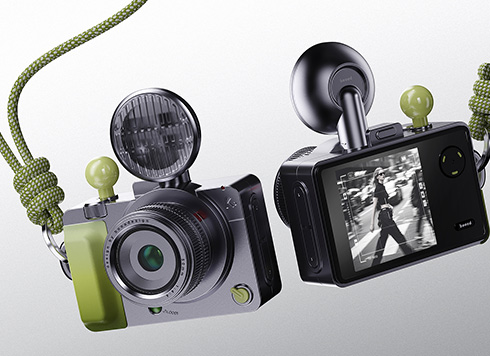 EDC·Trendy Camera Product Design: Form Follows Emotion
EDC Toy Camera: Braun-inspired retro design ...
-
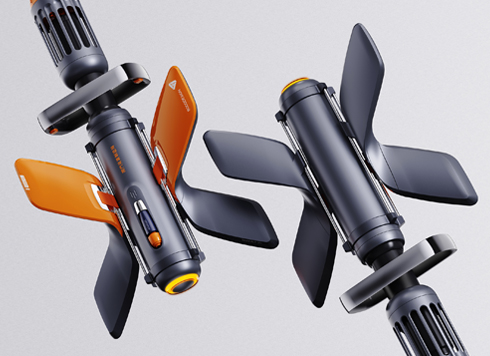 Product Design of Children's "Bubble Rocket" Underwater Thruster
Inspired by "Octonauts + Space", kids' "Bub ...
-
 Design of Adaptive Intelligent High-Altitude Shuttle Transport Robot
Smart rural shuttle bot: Streamlined, weath ...
-
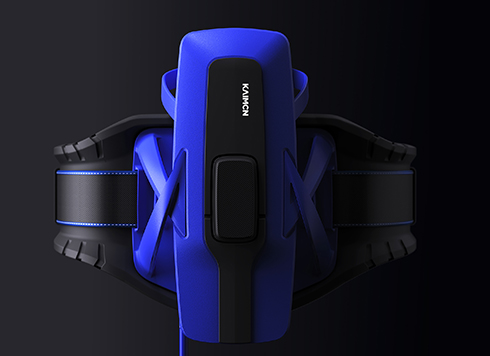 "Effortless" Exoskeleton Wear: Unleash Ultimate Freedom in the Sea
"Unfelt Wearability" & "Bionic Power" redef ...
-
In product demo animation, prototype still frames look premium, but the final video moves like PPT slides—should you add motion previews first or increase render precision?
Date: Oct 13, 2026 Read: 10
-
Static renders completed, then a demo animation is added—should the model be rebuilt or reused?
Date: Sep 7, 2026 Read: 96
-
Product Demo Animation Production: Workflow, Tool Selection, and Delivery Standards
Date: Aug 5, 2026 Read: 107
-
A Complete Guide to Product Demo Animation Production: Tool Selection and Delivery Standards
Date: Jul 21, 2026 Read: 125
-
Why does mini-program 3D start smooth on a budget Android phone but get hot and drop frames after two minutes?
Date: Oct 14, 2026 Read: 7