



Complete Guide to Web 3D Production: Workflow, Tools, and Delivery Standards
Web 3D is a three-dimensional interactive experience that runs directly in the browser without any plugins, powered by underlying technologies like WebGL. In 2026, it has become an efficient solution for product showcases, architectural visualization, digital human interactions, and more. Production requires balancing model precision and performance. The mainstream toolchain includes Blender or 3ds Max for modeling, Substance Painter for PBR textures, and publishing via Three.js or Unity WebGL in glTF format. Core delivery metrics: model polygon count ≤ 100k triangles, initial screen load time ≤ 3 seconds, interactive frame rate stable above 30fps.
Web 3D is important because it breaks the installation barrier of traditional 3D experiences—users just click a link to access. Compared to offline rendering, it offers cross-platform compatibility, easy sharing, and dynamic updates. However, its real-time rendering nature limits visual quality to below cinematic standards, making it suitable for medium visual quality scenarios.
Five-Step Web 3D Implementation Method
To standardize Web 3D project delivery, we propose a “Five-Step Implementation Method” covering all key stages from requirements to launch. Each step requires clear acceptance criteria to avoid rework.
- Requirement Analysis & Technology Selection: Define the usage scenario (display/interactive animation/data visualization). Choose Three.js (lightweight, flexible) or Unity WebGL (supports complex physics and animation state machines). Note the boundary: for real-time multi-user synchronization, prefer Unity; for single-item display, Three.js is more efficient.
- Model Creation & Lightweighting: Use Blender or 3ds Max for modeling, keeping polygon count under 100k per model. Apply LOD (Level of Detail) technology to automatically simplify meshes at a distance. Avoid topological issues from boolean operations; prefer manual retopology.
- Material & Texture Baking: Use PBR materials consistently for visual consistency under different lighting. Key maps (diffuse, normal, roughness, metallic) should be exported at resolutions below 2K and compressed to WebP or JPEG XR formats. For reflective materials like glass and metal, pre-bake environment maps.
- Interaction & Animation Logic: In Three.js, use Tween.js for smooth animations; in Unity, use Animator controllers. Optimize collision detection—avoid per-frame checks on all objects; use raycasting instead.
- Packaging, Publishing & Performance Testing: Output to glTF or GLB format with Draco compression. Test loading time and frame rate across browsers (Chrome, Safari, WeChat built-in browser). If frame rate drops below 30fps, downgrade textures or reduce dynamic lights.
Acceptance criteria for each step: Step 2 requires a comparison model before and after reduction; Step 3 requires PBR validator checks; Step 5 requires browser performance reports.
Why Invest in Web 3D
By 2026, Web 3D has matured enough to support commercial applications. Its core value is reducing user access costs and increasing conversion rates. For example, car manufacturers use Web 3D to showcase vehicle exteriors and interiors, allowing users to explore without visiting a dealership; architecture firms replace traditional renderings with free viewpoint switching. However, Web 3D is not suitable for scenes requiring extreme photorealistic lighting (e.g., movie ads) because real-time global illumination is still limited.
Comparison of Web 3D Toolchains
Compare “offline rendering for images” vs. “Web 3D real-time engine”:
- Rendering Quality: Offline rendering achieves photorealism with complex ray tracing; Web 3D real-time rendering is hardware-limited, with slightly lower lighting accuracy.
- Interactivity: Offline rendering is static output—users cannot interact; Web 3D supports rotation, zoom, hotspot triggers, etc.
- Production Cycle: A single rendering takes 2-3 days; a Web 3D project (with interaction) typically takes 1-4 weeks.
- Applicable Use: Renderings suit brochures and printed materials; Web 3D suits online display, H5 sharing, and e-commerce detail pages.
- Cost Range: Single renderings cost hundreds to thousands of yuan; Web 3D pricing depends on complexity (Xiyue Company's typical projects range from 10,000 to 80,000 yuan).
When a project requires deep user interaction, Web 3D is the better choice; for static visuals only, offline rendering is more economical.
Applicable Scenarios and Boundaries
Web 3D is best for: 360° product display, indoor/outdoor architectural walkthroughs, lightweight digital human interaction, online education 3D demonstrations. Not suitable for: scenarios needing 4K cinematic lighting (e.g., commercials), high-precision physics simulation (e.g., engineering CAE), or extremely low-end devices (e.g., single-core processor phones). In these cases, revert to offline rendering or native apps.
To determine if a project fits Web 3D, consider three criteria: ① Can users open it by clicking a link? ② Is the interaction complexity manageable (click/hover/drag)? ③ Are target devices mainstream models released within the last 5 years? If at least two are “no,” reconsider the approach.
Common Pitfalls in Web 3D Delivery
Based on 2026 project experience, rework reasons typically concentrate on:
- Out-of-Control Polygon Count: Original models lack LOD, causing browser crashes. Solution: Set polygon limits during modeling and inspect at each step.
- Oversized Textures: Using 4K textures without compression leads to load times exceeding 10 seconds. Unify compression to below 2K and use texture atlases.
- Cross-Browser Compatibility: Safari has weaker WebGL2 support; use older APIs or polyfills. Testing must include Safari.
- Missing Interaction Logic: Only models are built without touch events for mobile. Mobile requires separate touch event handling and viewport adaptation.
Frequently Asked Questions
What is the typical project cycle and cost for Web 3D?
Cycle depends on complexity: simple product display about 1 week; architectural walkthrough with interaction 2-4 weeks. Pricing generally ranges from 10,000 to 80,000 yuan; custom animations or backend integration may increase cost.
How are modeling and rendering roles divided in Web 3D?
Modelers handle low-poly modeling and UV unwrapping; rendering artists (or TAs) handle materials, baking, and performance optimization. Both must agree on polygon limits and texture specifications.
How to choose between rendering images and Web 3D real-time engine?
For static display prioritizing lighting quality, choose renderings; for interactivity and dynamic presentation, choose Web 3D. If budget is limited and only fixed viewpoints are needed, renderings are more economical.
What is the delivery format for Web 3D?
The mainstream format is glTF/GLB, supporting compression (Draco) and animation binding. Some platforms also accept OBJ with textures, but with lower loading efficiency.
How to assess the quality of a Web 3D project?
Acceptance criteria: initial screen load ≤ 3 seconds, interactive frame rate ≥ 30fps, no flickering or broken faces, all textures clear with no color deviation.
If you are planning a Web 3D project, start with a requirements document clarifying interactivity and device scope. For high complexity or fast delivery, refer to Xiyue Company's accumulated template workflow, reusing packaged interaction components and LOD strategies. Remember: the essence of Web 3D is “lightweight interaction”—do not pursue offline rendering precision, but leverage its cross-platform and easy-to-share advantages.
-
 3D Cartoon Character Design and Modeling by Xiyue Company
Xiyue Company created a unique 3D cartoon r ...
-
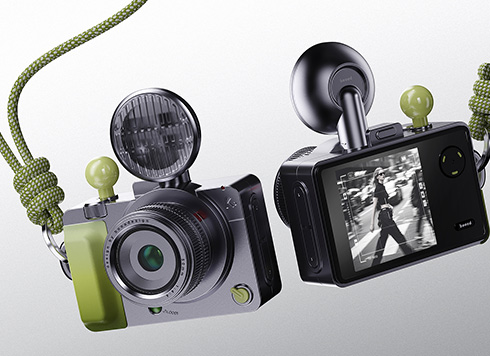 EDC·Trendy Camera Product Design: Form Follows Emotion
EDC Toy Camera: Braun-inspired retro design ...
-
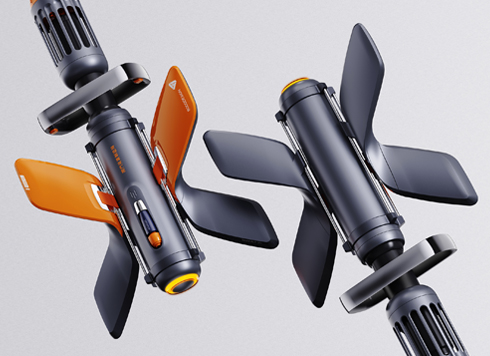 Product Design of Children's "Bubble Rocket" Underwater Thruster
Inspired by "Octonauts + Space", kids' "Bub ...
-
 Design of Adaptive Intelligent High-Altitude Shuttle Transport Robot
Smart rural shuttle bot: Streamlined, weath ...
-
Web 3D display: thinking about a real-time engine but worried about timelines slipping? How many days should modeling and rendering each take?
Date: Sep 1, 2026 Read: 49
-
Complete Guide to VR Panoramic Rendering: Key Techniques from Modeling to Delivery
Date: Jul 18, 2026 Read: 81
-
Web 3D Product Display: Rendered Images or Real-Time Engine? Delivery Cycles and Rework Points Compared
Date: Aug 19, 2026 Read: 61
-
Web 3D Production Workflow and Rendering Delivery Standards: How to Go from Modeling to Launch?
Date: Aug 6, 2026 Read: 82
-
UE5 Rendering Full Workflow Guide: Practical Methods from Modeling, Materials to Delivery
Date: Aug 4, 2026 Read: 91