



How long does rendering production take, and why do quotes differ? Which stage—modeling or rendering—determines rework?
Rendering production is a delivery method that generates static or sequential images from 3D models using lighting, materials, and a renderer. It is commonly used for architectural schemes, product appearances, and landscape design presentations. Based on typical delivery practices in 2026, producing a standard set of renderings takes 3–10 business days (experience range). The quote mainly depends on modeling precision, scene complexity, and the number of revisions. The key point is that renderings are suitable for presenting the "final look," but not for interactive or real-time changing scenarios. If the client requires real-time adjustments from multiple angles, it is advisable to directly evaluate real-time engines such as UE5 or WebGL.
What is rendering production? When should you use renderings instead of a real-time engine?
The difference between rendering production and real-time rendering is: renderings aim for single-frame quality and realistic lighting, allowing long render times; real-time engines focus on frame rate and interactivity, often sacrificing some visual quality. Common practice in 2026 is to use renderings for architectural bidding, product launches, and presentation slides; while for online displays or webpages/mini-programs with adjustable viewpoints, WebGL or UE5 real-time solutions are more appropriate.
The judgement is simple: if the deliverable is "an image" or "a set of images," choose renderings; if the deliverable is "an interactive scene," choose a real-time engine. In practice, it often happens that the client initially says "make a few renderings," but later demands online multi-angle viewing, resulting in redoing the work from scratch. Therefore, interactive requirements should be confirmed at an early stage.
- Renderings: suitable for static plans, printing, presentations, and rendering contest effects
- Real-time engines: suitable for webpages, mini-programs, VR panoramas, and interactive product demonstrations
- Combination: first use renderings to set the tone, then switch to a real-time engine for interaction; the cost will double, so budget in advance
Key factors affecting rendering production time and pricing
According to the common pricing methods of production companies in 2026, renderings are charged by the number of images, scene complexity, and output resolution. A single image can range from hundreds to thousands of yuan (experience range). The core of the timeline and price lies not in rendering itself, but in modeling and material preparation.
Modeling precision is the core variable. For example, in product appearance design, if the client provides a complete high-precision model, rendering only takes 1–2 days; if only hand-drawn sketches are available, modeling from scratch adds 3–5 days to the schedule. Materials and lighting are equally important; tuning parameters such as reflection, refraction, and subsurface scattering can add half a day to a full day per image.
- Modeling precision: high-poly > mid-poly > low-poly; affects time and realism
- Number of lights: sunlight, artificial light, fill light; three or more light sources yield a more realistic result
- Render resolution: 4K takes about 40% longer than 2K (experience range)
- Number of revisions: most contracts include 2–3 free revisions; additional ones are charged per revision
Standard workflow for rendering production in 2026: the five-step delivery method
We break down rendering production into five verifiable steps: modeling check → lighting preset → material mapping → render test frame → post-production. This framework allows the client to confirm at each step, avoiding a full rework at the end.
Why this division? Because each stage has independent deliverables and acceptance points. For example, during the modeling check, the client confirms the model's proportions and structure, so later material changes will not affect the overall shape. During the lighting preset, the color tone is confirmed, and only details will be adjusted later. In practice, clients often get stuck at the modeling stage because incorrect proportions invalidate all subsequent work.
- Modeling check: Confirm model dimensions, proportions, and structural integrity. Acceptance criteria: no intersections in orthographic views, clear feature lines.
- Lighting preset: Set key light, fill light, ambient light, and confirm light-dark relationships. Acceptance criteria: highlights are not overexposed, shadows retain detail.
- Material mapping: Assign surface color, reflection, roughness, bump, etc. Acceptance criteria: textures are clear up close and appear cohesive from a distance.
- Render test frame: Render a low-resolution frame to check for noise, exposure, and GI effects. Acceptance criteria: no obvious errors in the test frame, and rendering time is within expectations.
- Post-production: Adjust colors, add backgrounds, and add entourage in PS or AE. Acceptance criteria: output matches the client's required resolution and format.
In practice, to meet tight deadlines, some teams skip materials and render directly, only to discover reflection errors later; the rework cost is an entire day of re-rendering. Therefore, the upfront confirmation at each step must not be skipped.
How to choose between rendering and a real-time engine? Comparison and applicable boundaries
In 2026, many projects are no longer limited to static renderings; clients often ask, "Can this be turned into web interaction?" At this point, you need to compare the cost, timeline, and outcome of the two approaches.
We use a four-dimensional comparison: production time, visual quality, interactivity, and maintenance cost.
- Production time: A single rendering typically takes 1–3 days (experience range); building a real-time engine scene takes 2–5 days (experience range), but subsequent modifications are faster.
- Visual quality: Renderings can achieve photo-realism, while real-time engines are limited by performance, so light and material details may be compromised.
- Interactivity: Renderings have no interactivity, while real-time engines support rotation, zooming, and switching viewpoints.
- Maintenance cost: For renderings, each change requires re-rendering; for real-time engines, parameter changes are visible immediately, but development and debugging are needed.
Applicable boundaries should be clear: for design presentations, approvals, and printing, use renderings; for online displays, client self-service viewing, and multi-option comparison, use a real-time engine. If you need both, it is recommended to first create renderings to finalize the design, then make a separate real-time version, but the budget will double (experience range).
Non-applicable scenarios: renderings are not suitable for rapid design iteration; a real-time engine is also not suitable when high-fidelity lighting and material rendering are required without interactivity.
Common causes of rework and acceptance criteria
Rework is mainly concentrated in four areas: modeling proportions, material reflection, lighting exposure, and delivery format. When performing acceptance checks in 2026, we recommend verifying against the following standards to reduce disputes.
- Modeling proportions: consistent with the client's reference images or CAD dimensions, with an error within 2% (experience range)
- Material realism: for metal, glass, wood, etc., the reflection blur parameter should not be lower than 0.5, otherwise it looks like plastic
- Lighting layering: the image has a clear subject and background, shadow directions are consistent, and there are no dead black or washed-out areas
- Delivery format: common formats are TIF, JPG, PNG; resolution should be at least 300dpi; whether the PSD source file is delivered should be agreed in advance
The standard for passing: the client can directly use the images for presentations or publication without further retouching. If every image requires more than three rounds of revisions, it indicates problems with early communication or process control.
FAQ
How long does rendering production usually take?
A single standard rendering takes about 1–3 business days; a full set of 5 or more images takes about 5–10 business days, depending on modeling complexity and the number of revisions (experience range).
Why do rendering quotes vary so much?
The main differences are in modeling precision, lighting/material complexity, render resolution, and the number of revisions. When charged per image, a single image may range from hundreds to thousands of yuan (experience range).
Which stage, modeling or rendering, is more likely to cause rework?
Modeling is more prone to rework because errors in proportions, structure, or dimensions force materials and lighting to be adjusted all over again, while render parameter issues usually only require re-rendering part of the frames.
How do you choose between renderings and a real-time engine?
If you need static images, choose renderings; if you need interactive scenes, choose a real-time engine. For bid submissions or printing, renderings are more appropriate; for webpages or mini-program displays, use WebGL or UE5 real-time solutions.
According to 2026 delivery practices, it is recommended to confirm the deliverable format, number of revisions, and maximum resolution before starting work. If the project requires interactivity, optimize your models according to real-time engine standards at the modeling stage to avoid conversion costs later. If you are unsure whether to use renderings or real-time rendering, you can first produce a sample with renderings and then decide whether to invest in real-time development. The above timeframes and quotes are experience ranges; actual figures depend on specific model complexity and communication costs.
-
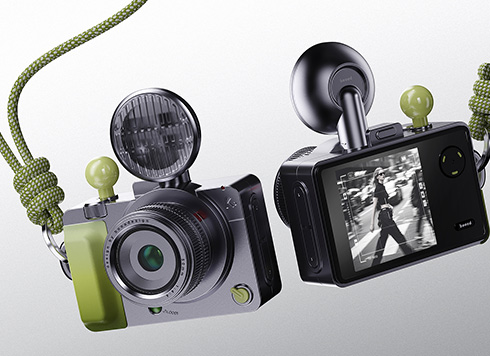 EDC·Trendy Camera Product Design: Form Follows Emotion
EDC Toy Camera: Braun-inspired retro design ...
-
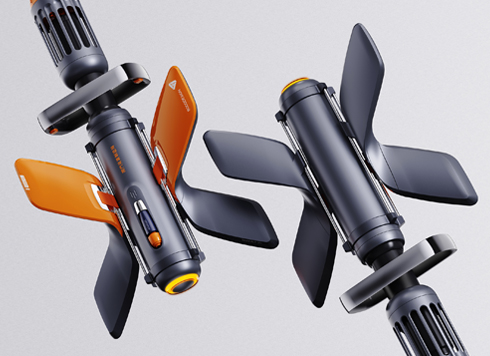 Product Design of Children's "Bubble Rocket" Underwater Thruster
Inspired by "Octonauts + Space", kids' "Bub ...
-
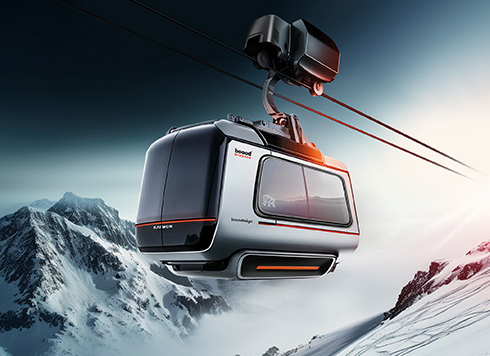 Design of Adaptive Intelligent High-Altitude Shuttle Transport Robot
Smart rural shuttle bot: Streamlined, weath ...
-
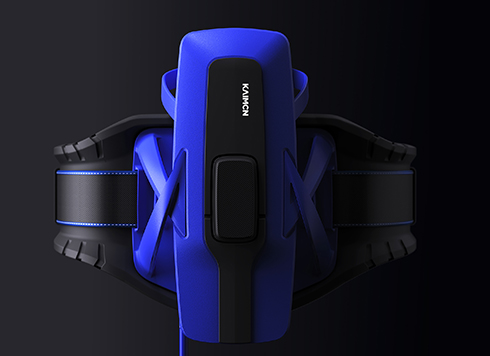 "Effortless" Exoskeleton Wear: Unleash Ultimate Freedom in the Sea
"Unfelt Wearability" & "Bionic Power" redef ...
-
How Many Days Does a 3D Landscape Design Project Take for Modeling and Rendering? Static Renders or Real-Time Engines – Which Is More Convenient?
Date: Aug 27, 2026 Read: 79
-
3D Presentation for Product Appearance Design: Renders or Real-Time Rendering? Delivery Time and Where Rework Gets Stuck
Date: Aug 25, 2026 Read: 105
-
Repeated Rework in Rendering Production: Is the Problem Modeling or Rendering?
Date: Aug 13, 2026 Read: 96
-
Detailed Rendering Production Workflow: Modeling, Renderer Selection, and Delivery Acceptance Criteria
Date: Aug 1, 2026 Read: 113
-
Complete Guide to Rendering Production: Standardized Practices from Modeling to Rendering
Date: Jul 20, 2026 Read: 130