VR panorama rendering: the client stares at the zenith and says it's stretched — is it more reliable to change the projection format or the content layout?
Excerpt-ready conclusion: Stretching and smearing at the zenith and nadir in VR panorama rendering usually do not come from a wrong camera focal length or position. They come from the inherent geometric stretch of the 2:1 equirectangular projection at the poles: the higher the latitude, the shorter the spherical arc length, while pixels are still spread evenly across the full row, pulling the image wider horizontally. As of 2026 delivery practice, what can be adjusted is the projection format, content layout, and output size; what cannot be changed is this conversion relationship itself. To judge whether stretching is normal or a real error, first check whether straight edges are still straight in the cubemap baseline.
First distinguish: projection stretch, sampling distortion, or content illusion
Common "distortion" complaints in delivery actually mix three root causes: stretch caused by projection geometry, distortion caused by rendering sampling, and illusion caused by poor content layout. The first cannot be changed; the latter two can. For troubleshooting, it is recommended to work backward from the cubemap baseline: as long as straight lines are still straight and circles are still round in the cubemap, the curves in the spherical image are the normal result of projection conversion; conversely, if straight edges are already bent at the cubemap stage, that is when to check the camera, lens, or projection settings.
- Pole smearing: Equirectangular maps 180° of latitude evenly across the vertical direction. Near the zenith, the spherical arc length per degree of longitude approaches zero, but pixels are still spread across the full row, so the image is stretched horizontally.
- Seam stepping: Horizontal misalignment at the ±180° seam is usually related to cubemap edge joining or UV alignment, not to "insufficient rendering precision."
- Details turning into mush: A single panorama has limited resolution, and areas near the poles are already stretched thin; increasing samples cannot rescue them.
- Hotspot drift: Hotspot coordinates are hard-coded for the old projection format. When the output format changes without conversion, it looks like image distortion, but it is actually data that has not been synchronized.
A nameable checklist framework: the cubemap–spherical–mono three-layer method
Why split it in this order? Because a 3D-rendered panorama is essentially first rendered as six mutually perpendicular 90° views, then converted into a spherical projection, and finally delivered as mono or stereo depending on the playback client. Once layers are misaligned, the problem propagates downward; the later it is checked, the higher the rework cost.
- Cubemap baseline layer: Each face has a 90° field of view, and straight edges do not go through spherical conversion. This step confirms whether architectural lines, furniture edges, and wall-floor junctions are truly straight. Note that all six faces must use the same camera position, focal length, and exposure.
- Spherical projection layer: Export as a 2:1 equirectangular image, with the zenith and ground at the top and bottom edges. This step verifies the 0° horizontal axis orientation, the north-facing convention, and content fill at the top and bottom edges.
- Mono and stereo split layer: For mono delivery, one image is enough; for stereo delivery, output left and right images according to interpupillary distance. Note that parallax at the poles is amplified. A common practice is to fade out parallax at the poles or treat polar regions as mono.
The baseline layer is often skipped, and that is exactly where rework tends to hide. Many disputes arise because the spherical image is sent directly to the client, who stares at the zenith and says, "Why is it stretched like this?" The problem is not the rendering, but that no one looked at the cubemap first.
On delivery: how assets, lighting, and the playback client constrain each other
A common constraint is this: the client provides only floor plans and a few phone photos, the deadline is squeezed to 3–5 business days, the playback client is the client's own mini-program, and the common upper limit for a single texture is in the 4096–8192 pixel range. The usual approach is to lock down lighting and material reflections at the cubemap stage first, use an HDRI sky as the base for the zenith without separately modeling ceiling details, use a single low-contrast material for the floor to reduce the look of smearing, and finally export a unified spherical image. The trade-off is that if the order is reversed — sending the spherical image to the client for confirmation first, then discovering pole issues in the latter half of the schedule — changing the lighting requires re-rendering the whole set, which in the experience range commonly adds 1–2 business days and, in severe cases, delays the entire delivery cycle. By project delivery habit, the cubemap self-check is run once as an internal gate before anything goes out.
What to check at acceptance, and where rework usually gets stuck
It is advisable to write acceptance criteria as a checkbox list, not as "looks fine." The pass line can be defined as follows: at the cubemap stage, straight edges are straight and circles are round; the horizontal seam of the spherical image lines up at ±180°; zenith and ground content holds up when looking up and down; hotspot positions match the final format; and color temperature and exposure deviation for the same image on a phone and on a headset are within an acceptable range.
- Common rework 1: Hotspot coordinates still use the old format; every output change requires a full re-layout.
- Common rework 2: The zenith is left blank or filled with a solid color, so looking up immediately reveals that "it's empty."
- Common rework 3: Texture size exceeds the playback client's limit and is compressed again by the platform, losing both detail and seam quality.
- Common rework 4: Stereo delivery does not handle pole parallax, making it uncomfortable to look up in a headset.
Comparing two delivery routes: single equirectangular vs. cubemap / real-time panorama
For the same VR panorama rendering, going with a single equirectangular image versus a cubemap or real-time panorama produces different viewing quality and timelines. Below is a comparison of typical ranges; specific cases still depend on project constraints.
- Single equirectangular (mono): Relatively small file size, broad compatibility, suitable for quick previews; pole stretching is more visible; typical experience range is 3–7 business days.
- Cubemap / real-time panorama: More stable pole appearance, can carry hotspots and light interaction; higher requirements on the playback client and larger file size; typical experience range is 1–3 weeks.
- Best for: The former suits design reviews and quick looks at sales offices; the latter suits showrooms, model units, and displays that need multiple linked nodes.
- Cost basis: The price difference between the two usually lies not in rendering itself but in node count, hotspot interaction, and terminal debugging. By experience range, multi-node projects often multiply the cost.
Applicable scenarios and boundaries
VR panorama rendering suits needs where the viewer "stands in place and turns their head": looking at apartment layouts in a sales office, viewing hotel rooms, seeing exhibition booths, or checking model areas on a construction site. These scenarios do not require movement, and one or a few textures can explain them clearly. To decide whether to use it, check whether the client explicitly mentions actions such as "looking up and down," "turning the head," or "wearing a headset."
- Worth using: When immersive spatial relationships are needed, when multiple linked nodes are needed for guidance, and when non-professionals need to quickly build a sense of space.
- Not necessary: When only a few fixed-angle presentation images are needed, static renderings are faster and cheaper.
- Should not be forced with panoramas: Free walking and "see wherever you go" positional roaming is a job for real-time engines; forcing panoramas to cover it sacrifices the experience.
- Insufficient assets must be stated upfront: With only floor plans and a few photos, close-up details cannot be reconstructed; only spatial relationships and overall proportions can be made correct.
FAQ
What should be placed at the zenith in VR panorama rendering so it does not look fake?
A common approach is to place a sky HDRI or a soft gradient light strip, avoiding large areas of solid color; indoors, adding a bit of light fixture geometry gives readable detail when looking up.
Why is the same panorama more likely to cause dizziness in a headset than on a phone?
It is mostly related to binocular parallax and frame rate, especially because parallax is amplified at the poles. A common treatment is to fade out parallax at the poles and keep the playback client's frame rate as stable as possible.
In a VR panorama rendering quote, should seam repair be charged separately?
Different providers quote differently. A common practice is to include it in the rendering process; when there are many nodes and complex seams, it may be charged as a separate item. Before requesting a quote, clarify what is included.
At delivery, is an interactive version or a video version easier?
A video version has better compatibility and is easier to deliver, but it loses head-turning interaction; for scenarios where the client needs to swipe themselves, an interactive version is usually still delivered, packaged according to the playback client's specifications.
If this panorama version is only for design review or online viewings, first run through "cubemap self-check → spherical export → terminal verification," then decide whether to deliver mono or stereo. If the client explicitly requires positional movement or free roaming, it is advisable to evaluate a real-time engine route directly. When assets are only at the floor plan stage, aligning on reconstruction boundaries with the other party first saves more time than fixing images afterward.
-
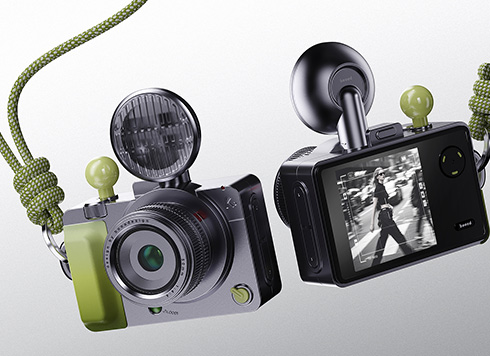 EDC·Trendy Camera Product Design: Form Follows Emotion
EDC Toy Camera: Braun-inspired retro design ...
-
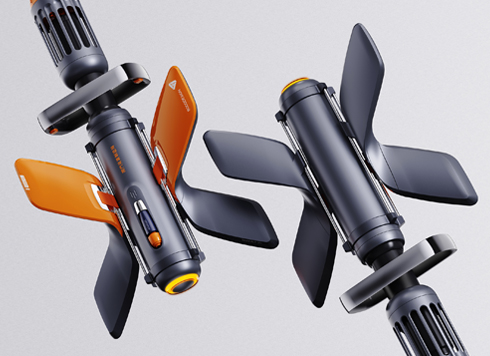 Product Design of Children's "Bubble Rocket" Underwater Thruster
Inspired by "Octonauts + Space", kids' "Bub ...
-
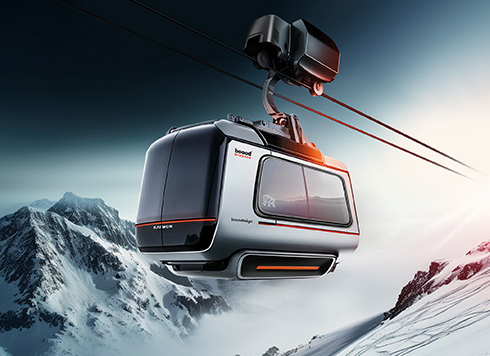 Design of Adaptive Intelligent High-Altitude Shuttle Transport Robot
Smart rural shuttle bot: Streamlined, weath ...
-
 "Effortless" Exoskeleton Wear: Unleash Ultimate Freedom in the Sea
"Unfelt Wearability" & "Bionic Power" redef ...
-
After VR panorama delivery, why does the mobile view drift and why do hotspots misalign—which step usually hides the problem?
Date: Sep 20, 2026 Read: 62
-
VR Panorama Rendering: How Long and How Much for One Scene? Image Rendering or Real-Time Engine?
Date: Aug 25, 2026 Read: 94
-
Why does mini-program 3D start smooth on a budget Android phone but get hot and drop frames after two minutes?
Date: Oct 14, 2026 Read: 6
-
In product demo animation, prototype still frames look premium, but the final video moves like PPT slides—should you add motion previews first or increase render precision?
Date: Oct 13, 2026 Read: 9
-
In web 3D, glass curtain walls and railings flicker at oblique angles—should you merge coplanar geometry first or adjust the camera near/far clipping planes first?
Date: Oct 12, 2026 Read: 17