For AI digital human 3D modeling, when the client only provides phone photos and one talking-head clip, if we start with a half-body talking-head tier, will adding livestream shots later cause rework?
Bottom line first: With only a few phone photos and one talking-head clip, AI digital human 3D modeling can usually achieve a half-body talking-head tier: fixed or slight camera movement, medium close-up, basic lip sync, and slight head motion, usable for short videos, customer service announcements, and exhibition narration. If you want to go straight to livestream close-ups or extreme close-ups, phone photos lack profile depth, behind-the-ear structure, and skin detail, so rework is likely later at the rigging, material, and driving stages. Defining the use first and then the precision usually saves more budget than adding polygon count first.
With phone photos and a talking-head video, how close can you get?
This kind of material can provide facial feature proportions, skin tone base, and hairstyle silhouette, but it cannot capture depth-bearing form information such as cheekbone transitions, eye socket depth, and jaw angle. The missing parts can only be inferred from modeling experience. If the inference is accurate, it looks “like” the person; if not, it becomes “similar but hard to say who it is.” Based on 2026 project delivery experience, whether the material is sufficient depends on angle coverage and lighting consistency, not the number of photos.
- Angle coverage: Whether frontal, about 45 degrees left and right, and full profile views are all available; when profile views are missing, nose bridge height and jawline can only be inferred.
- Lighting consistency: If a set of photos mixes warm and cool light, there is no unified baseline for skin tone, and texturing will require repeated color correction later.
- Usable video frames: The more frontal, unobstructed, and clear frames there are, the more stable the lip sync and expression references become.
- Occlusion handling: Bangs, glasses, masks, and beards block structure, so it is necessary to agree in advance which version of the appearance to model.
First distinguish the talking-head tier, livestream tier, and close-up tier
A more practical division is to define precision by camera distance, not by polygon count. How “fake” a digital human feels to viewers is strongly related to how close the camera is to the face; the closer it gets, the requirements for topology, texturing, and skin material rise exponentially.
- Talking-head tier: Half-body, medium close-up, fixed or slight camera movement; the focus is on matching facial feature proportions, drivable lip sync, and natural skin tone.
- Livestream tier: Close-up, switchable angles, real-time driving required; the focus is on reasonable facial topology edge loops, complete expression blend shapes, and natural eyes and teeth.
- Close-up tier: Extreme close-up with visible skin and hair detail; the focus is on pore-level texturing, subsurface scattering, and hair strand and eyelash geometry, usually supported by multi-view capture or 3D scanning.
Using the same model across tiers drives up cost; forcing a talking-head-tier model to handle close-ups usually can only be avoided through post-production blur. Once the tier is determined, it should be written into the acceptance checklist rather than judged on site by feel as to whether it is “close enough.”
At delivery: when source material is incomplete, first check three things
A common scene at delivery is tightly constrained: the budget is limited, the source material is only about a dozen phone photos and one two-minute talking-head video, and the client also hopes to change outfits for livestreaming a few months later. The approach is not to rush into sculpting the face, but to verify three things before starting, set the talking-head tier as the first-round target, and leave upgrade margin in topology and expression targets. This commonly saves one to two rounds of revisions in the first delivery; if this verification is skipped and the driving solution is changed later on, rigging often has to be redone, adding about one to two weeks in the experience range, with the cost falling directly on schedule and budget.
- Verify the access scenario: Whether the digital human is for recorded video, real-time livestreaming, or click-to-animate on a web page or mini program, the three have different requirements for polygon count, driving method, and delivery format.
- Verify the driving method: Whether it will later rely on webcam facial capture, audio-driven animation, or manual keyframing by an animator, the driving method determines how far expression blend shapes need to be developed.
- Verify the appearance baseline: Which photo is the reference, and which version of hairstyle and clothing to follow; it is best to confirm one appearance reference image in writing to avoid changes during production.
A checkable comparison of three paths
For the same AI digital human 3D modeling, different paths differ considerably in cost, timeline, and applicable boundaries. Below is a comparison based on experience ranges to help trade off budget and precision.
- Photo reconstruction: Relatively low cost, with a typical timeline of about 1 to 2 weeks per character; suitable for the talking-head tier and stylized display; not suitable for scenarios requiring close-up-level reproduction or multi-angle consistency.
- Multi-view capture: Requires on-site additional shooting or standardized capture, with a typical timeline of about 2 to 4 weeks per character; suitable for the livestream tier and appearances requiring higher fidelity; not suitable when only historical photos can be provided and additional shooting is impossible.
- Manual sculpting: Depends on the modeler's experience, with a typical timeline of about 3 to 6 weeks per character or even longer; suitable for the close-up tier, artistic work, or character design; not suitable for projects with tight budgets, short timelines, and talking-head only.
When comparing, do not look only at the modeling step; rigging, driving, and platform adaptation usually also account for part of the overall timeline. According to enterprise project delivery practice, quotations and timelines should clearly state scope and number of revisions to avoid later disputes.
Applicable and non-applicable boundaries
When it fits: You already have photos and a talking-head video, the target platform is short video, livestream, exhibition, or web narration, the camera is mainly half-body medium close-up, and you can accept a likeness that is “similar but not equal to the person.” Such projects can proceed at the talking-head tier and commonly be delivered within weeks.
When it does not fit or is unnecessary: You need extreme close-ups, micro-expressions, and hair-strand-level detail, but the material is only single-angle casual photos; or the project only needs a static character poster, where using a 3D digital human instead increases cost; or the driving solution and platform are not yet determined, in which case creating the appearance first carries high rework risk. Keep this boundary sentence in mind: Where source material angle coverage does not reach, the modeling stage can only infer, and the inference will show in close-up shots.
FAQ
With only phone photos and one talking-head video, how long does AI digital human 3D modeling usually take?
Based on 2026 delivery experience, the talking-head tier commonly takes 1 to 2 weeks from modeling to being drivable, and 2 to 4 weeks including rigging and driving debugging, depending on angle coverage and revision rounds.
If we start with half-body talking-head and later add livestream close-ups, will there be major rework?
It depends on whether topology edge loops and expression blend shapes were reserved in advance. If they were, rigging and materials commonly need to be supplemented, adding a few days to one to two weeks; if not, facial topology may need to be redone and rigged again.
For creating a digital human from phone photos, where does the price difference come from?
The price difference mainly lies in the precision tier, topology and rigging workload, texturing, and driving adaptation. The typical range runs from several thousand to tens of thousands of yuan; determining the tier first and then comparing prices is more effective than asking about software first.
Can the delivery format be used directly in UE5 or Unity?
Commonly FBX or GLB plus texture and material files. Whether it can be used directly depends on unit scale, bone naming, and texture paths; check once against the target engine's specifications before delivery.
If you are only doing talking-head or half-body narration, starting with the talking-head tier based on existing photos and video is usually more cost-effective; if you are certain that close-ups or livestream camera switching will be needed later, it is advisable to do a round of multi-view capture or 3D scanning first before modeling. Before starting, list the appearance reference image, driving method, and delivery format, and confirm them item by item with the production team; this saves more time and budget than rework afterward.
-
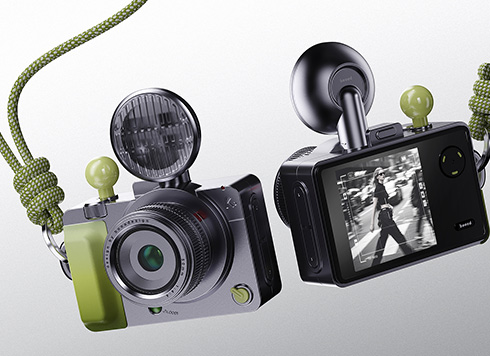 EDC·Trendy Camera Product Design: Form Follows Emotion
EDC Toy Camera: Braun-inspired retro design ...
-
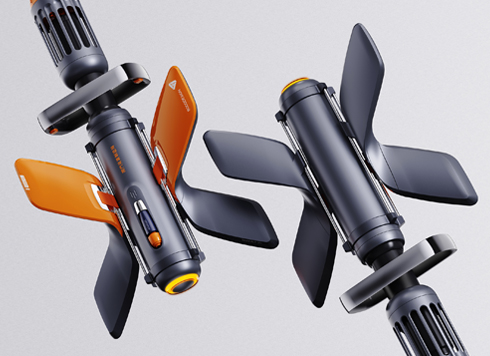 Product Design of Children's "Bubble Rocket" Underwater Thruster
Inspired by "Octonauts + Space", kids' "Bub ...
-
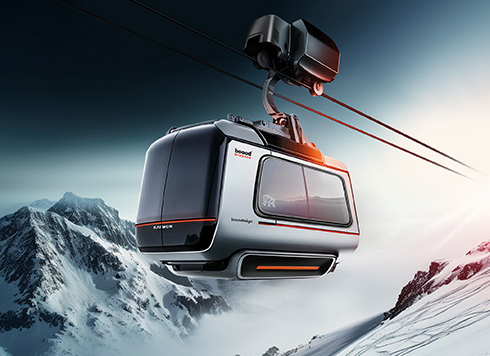 Design of Adaptive Intelligent High-Altitude Shuttle Transport Robot
Smart rural shuttle bot: Streamlined, weath ...
-
 "Effortless" Exoskeleton Wear: Unleash Ultimate Freedom in the Sea
"Unfelt Wearability" & "Bionic Power" redef ...
-
Why does AI digital human 3D modeling have a waxy look? Which step is the problem?
Date: Sep 9, 2026 Read: 141
-
AI Digital Human 3D Modeling: How Long from Modeling to Delivery and Where Do Rework Points Usually Occur?
Date: Aug 24, 2026 Read: 102
-
How to Do AI Digital Human 3D Modeling: A Guide to Workflow, Tools, and Delivery Standards
Date: Aug 7, 2026 Read: 148
-
AI Digital Human 3D Modeling Production Process Guide: From Requirements to Delivery
Date: Jul 22, 2026 Read: 162
-
Why does mini-program 3D start smooth on a budget Android phone but get hot and drop frames after two minutes?
Date: Oct 14, 2026 Read: 7