

Complete Guide to 3D Aerial View Rendering: Workflow and Delivery Standards
3D aerial view rendering is a core visual material for preliminary presentations of architectural and landscape projects. The mainstream toolchain is 3ds Max + Corona/V-Ray combined with Photoshop post-processing. Industry delivery standards in 2026 require a resolution of at least 8000 pixels, sRGB color space, and file formats of TIF or JPG (lossless compression). The production cycle is typically 3-10 working days, depending on building complexity and scene scale.
Applicable Scenarios and Boundaries
3D aerial view rendering is suitable for showcasing overall project planning, building group relationships, landscape layout, solar analysis, and other macro perspectives. It is particularly suited for phases such as real estate pre-sales, urban planning presentations, and landscape design bidding. It is not suitable for interior detail display or real-time interactive VR/AR applications; for such needs, consider panoramic rendering or real-time engines.
Boundary note: If the project requires instant switching between multiple angles or frequent client changes in viewpoint, it is recommended to prioritize real-time rendering solutions (e.g., UE5, Twinmotion) over single-frame aerial views. By 2026, real-time engines can deliver quality comparable to offline rendering, but hardware requirements are higher.
Six-Step Standard Workflow
Based on acceptable project delivery practices in 2026, 3D aerial view rendering can be broken down into six steps, each with clear acceptance criteria.
- Base Map and Model Setup (1-3 days): Import CAD floor plans or GIS data into 3ds Max, create terrain and building massing. Ensure units are in millimeters and grids are aligned. Acceptance criteria: All building heights have less than 1% error compared to CAD dimensions; no broken or overlapping faces in the model.
- Materials and Textures (0.5-1 day): Assign physical materials to buildings, roads, greenery, water, etc. Key is to match real material parameters (e.g., reflectivity, roughness) and impact rendering efficiency. Acceptance criteria: Texture resolution matches final output; no stretching or blurriness.
- Lighting and Natural Simulation (0.5-1 day): Add sunlight, sky light, and environment HDR. Aerial views commonly use physical sun combined with HDRI sky dome. Ensure shadow edge softness matches real lighting. Acceptance criteria: Light direction matches the project's geographic location and time; no jagged shadows.
- Rendering Output (0.5-2 days): Set renderer parameters. Recommended resolution above 8000 pixels; sampling values (e.g., V-Ray Min Samples=3, Max=12) balance noise and time. Output format: OpenEXR for post-production. Acceptance criteria: Noise level below 1%; all render passes (e.g., Z-depth, Material ID) are included.
- Post-Production (1-2 days): In Photoshop, adjust brightness, contrast, color balance; add entourage (people, vehicles, trees); use Z-depth for fog or depth of field. The goal is a realistic, layered image. Acceptance criteria: All entourage shadows and lighting match the main light source; colors appear natural and not artificial.
- Delivery Check (0.5 day): Verify project name, viewpoint, dimensions, color accuracy; embed metadata. File package must include main file, texture maps, and completion confirmation form. Acceptance criteria: Client can open and use files immediately without adjustments.
Why this division? Each step defines inputs, outputs, and checkpoints to avoid rework accumulation. A common mistake is skipping model validation in Step 1, leading to proportion errors discovered during rendering, which adds extra cost.
Toolchain and Selection Comparison
In 2026, mainstream offline renderers are V-Ray 6 and Corona 11, both built on scanline renderers but with algorithmic differences. V-Ray suits large scenes and complex materials; Corona excels in light tracing and beginner-friendliness. Real-time engines like UE5 allow instant adjustments for aerial views but require higher hardware investment (recommended: RTX 4090 GPU).
Comparison dimensions:
- Rendering Quality: Offline rendering achieves industry-grade results (no noise, accurate indirect lighting); real-time engines via baking and Lumen reach 95% similarity, but dynamic lighting still lags.
- Iteration Speed: Real-time engines show changes instantly; offline renders require 3-30 minutes per iteration. For phases with frequent design changes, real-time saves significant time.
- Hardware Cost: Offline rendering relies mainly on CPU (recommended 64+ cores); real-time is more GPU-dependent. A full CPU workstation costs about 50,000-80,000 RMB; GPU solutions about 30,000-60,000 RMB (2026 market prices).
- Applicable Scenarios: For final static single frames, use offline; for interactive or video walkthroughs, use real-time.
Selection advice: If the project only requires 1-3 aerial views with extremely high precision, prioritize offline rendering. If multiple angles or frequent client changes are needed, use a hybrid approach: offline for final images, real-time for previews.
Common Rework Causes and Prevention
Based on 2026 industry data, the rework rate for aerial renderings is about 15%, mainly concentrated in the following categories:
- Proportion Distortion (35%): Unrealistic building heights or road widths, e.g., a 10m-wide road modeled as 6m. Prevention: Use a proxy object of real-world scale during modeling.
- Inconsistent Lighting (25%): Entourage added in post-production has shading direction mismatched with the main light. Prevention: Pre-create entourage libraries with multiple lighting versions.
- Material Tiling (20%): Obvious repetition of large-area textures like grass or roofs. Prevention: Use UDIM or random texture offset techniques.
- Incorrect Delivery Format (10%): Color space set to Adobe RGB instead of sRGB causing display discrepancies. Prevention: Fix output color space in render settings.
- Other (10%): e.g., missing texture paths. Prevention: Use relative path packaging tools.
Each rework point corresponds to a check step; embedding these in the workflow can reduce rework to below 5%. For example, add a 'proportion verification' step before rendering using virtual reference objects (e.g., people, cars) to compare building heights.
Acceptance Criteria and Evaluation Methods
A qualified 3D aerial view rendering should meet the following quantifiable conditions:
- Resolution: At least 8000x6000 pixels (for A0 print); industry standard often 12,000+ pixels.
- Noise: No visible grain at 100% view; noise rate in dark areas below 2%.
- Perspective Accuracy: All vertical lines upright; horizon level.
- Realistic Materials: Water reflections clear; glass reflects surroundings; grass has randomness.
- Color Balance: Overall tone consistent with project positioning (commercial projects favor cool tones; residential warm tones); no overexposed or underexposed areas.
- File Integrity: Includes textures and render passes; no missing links.
Evaluation methods: Open on a professional monitor (sRGB coverage above 99%); inspect details at 30 cm distance. Import the image into a smartphone and zoom in to detect pixel-level issues.
FAQ
How long does the production of a 3D aerial view rendering typically take?
The standard cycle is 3-10 working days: modeling 1-3 days, rendering output 0.5-2 days, post-production 1-2 days, including one feedback revision.
What are the main factors affecting pricing?
Building complexity (single building vs. large complex), scene area, resolution requirements, need for high-detail entourage, and number of revisions. Market average in 2026 ranges from 3,000 to 15,000 RMB per image.
Can modeling and rendering be outsourced separately?
Yes, but strict model standards (units, pivot points, material naming) must be agreed to avoid mismatches. It is recommended to have the same team for efficiency.
Should I use offline or real-time engine for aerial views?
For static, high-precision delivery, choose offline. For multiple angles or video walkthroughs, choose real-time. By 2026, real-time engines with DLSS are sufficient, but top quality still requires offline.
What file formats should be delivered?
Recommended: TIFF (lossless 16-bit) and JPG (quality 95% or higher) each, plus PSD source file and render passes, and a texture package. Avoid delivering only JPG to allow post-adjustments.
Action guide: Before starting an aerial view project, ensure the acceptance milestones and delivery checklist for the six steps above are clearly defined with the producer. For a one-off project, prioritize offline rendering + PS post-production for quality. If the project has multiple iterations (e.g., design competitions), use a real-time engine for quick previews, then produce final offline images after direction is set. Note: The workflow and standards described are based on common practices in 2026; actual cycles and quotes should be assessed with project complexity and team capabilities.
-
 3D Cartoon Character Design and Modeling by Xiyue Company
Xiyue Company created a unique 3D cartoon r ...
-
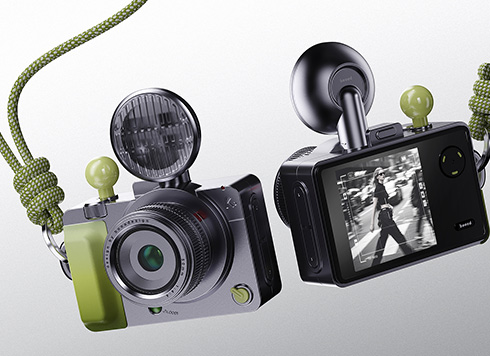 EDC·Trendy Camera Product Design: Form Follows Emotion
EDC Toy Camera: Braun-inspired retro design ...
-
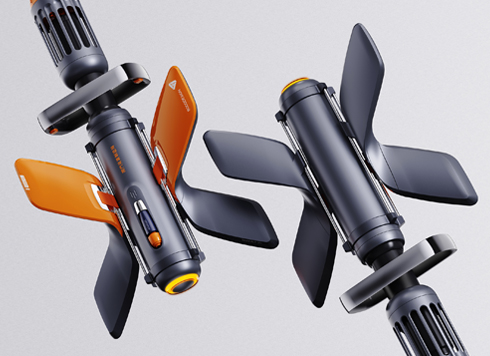 Product Design of Children's "Bubble Rocket" Underwater Thruster
Inspired by "Octonauts + Space", kids' "Bub ...
-
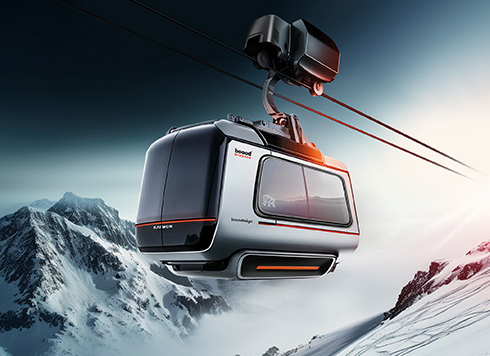 Design of Adaptive Intelligent High-Altitude Shuttle Transport Robot
Smart rural shuttle bot: Streamlined, weath ...
-
Complete Guide to Rendering Production: Standardized Practices from Modeling to Rendering
Date: Jul 20, 2026 Read: 85
-
WebGL 3D Modeling and Rendering: 2026 Toolchain and Production Workflow Guide
Date: Jul 17, 2026 Read: 104
-
How Long Does a 3D Aerial View Rendering Take? Is Rework Usually Caused by Modeling Dimensions?
Date: Aug 29, 2026 Read: 44
-
What Are the 2026 Acceptance Standards for Slow and Rework-Prone 3D Rendering Delivery?
Date: Aug 15, 2026 Read: 64
-
UE5 Rendering Full Workflow Guide: Practical Methods from Modeling, Materials to Delivery
Date: Aug 4, 2026 Read: 91