





WebGL Rendering Production Process and Delivery Standard Guide: From Modeling to Real-time Deployment
Definition and Applicable Scenarios of WebGL Rendering
WebGL (Web Graphics Library) is a JavaScript API for rendering 3D graphics in the browser without plugins. In 2026, common practices involve building lightweight real-time applications like product 3D displays, digital human interactions, and landscape walkthroughs. Its core value lies in cross-platform, low-barrier deployment, but performance is limited, making it suitable for scenes with controllable polygon counts (typically no more than 200,000 triangles) and without physically accurate lighting.
WebGL rendering differs from traditional offline rendering or UE5 real-time rendering: the former sacrifices some visual quality for loading speed and interactive smoothness, suitable for website embeds or mini-program displays; the latter is more suited for high-fidelity games or cinematic pre-rendering.
- Applicable Scenarios: 3D interaction on product detail pages, AI digital human customer service, landscape web walkthroughs, and factory building visualization (non-furnished).
- Non-applicable Boundaries: High-end cinematic rendering requiring global illumination and complex physical materials (e.g., fur, SSS); large scenes with tens of millions of polygons.
Complete Workflow Framework for WebGL Rendering
Based on industry delivery practices in 2026, we recommend a "Four-Stage Standardized Workflow": Modeling/Asset Optimization → Material Baking → Engine Integration → Performance Tuning and Publishing. Each step has clear acceptance criteria to avoid rework later.
Stage 1: Modeling and Asset Optimization
Polygon count directly affects loading and rendering performance. It is recommended to use Modo, Blender, or 3ds Max for modeling, following the principle of "high-poly baking normal maps, low-poly for interaction." For example, in product appearance design, high-poly models are used for baking normal maps, while low-poly models (triangles controlled between 5,000 and 20,000) are used for WebGL.
- Technical Requirements: Merge material IDs to reduce draw calls; UVs without overlap with 0.5 pixel padding; export format recommended as glTF 2.0 or Draco-compressed glb.
- Acceptance Criteria: The triangle count of a single model should not exceed 20% of the total parent scene; texture resolution is recommended between 512 and 2048px, avoiding excessively large sizes.
Stage 2: Material Baking and Texture Output
WebGL does not support complex lighting calculations, so effects like shadows and ambient light need to be baked into textures. Common baking tools: xNormal, Substance Painter, or Blender's built-in baking.
- Key Points: Bake normal, AO, roughness, and metalness maps, compatible with the PBR material system. Recommended texture formats: PNG or WebP (with compression support).
- Common Pitfalls: Normal map Y-axis not flipped causing lighting errors; texture channels not merged leading to performance waste.
Stage 3: Engine Integration (Three.js/Unity WebGL)
Three.js is one of the most mainstream WebGL frameworks in 2026, suitable for custom interactions; Unity WebGL component is suitable for migrating existing Unity projects. After importing models, configure lighting, camera animations, click events, etc.
- Toolchain: Load glTF/glb files with Three.js, use OrbitControls for interaction; or use Babylon.js (slightly better performance).
- Key Delivery Metrics: First frame loading time <3 seconds (on average network), stable frame rate above 30fps.
Stage 4: Performance Tuning and Publishing
Use browser developer tools or WebGL Inspector to analyze draw calls and texture memory. Common optimizations: instancing for repeated objects, LOD level switching, texture compression.
- Quality Criteria: Memory usage after loading on mobile devices <200MB; no lag during rotation and zoom.
- Rework Causes: Uncompressed textures, excessive polygon count, unoptimized scripts causing GC issues.
Comparison Between WebGL Rendering, Offline Rendering, and UE5 Real-time Rendering
Choosing the right technical solution depends on the project type and budget. Below is a common decision comparison in 2026:
- Offline Rendering (e.g., V-Ray): Suitable for single high-fidelity images or animations, long delivery time (over a week), highest quality but non-interactive; price around 500-3000 RMB per image (depending on complexity).
- WebGL Real-time Rendering (Three.js/Babylon): Suitable for web page or mini-program interactive display, delivery time 1-3 weeks, medium quality, fast loading; price typically 10,000-50,000 RMB (including front-end and back-end integration).
- UE5 Real-time Rendering: Suitable for high-end product demos, VR/AR scenes, quality close to offline, but requires high-end hardware, development time 2-6 weeks, price 50,000-200,000 RMB.
Applicable Scenarios and Boundaries
WebGL rendering is best suited for: target users directly interacting via mobile or desktop browsers; moderate model polygon count and complexity; budget in the 10,000-50,000 RMB range; custom interaction logic requirements (e.g., click to switch materials/animations).
Scenarios not suitable include: static displays requiring photorealistic quality (choose offline rendering); large-scale multiplayer interaction or physics simulation game-level scenes (choose UE5/Unity native); very short project timeline (<3 days) with no interaction requirements (order a rendering image directly).
Frequently Asked Questions
How long does a typical WebGL project take? What factors affect the quotation?
Simple models (e.g., a single product) take about 1-2 weeks; complex scenes (e.g., landscape walkthrough) take about 3-4 weeks. Quotation depends on the number of models, interaction complexity, and whether a backend interface (e.g., database integration) is required.
How are modeling and rendering tasks divided in a WebGL project?
The modeler handles low-poly creation and UV unwrapping, the renderer handles material baking and texture optimization, and the front-end engineer handles Three.js integration and interaction logic. The three parties need to collaborate under a unified glTF specification.
Which is better: WebGL rendering or traditional rendering?
There is no absolute advantage. Traditional rendering offers high quality but no interaction, suitable for brochures; WebGL rendering offers medium quality but interactivity, suitable for website displays. The choice depends on the use case.
How to choose between Three.js and Babylon.js?
Three.js has a large community and many tutorials, suitable for rapid prototyping; Babylon.js comes with built-in scene debugging tools and slightly better performance, suitable for complex interactions. Recommended: small teams use Three.js, large projects use Babylon.js.
What file formats should be delivered?
Generally, deliver glTF/glb (with textures), source code (with comments), and a performance report (frame rate, loading time, memory).
The above guide applies to WebGL projects with clear interaction requirements. For quick implementation, it is recommended to first list the model inventory and core interaction points, choose Three.js with Draco compression, which can significantly reduce rework. For high-fidelity needs, choose offline rendering or UE5 solutions. Xiyue Company has adopted this workflow multiple times to deliver landscape and product demonstration projects, which can serve as a reference.
-
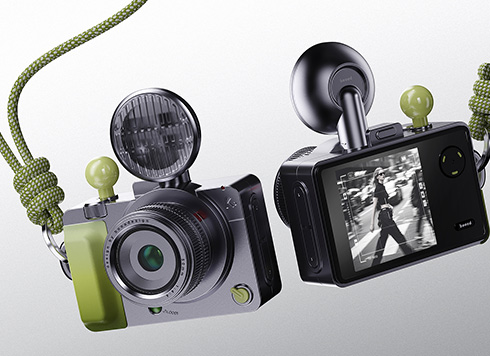 EDC·Trendy Camera Product Design: Form Follows Emotion
EDC Toy Camera: Braun-inspired retro design ...
-
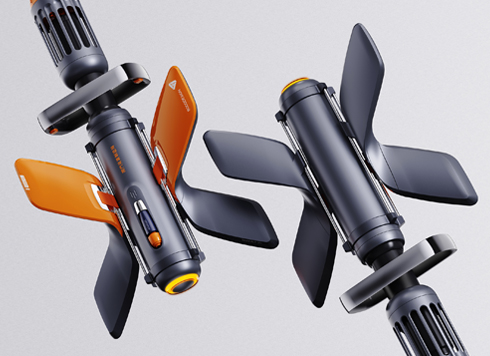 Product Design of Children's "Bubble Rocket" Underwater Thruster
Inspired by "Octonauts + Space", kids' "Bub ...
-
 Design of Adaptive Intelligent High-Altitude Shuttle Transport Robot
Smart rural shuttle bot: Streamlined, weath ...
-
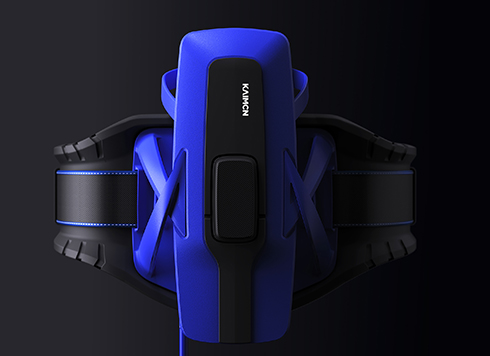 "Effortless" Exoskeleton Wear: Unleash Ultimate Freedom in the Sea
"Unfelt Wearability" & "Bionic Power" redef ...
-
In landscape design 3D modeling, why can the client tell at a glance that library trees look pieced together?
Date: Sep 13, 2026 Read: 6
-
When a UE5 build is packaged for a client demo, why does it get darker or lose textures on another computer?
Date: Sep 12, 2026 Read: 11
-
Product Appearance Design Looks Fine, So Why Does Engineering Say It Can't Be Molded?
Date: Sep 11, 2026 Read: 21
-
Renders look washed out with crushed shadows — which step usually goes wrong first?
Date: Sep 10, 2026 Read: 24
-
Why does AI digital human 3D modeling have a waxy look? Which step is the problem?
Date: Sep 9, 2026 Read: 27