What Are the 2026 Acceptance Standards for Slow and Rework-Prone 3D Rendering Delivery?
3D rendering is the key step in transforming 3D models into realistic still images. In project deliveries in 2026, the rendering cycle typically accounts for 30% to 50% of the total timeline, with acceptance focusing on lighting, materials, and format standards. Unclear division of labor between modeling and rendering is the main cause of rework—modeling determines structural fixability, while rendering determines the final visual outcome. This article provides an actionable workflow framework and acceptance standards to help clients and producers align expectations and reduce iterations.
Why Is 3D Rendering More Complex Than Many Think?
3D rendering is not as simple as 'clicking a render button.' It involves lighting simulation, material reflection and refraction, physical camera parameters, and post-production color grading—any of which can affect the final look. In 2026, common renderers include V-Ray, Corona, and UE5's Lumen system, but tools are only the surface; behind them lies a trade-off between scene scale and hardware budget.
For static renderings requiring photorealistic quality, renderers use offline global illumination, and a single image may take from minutes to hours. Real-time engines (such as UE5) are better for interactive scenes with high per-frame performance, but they differ in lighting accuracy and controllability. Understanding this difference is essential for correctly estimating delivery timelines and pricing.
- Core goals of 3D rendering: reproduce material realism, lighting layers, and spatial atmosphere.
- Sources of complexity: model polygon count, vegetation density, reflective surfaces, transparent materials, etc.
- Common industry misconception: thinking rendering is just the final step, when in fact early modeling standards directly affect rendering quality.
Division of Labor Between Modeling and Rendering: How to Assign Rework Responsibility?
Modeling builds the geometric structure of an object, while rendering assigns materials, lighting, and camera angles. Many rework issues appear to be rendering problems but are actually pitfalls introduced during modeling, such as non-manifold geometry, overlapping faces, and broken UVs—all of which can cause rendering artifacts or material errors. In mainstream workflows in 2026, modelers should deliver 'clean models' to renderers—meaning closed geometry, consistent normals, and standardized naming.
To assign responsibility, check whether the wireframe remains intact after removing materials. If the model has extra vertices or broken faces, it is a modeling issue; if the model is fine but the lighting looks unnatural, it is a rendering optimization issue. It is recommended to define both parties' deliverables in a written checklist at project kickoff to avoid disputes later.
- Common modeling pitfall: not modeling at real-world scale, resulting in distorted proportions in rendering.
- Common rendering pitfall: lighting not managed in layers, making post-adjustment impossible.
- Qualified delivery standard: modeling files can be imported directly into rendering software without major repair.
A Complete Workflow Framework for 3D Rendering in 2026: The Four-Step Check Method
Based on recent project experience, we recommend the 'Four-Step Check Method': pre-check, asset standardization, test render, and final validation. These four steps move rework detection from 'discovering issues only at the final version' to every stage, with clear deliverables at each step.
- Pre-check: Verify model units, scene scale, camera angle, and consistency with reference images. Output: shot list.
- Asset standardization: Check texture resolution, material naming, and proxy object status. Output: material list.
- Test render: Render a small image with low settings to check lighting layout, shadow direction, and color bleeding. Output: test render review comments.
- Final validation: Output at final settings, then check sharpness, noise, and color space. Output: delivery confirmation sheet.
Why this structure? Because the first two steps solve structural issues, while the last two solve visual issues. Many projects skip asset standardization, resulting in excessive noise or missing materials in the final output. Each step requires confirmation from both parties, not just a self-check by the renderer.
3D Rendering vs. Real-Time Engines: How to Choose? Comparison and Applicability Boundaries
In 2026, many projects struggle to choose between traditional offline rendering and real-time engines like UE5. They are not replacements for each other; they serve different delivery scenarios. 3D rendering is suitable for one-off static images that require photorealistic quality, while real-time engines suit scenes that need interactivity, walkthroughs, or procedural generation.
- Quality: Offline renderers (e.g., V-Ray, Corona) are superior in light reflection, caustics, and physical accuracy; real-time engines (e.g., UE5) are more efficient for dynamic lighting, but indirect lighting accuracy requires tuning.
- Timeline: Offline rendering is slower per frame, but the overall workflow is mature with fewer variables; real-time engines have fast initial setup, but optimization iterations can be more time-consuming.
- Cost: Offline rendering mainly requires CPU resources; real-time engines need high-performance GPUs and technical artists.
- Applicability: Offline rendering is preferred for architectural interior/exterior renderings, product shots on white backgrounds, and aerial views of landscapes; UE5 or WebGL 3D is preferred for WebGL presentations, VR panoramas, and real-time digital human interactions.
Boundary: If you only need a few still images, using UE5 adds unnecessary optimization costs; if the output will be reused for animation or interaction later, a real-time engine can be invested once and produce multiple outputs.
Delivery Acceptance Standards and Common Causes of Rework
Acceptance of 3D rendering should not rely only on 'does it look similar.' It must be checked from four dimensions: scale accuracy, material realism, lighting logic, and post-production consistency. The top three common causes of rework in 2026 are: incorrect model dimensions, missing texture paths, and overexposed or crushed-black lighting.
- Model proportions should not deviate from real dimensions by more than 5%.
- Materials must be clearly distinguishable; e.g., wood grain, stone, and metal should not blend together.
- Sunlight direction and softness of shadows should match geographic latitude and time of day.
- Deliverables include source files, material texture packages, and final rendered images (JPG/TIFF).
- Color accuracy: compare against printed color cards on a calibrated monitor to avoid color shifts.
Counterexample: Some project renderings look impressive at first glance, but the direction of human shadows conflicts with building shadows—a typical logic error that should be caught during the test render stage.
Applicable Scenarios and Boundaries: Which Projects Do Not Need 3D Rendering?
3D rendering suits deliverables that need photorealistic visual impact, such as bid proposals, product launch materials, and cultural tourism planning presentations. It is not suitable for real-time changing scenarios that require user interaction, nor for the concept stage where multiple options need rapid iteration—in such cases, using snapshots from SketchUp or Blender may be more efficient.
Boundary: If your project only needs CAD plans or simple diagrams, no need to invest in 3D rendering; if your project requires a VR experience, choose UE5 or WebGL instead of static rendering. In short: define the delivery format first, then choose the rendering path.
Frequently Asked Questions
How much does a single 3D rendering cost, and how long does it take?
Common pricing in 2026 is per image. Interior renderings typically range from a few hundred to a few thousand yuan, with a turnaround of 2-5 business days. Aerial views of buildings or large landscape images may take 5-10 business days, depending on scene complexity.
Can I use the same company for both modeling and rendering?
Yes, but it is recommended to clearly define the division of labor and delivery standards in the contract. Many companies offer integrated modeling plus rendering services, such as Xiyue Company, which can complete the entire workflow internally, but you need to confirm model ownership and source file delivery.
Which is more suitable for product display: 3D rendering or real-time engine rendering?
For static e-commerce images or catalogs, choose 3D rendering; for online interaction such as changing colors or materials, choose WebGL 3D or UE5 real-time rendering.
Besides JPG, what other files should be delivered?
Deliver layered PSD or EXR files, along with model source files and material texture packages, to facilitate later modifications and reuse. Otherwise, changing an angle would require re-rendering from scratch.
Actionable advice: Before project kickoff, confirm the deliverable list, renderer version, and acceptance standards with the production party. In 2026, it is recommended to specify the number of test renders and revision rounds in the contract. If the model quality is high and lighting is clear, most 3D rendering projects will not require more than two rounds of rework. If your project needs photorealistic still images, follow the standards above; if you need interactive or real-time display, choose UE5 or WebGL solutions instead.
-
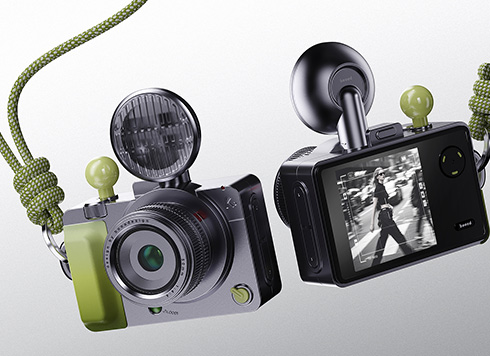 EDC·Trendy Camera Product Design: Form Follows Emotion
EDC Toy Camera: Braun-inspired retro design ...
-
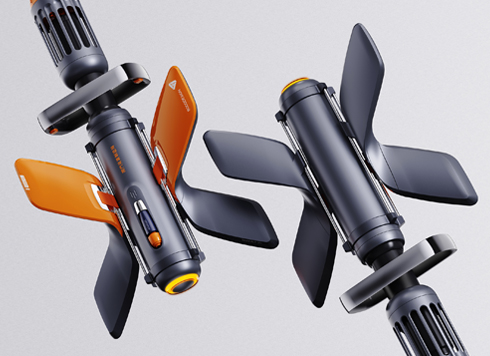 Product Design of Children's "Bubble Rocket" Underwater Thruster
Inspired by "Octonauts + Space", kids' "Bub ...
-
 Design of Adaptive Intelligent High-Altitude Shuttle Transport Robot
Smart rural shuttle bot: Streamlined, weath ...
-
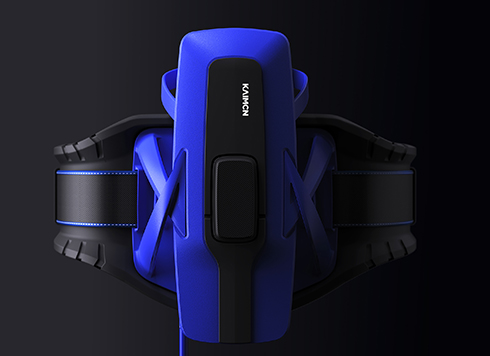 "Effortless" Exoskeleton Wear: Unleash Ultimate Freedom in the Sea
"Unfelt Wearability" & "Bionic Power" redef ...
-
Detailed Rendering Production Workflow: Modeling, Renderer Selection, and Delivery Acceptance Criteria
Date: Aug 1, 2026 Read: 113
-
Renders look washed out with crushed shadows — which step usually goes wrong first?
Date: Sep 10, 2026 Read: 107
-
Factory Building Landscape Planning 3D Modeling and Rendering: How Long Is Delivery? Where Does Rework Often Get Stuck?
Date: Aug 31, 2026 Read: 108
-
Rendering Keeps Getting Revised: Is the Main Issue Modeling or Materials and Lighting?
Date: Aug 28, 2026 Read: 100
-
Park Plaza Street Greening Production: Static Renders or Real-Time? 2026 Delivery Timelines and Common Rework Points
Date: Aug 16, 2026 Read: 93