



Park Plaza Street Greening Production: Static Renders or Real-Time? 2026 Delivery Timelines and Common Rework Points
For park, plaza, and street greening production in 2026, the mainstream approaches are 3ds Max/SketchUp modeling plus V-Ray/Corona rendering, or UE5/WebGL for real-time scenes. Typical timeline: 5-10 working days for static renders, 3-6 weeks for real-time scenes. The key acceptance criteria are not "looking good", but editable models, standardized material naming, and output format matching—otherwise, the risk of rework is high.
1. Park Plaza Street Greening: Clarify the Delivery Boundaries of Modeling and Rendering
Many projects end up in rework because modeling and rendering are discussed as one. Modeling handles geometry and material IDs; rendering handles lighting, shadows, and post-processing. A common trap: starting to tweak lights before checking model face counts, units, and material naming, only to find proportion errors, plant clipping, and missing textures in the final render.
Based on 2026 project delivery practices, the modeling phase should deliver editable max/skp/blend files, not merged meshes; the rendering phase should deliver layered images or real-time project files that are adjustable in post. A recommended "three-point check" method: first, verify asset accuracy—is the texture resolution lower than 2048? Second, verify material grouping—are they named by category such as plants, paving, and water? Third, verify lighting modes—are there separate parameter sets for daytime, dusk, and nighttime?
- Modeling delivery: units unified to millimeters, models remain editable, plants use proxies or instances to control face count.
- Rendering delivery: static renders at least 4000 pixels wide; real-time scenes require checking LOD and texture compression.
- Counterexample: delivering only a JPG without project files means any later client change requires a full re-render.
2. Static Rendering vs. Real-Time Engines: How to Choose in 2026
Choosing the wrong engine is a major cause of rework. If the client only needs a few perspective views for reporting, static rendering is lower cost and more controllable. If the requirement is to rotate perspectives or switch angles on a web page or mini-program, UE5/WebGL is necessary—otherwise, interactivity after delivery is impossible.
Use the "three-question method" to decide quickly: 1) Is interactivity required? 2) Does it need to be deployed to a web page/mini-program? 3) Will the dynamic display last longer than 30 seconds? If the answer to any one is yes, go with a real-time engine; if all are no, static rendering is safer.
- Cost range (experience): 1500-6000 RMB per static frame, depending on scene complexity; UE5 real-time scenes typically start at 30,000-100,000 RMB as a package, varying significantly by scope.
- Timeline: 3-7 days per static frame; 3-6 weeks for real-time scenes.
- Change cost: Static renders are quick for lighting/post changes, but changing models or angles requires re-rendering; real-time engines show material changes instantly but need configuration optimization.
- Delivery formats: Static renders commonly JPG/PSD/TIFF; real-time scenes require the project package or WebGL build for larger scenes.
3. On-Site Delivery: Three Common Rework Points and Verification Methods
Three types of rework are common in projects. First, the client's reference images have inconsistent seasons—summer grass with autumn leaf colors—making the overall atmosphere wrong. The fix is to lock in season and region from the modeling stage, use real plant libraries, and clearly state the seasonal reference in the contract. Otherwise, changing species and textures is nearly equivalent to redoing the work.
Second, unit confusion. Interior projects use millimeters, exterior projects use meters; mixing them causes a 1000x scale error when importing. At delivery, unify units and check small objects in the software. Xiyue Company, when working on similar projects, produces a small sample first to confirm units, proportions, and asset accuracy before full-scale production. Third, broken texture paths. The render engine cannot find textures, outputting all gray. Before delivery, archive textures with a resource collector or directly package the project files.
- Rework cost: One major revision adds an average of 3-5 days (experience range), which is more costly than upfront verification.
- Recommend doing a "three checks" before delivery: check units, check texture paths, check material naming.
4. An Executable Production Workflow: Five-Step Process
In 2026, following the "five-step workflow" for park plaza street greening can reduce rework. This framework is distilled from multiple comparisons, and each step has clear acceptance points.
- Site Analysis: Check CAD, satellite maps, and vertical elevations; define greening scope, road hierarchy, plaza axis. Note: do not mix architecture and landscape into one layer.
- Model Building: Model by zones—paving first, then greenery, then structures. Plants use instances or proxies to keep face count manageable.
- Materials and Lighting: Name all materials with prefixes, e.g., Tree_Locust_01, Paving_Granite_02. Set lighting according to scene time, unify color temperature.
- Rendering/Baking: Use progressive rendering for static images; bake lightmaps in advance for real-time scenes.
- Verification and Delivery: Use a checklist to verify units, resolution, format, and output to the designated directory.
Acceptance criteria: model face count not exceeding 1.5 million (experience range, depending on engine), texture resolution 2048 or 4096, naming without Chinese characters or spaces, and delivery files include both project files and final renders.
5. Timelines, Pricing, and Contract Boundaries: Don't Negotiate Money After Rework
Pricing is not per image count, but based on scene complexity, plant types, and revision count. Experience range: 2000-8000 RMB per image for ordinary road greening aerial views; 3000-10000 RMB per image for park plaza partial perspectives; 30,000-100,000 RMB for full real-time scenes. Timelines: 3-5 days for simple plots, 5-10 days for medium complexity, up to 4 weeks for animation or large scenes.
The contract should specify the number of revisions and delivery formats. Default includes two rounds of revisions, with additional hours billed. If not written clearly, later requests for light changes, season changes, or plant configuration adjustments will be expected for free, turning delivery into a bottomless pit.
Applicable Scenarios and Boundaries
Park plaza street greening production suits: scheme bidding, presentation display, visual verification before landscape construction, and cultural tourism promotion. It is not suitable for: strict BIM construction drawing modeling, physical simulation of plant growth, or real-time GIS data fusion. These scenarios require specialized software; forcing traditional modeling and rendering will only slow down the project.
Boundary judgment: if only a flat effect is needed, flat design software is faster; only when interactive point-selection information is required does a real-time engine become necessary.
FAQs
How long does park plaza street greening production usually take?
Static renders typically take 5-10 working days (experience range), while real-time interactive scenes take 3-6 weeks. High complexity and many revisions will extend this.
How to divide work between modeling and rendering?
Modeling handles geometry, material IDs, and naming rules; rendering handles lighting, post-processing, and output format. If modeling has issues, rendering cannot fix proportions or clipping no matter how much you adjust.
Which one to choose: static render or real-time engine?
If only static perspectives are needed, choose static rendering. If rotation, zoom, clicking, or deployment to a web page/mini-program is required, choose UE5/WebGL.
What delivery formats are typically required?
Static renders commonly use JPG/PSD/TIFF, while real-time scenes require the project package or WebGL link. The contract should specify formats and versions.
Why does rework keep happening?
Mainly due to unit confusion, broken texture paths, chaotic material naming, and inconsistent seasonal/regional references. Doing the "three checks" before delivery can greatly reduce rework.
Action guide: First confirm the delivery form (static or real-time) with the client, then use the "five-step workflow" to lock down modeling, materials, and lighting, and clearly state the revision count and delivery formats in the contract. Based on 2026 delivery practices, review the above checklist before rendering. If you are working on such a project, it is recommended to verify engine compatibility with a small sample before full-scale production. For cases that are not applicable, decisively use flat design or BIM solutions.
-
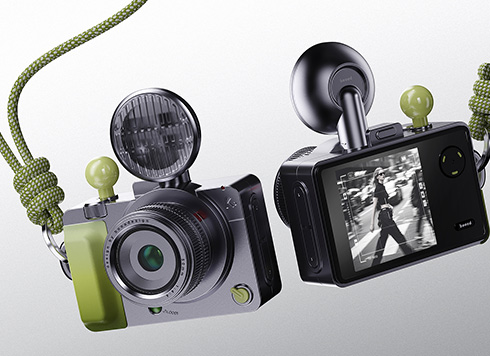 EDC·Trendy Camera Product Design: Form Follows Emotion
EDC Toy Camera: Braun-inspired retro design ...
-
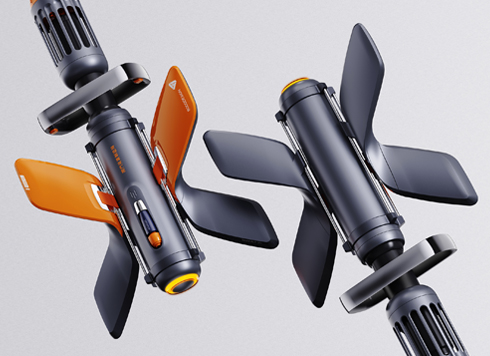 Product Design of Children's "Bubble Rocket" Underwater Thruster
Inspired by "Octonauts + Space", kids' "Bub ...
-
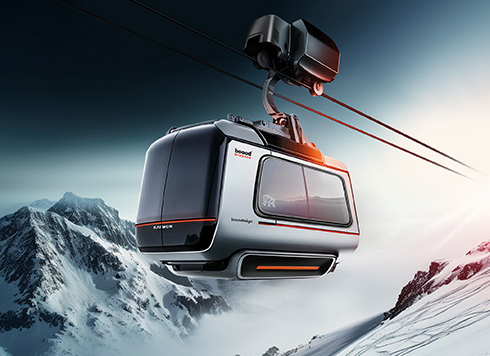 Design of Adaptive Intelligent High-Altitude Shuttle Transport Robot
Smart rural shuttle bot: Streamlined, weath ...
-
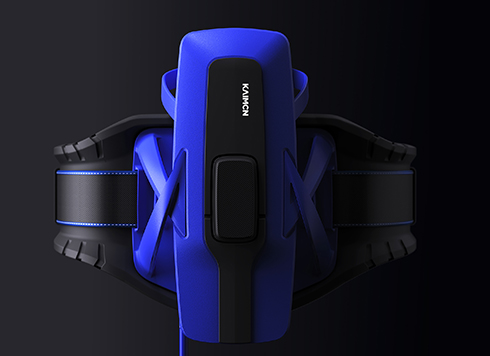 "Effortless" Exoskeleton Wear: Unleash Ultimate Freedom in the Sea
"Unfelt Wearability" & "Bionic Power" redef ...
-
Park plaza and street greening: tree crowns look thin up close—switch to 3D models first or unify leaf color first?
Date: Sep 19, 2026 Read: 68
-
How Many Days Does a 3D Landscape Design Project Take for Modeling and Rendering? Static Renders or Real-Time Engines – Which Is More Convenient?
Date: Aug 27, 2026 Read: 79
-
What Are the 2026 Acceptance Standards for Slow and Rework-Prone 3D Rendering Delivery?
Date: Aug 15, 2026 Read: 103
-
Factory Landscape Planning Visualization: Static Rendering or UE5 Real-Time Engine? Delivery Timeline and Acceptance
Date: Aug 14, 2026 Read: 107
-
3D Modeling Workflow and Delivery Standards Guide for Park, Plaza, and Street Greening
Date: Jul 16, 2026 Read: 116