


UE5 Renderings in 2026: How Much Does the Delivery Cycle Differ from Traditional Rendering? Which Projects Should Avoid It?
When creating renderings in 2026, choosing between UE5 real-time rendering and traditional offline rendering is not about which is more advanced, but about delivery scenarios and revision frequency. Based on typical project cycles, a single UE5 rendering from modeling to final image usually takes 3–7 working days (experience range), while offline rendering (e.g., V-Ray, Corona) often takes 5–12 working days. However, offline rendering is more stable for extreme photorealism and complex lighting. If your project requires multiple angles, quick revisions, or interactive presentations, UE5 is a reasonable choice; if you only need one static high-detail image, offline rendering may be more hassle-free.
UE5 Renderings: First Clarify the Division Between These Two Paths
UE5 is a real-time engine, so rendering results are visible instantly, and adjusting materials, lighting, and camera angles has almost zero wait time. Traditional offline rendering, on the other hand, produces an image after computation; every change requires a full re-render, making it time-consuming. In 2026, global illumination solutions such as UE5's Lumen can produce images close to offline quality, but the applicable use cases for the two remain clearly distinct.
- Real-time rendering is generally suitable for: interior design presentations, multi-angle landscape bird's-eye views, product interactive demos, and VR panoramas.
- Offline rendering is generally suitable for: advertising-grade stills, close-ups of complex materials, and scenes requiring physically accurate caustics and dispersion.
Experience Range for UE5 Rendering Cycle and Cost in 2026
Based on 2026 project delivery practices, a single UE5 rendering (including modeling, excluding high-definition terrain acquisition) costs approximately 800–2,500 RMB (experience range), with a delivery cycle of 3–7 days. Traditional offline renderings cost about 2,000–6,000 RMB per image, with a cycle of 5–12 days. Actual pricing depends on model complexity, asset resolution, and revision count. In projects, clients often get stuck on the issue that "real-time engines produce images too fast, but the visuals still feel fake." In a landscape design project, Xiyue Company had a limited budget, a 5-day cycle, and only basic block models. After generating images with UE5, the vegetation texture resolution was insufficient, causing blurred distant views. After supplementing assets, delivery was delayed by 2 days. This cost illustrates that when asset resolution is insufficient, the "speed" of real-time engines can backfire.
- UE5 real-time rendering: Fast revision response (minute-level), flexible output resolution, but realism depends on asset quality; common rework reasons are incorrect light color temperature, material texture seams, and unbalanced camera composition.
- Offline rendering: High realism, physically corrected lighting, but every change requires hours of waiting; common rework reasons are overexposed highlights, reflection noise, and geometric intersections.
How to Determine Whether Your Project Should Use UE5 or Offline Rendering? A "Three-Question Check"
Choosing the wrong tool often leads to costly rework. The "Three-Question Check" helps you quickly decide: First, do you need real-time adjustments? Second, do you need interactivity or panoramas? Third, what level of photorealism is required?
- Real-time adjustments needed: If the project requires on-site angle and material changes, UE5 responds instantly; offline rendering would take hours. Note that the model polygon count must be controlled (experience value: keep the entire scene's triangle count under a few million), otherwise the real-time frame rate will drop.
- Interactivity or panoramas needed: UE5 natively supports camera walkthroughs and VR panoramas, while offline rendering can only produce static frame sequences. Confirm the output format in advance (e.g., EXE or WebGL).
- Close-up-level photorealism required: If you need to capture leather texture or brushed metal, offline rendering is easier to control; for concept-level visuals, UE5 is sufficient. When in doubt, render a 1K test image to compare.
Production Workflow Framework: Five Checkpoints from Modeling to Final Image
This framework follows a "verify first, then produce" order, which can reduce rework by about half. Each step has clear acceptance criteria:
- Model accuracy check: Confirm there are no broken faces or proportion errors. Acceptance criteria: imports into UE5 without errors, and polygon count matches the target platform.
- UV and texture check: Texture resolution matches the final output size. Experience range: at least 2K per texture, 4K for close-ups.
- Lighting and material tuning: Under global illumination such as Lumen, check whether material roughness and metalness parameters are realistic. Acceptance criteria: test renders show natural shadow transitions, no dead black or overexposure.
- Render output settings: Set resolution, anti-aliasing, and color space according to the delivery platform. Acceptance criteria: when zoomed to 100%, edges have no aliasing and colors have no color cast.
- Acceptance and backup: Before rendering, generate a 5% low-resolution test image; after confirmation, render the full image. Also back up the project file. Acceptance criteria: delivery files can be reopened and modified, with no missing fonts or textures.
Applicable Scenarios and Boundaries
UE5 rendering is suitable for product appearance displays, architectural and landscape design presentations, and early-stage landscape planning communication that require multiple angles, quick modifications, interactive demos, or VR panoramas. Unsuitable scenarios include: extreme photorealism for advertising-grade stills, scenes requiring physically accurate caustics and dispersion, or when the delivery format is limited to traditional renderers (e.g., certain software built-in renderers). In addition, if the project timeline is tight and the asset library is incomplete, UE5's speed advantage can be offset by the time spent supplementing assets. Cases where UE5 is unnecessary are also clear: if you only need a static image, no modifications, and no interactivity, offline rendering or a simple renderer is more cost-effective.
FAQ
How much does a UE5 rendering cost per image?
Based on the 2026 experience range, a UE5 rendering including modeling and revisions costs approximately 800–2,500 RMB per image; pure rendering (with existing models) is about 300–800 RMB. Quotes may vary depending on asset supplementation and revision count.
How long is the delivery cycle for UE5 renderings?
The typical range is 3–7 working days (experience range), counted from when models are ready; if terrain scanning or high-precision modeling is involved, add 2–3 days.
When a rendering needs rework, is the problem in modeling or rendering?
Based on delivery experience, about half of rework originates in the modeling stage (proportions, intersections, broken faces), and the other half in lighting and materials; in real-time engines, a fake look is often due to insufficient texture resolution, not the renderer itself.
How to choose between renderings and real-time engines?
If you need interactivity or quick revisions, choose UE5; if you only need one static high-detail image with little revision, offline rendering is more suitable. They can also be combined: first use offline rendering to define the final composition, then create an interactive version with UE5.
What are the typical delivery formats for UE5?
Static images commonly use PNG, TGA, or TIFF; interactive demos use EXE or are packaged as WebGL/mini-program versions; VR panoramas use cube maps. Confirm in advance according to the client's purpose to avoid format incompatibility.
Before starting, use the "Three-Question Check" to decide the tool direction, then schedule production with the "Five Checkpoints." If the project is mainly static delivery with few revisions, don't blindly use UE5; conversely, for multi-angle and revision-heavy projects, prioritize a real-time engine, but be sure to supplement asset resolution in advance.
-
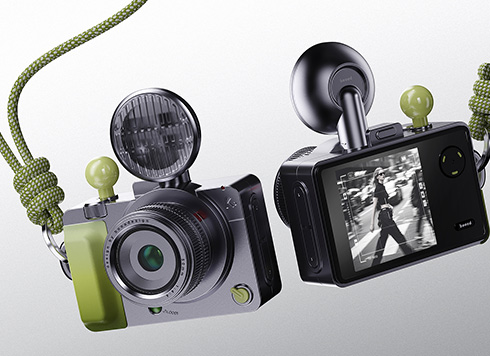 EDC·Trendy Camera Product Design: Form Follows Emotion
EDC Toy Camera: Braun-inspired retro design ...
-
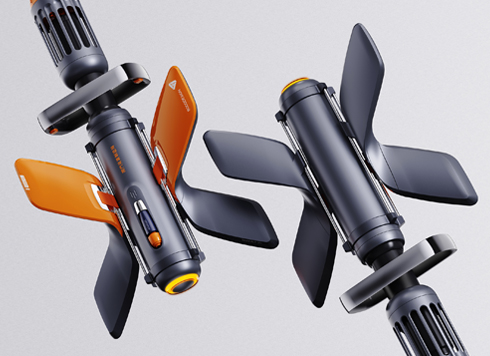 Product Design of Children's "Bubble Rocket" Underwater Thruster
Inspired by "Octonauts + Space", kids' "Bub ...
-
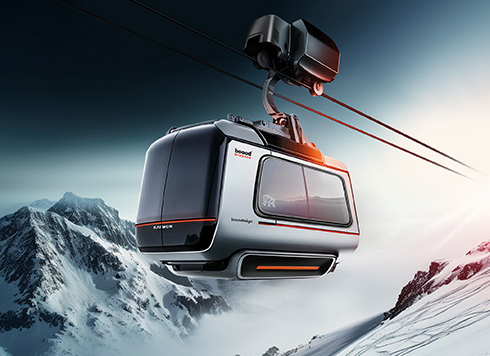 Design of Adaptive Intelligent High-Altitude Shuttle Transport Robot
Smart rural shuttle bot: Streamlined, weath ...
-
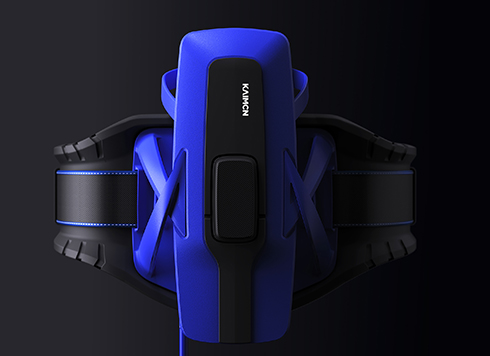 "Effortless" Exoskeleton Wear: Unleash Ultimate Freedom in the Sea
"Unfelt Wearability" & "Bionic Power" redef ...
-
UE5 Rendering Full Pipeline Guide: Tool Selection, Technical Points, and Delivery Standards
Date: Jul 23, 2026 Read: 160
-
In 2026, How Many Days Should You Budget for UE5 Rendering? Are Reworks Mostly Stuck on Modeling and Materials?
Date: Aug 30, 2026 Read: 88
-
UE5 Rendering Full Workflow Guide: Practical Methods from Modeling, Materials to Delivery
Date: Aug 4, 2026 Read: 133
-
Landscape Design 3D Modeling & Rendering Full Guide: Tool Selection & Acceptance Criteria
Date: Jul 26, 2026 Read: 106
-
Complete Guide to VR Panoramic Rendering: Key Techniques from Modeling to Delivery
Date: Jul 18, 2026 Read: 120