



How Long Does Unity 3D Animation Take and What Formats Are Delivered? 2026 Acceptance Standards and Rework Points
Unity 3D animation production is about building scenes, adjusting materials, and writing animations in a real-time engine, then exporting them as video or interactive files. In 2026, for content that "needs to move" like product demos, digital humans, and architectural walkthroughs, it is more suitable than traditional rendering—provided the project requires real-time interaction, frequent camera changes, or later updates. Experience range: with complete assets, a medium-complexity demo takes 5 to 10 working days. If none of these three conditions apply, Unity may not be necessary.
What is the difference between Unity 3D animation production and traditional rendering?
Traditional rendering uses offline rendering, such as V-Ray and Corona. Changing an angle or light requires recalculating the image, and the cycle is measured in days. Unity is a real-time engine with WYSIWYG: camera, lighting, and materials are adjusted in the editor and viewed instantly, and export is fast, so modification costs are significantly lower. However, offline rendering still has advantages for photorealistic stills and high-precision materials.
- Rendering (offline): suitable for photorealistic stills and advertising large images; high single-frame quality, but each revision takes days.
- Unity 3D animation production (real-time): suitable for demo videos, interactive walkthroughs, digital humans, Web3D; fast modification, slightly lower material limits.
Decision criteria: if the project calls for "360-degree rotation to view the product," or uploading new styles to the backend and automatically changing materials, Unity is essentially the only way; if only a large poster is needed, offline rendering is more trouble-free.
A practical Unity 3D animation production workflow: the four-step approval method
Based on the more stable delivery practices in 2026, we recommend four steps: define interaction, prepare assets, adjust the scene, and verify delivery. Each step has an exit standard, and skipping any step is likely to cause rework.
- Define interaction and storyboard: specify whether it is pure video or interactive, and how the camera moves. Exit standard: a one-page storyboard script signed by the client.
- Modeling and asset preparation: use 3ds Max, Blender, C4D, etc., and pay attention to units, axes, and polygon counts. Experience range: keep single-model polygon count under 100,000, textures no larger than 2048, and total polygon count can run at 60 fps.
- Materials, lighting, and Unity configuration: plan baked or real-time lighting in advance; adjust materials according to Unity's standard Roughness/Metallic workflow. Exit standard: the viewport result differs from the final output by no more than 10%.
- Test export and acceptance: test on target platforms—PC, mobile, and WebGL have very different performance. Exit standard: video at least 1080p, stable 30 fps, and WebGL opening in mainstream browsers.
The key to this workflow is to force the client to confirm the storyboard at the first step. Many rework cases stem from "let's produce it and see later." Once the shot order changes, the models and animations are all redone. Better to spend an extra day confirming than to save it.
At the delivery site: how assets, lighting, and engine constraints affect rework
At a project site, a common pitfall is that the client provides high-poly models with hundreds of thousands or even millions of faces. Dropping these directly into Unity causes it to freeze into a slideshow. The solution is to first reduce the polygon count and add LODs, bake the high-poly details into normal maps, and set up LOD groups. Without this step, the demo will drop frames, causing the client to question your capability, and eventually you will have to redo the work, spending two to three extra days. Another pitfall is lighting: too many real-time lights and a large shadow distance can halve the frame rate on mobile. The common approach is to use baked lighting whenever possible, use real-time lights only for dynamic objects, and control shadow distance according to the scene.
Experience range: a medium-complexity product demo, from model cleanup to Unity motion export, typically takes 5 to 10 working days; adding a digital human with full-body motion adds another 2 to 3 weeks. The premise is complete assets; otherwise, each rework point can eat up 2 to 3 days.
- High polygon count: reduce faces and add LODs, otherwise the live demo will drop frames.
- Incompatible materials: materials from offline renderers need to be re-adjusted according to the engine.
- Unplanned lighting: too many real-time lights cause lag; need baking or shadow distance control.
- Unconfirmed storyboard: if the shot order changes, all animations need to be reworked, which is very time-consuming.
Delivery formats and acceptance standards: what qualifies and what should be rejected
In 2026, common delivery has three tiers: MP4 video, WebGL link, and Windows/Android application. Acceptance is not just "it works"; it must be checked against a checklist.
- Video tier: resolution at least 1080p, 2K/4K recommended; bitrate no lower than 8Mbps; no flickering, no frame skips; duration and shots checked against the storyboard.
- WebGL tier: opens in Chrome and Edge; loads in no more than 10 seconds on broadband (experience range); no obvious delay in interaction response.
- Application tier: reasonable installation package size, fast startup, explicit exit method in UI; on mobile, check heat and battery consumption.
Also accept source files: naming conventions and complete texture paths. Otherwise, if you want to change colors next month and can't find the textures, there will be another dispute.
Applicable scenarios and boundaries: which projects are worth using Unity?
Unity 3D animation production is suitable for: product demo animations, AI digital humans, architectural and garden walkthroughs, Web3D display, and interactive training. The common point is "needs to move, needs to change, needs to be viewed from multiple angles." Conversely, if all you need is a high-precision still poster or cinematic light effects, offline rendering is more appropriate.
- Worth using: product demos, digital humans, interactive walkthroughs, Web3D display, scenes that can switch styles or colors.
- Don't use: single still posters, film-level CG, short videos with zero interaction.
Boundaries where it is not suitable: extremely low budgets (two to three thousand yuan) with complex interaction requirements cannot cover costs; CG short films requiring photorealistic skin texture may have real-time rendering debugging costs exceeding offline rendering; clients have no interaction needs and only want a video, so traditional rendering or editing is more direct.
Decision boundary: if the project description includes "rotatable, clickable, changeable color, real-time switching," Unity should be used; if it's only "produce an image, produce a video," consider traditional rendering first.
FAQ
What factors affect the production cycle and quotation of Unity 3D animation?
Main factors include model complexity, animation length, interaction depth, and number of revisions. Experience range: simple product demos take 5 to 10 working days; complex scenes with digital humans take 3 to 4 weeks. Quotation is calculated per person-day, and more than two revision cycles will extend the schedule.
How are modeling and rendering divided?
Modeling is responsible for model assets, including structure, topology, UVs, and textures; rendering turns the model into the final image or animation. In Unity, rendering is integrated into the engine, mainly adjusting lighting, materials, and export settings; there is no need to use V-Ray separately.
How do you choose between offline rendering and a real-time engine?
Look at the deliverable: choose offline rendering for still large images, choose a real-time engine for dynamic interaction. Render one frame from the same scene using both workflows and compare the results and modification costs.
What formats are typically delivered for Unity 3D animation?
Common formats are MP4, WebGL, exe, or apk. Video is easy to share, WebGL is suitable for web embedding, and application packages are suitable for exhibitions or training. During acceptance, also confirm the source files and project files are archived.
On the action side, we suggest taking a one-page storyboard script to discuss with the production team and clarify "whether real-time interaction is needed," "how many revisions are allowed," and "whether new shots will be added after delivery." If it is just video display, don't pay extra for Unity's real-time features; if it is a true interaction project, don't judge it by offline rendering quotations. The right solution for you is to put the usage scenario and acceptance standards in written confirmation.
-
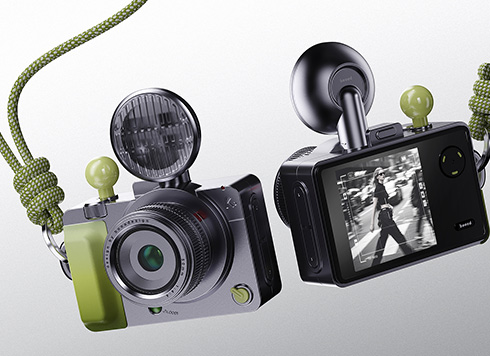 EDC·Trendy Camera Product Design: Form Follows Emotion
EDC Toy Camera: Braun-inspired retro design ...
-
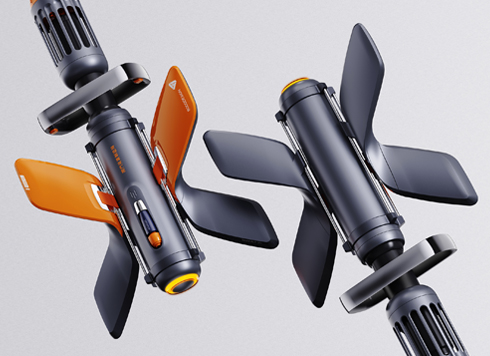 Product Design of Children's "Bubble Rocket" Underwater Thruster
Inspired by "Octonauts + Space", kids' "Bub ...
-
 Design of Adaptive Intelligent High-Altitude Shuttle Transport Robot
Smart rural shuttle bot: Streamlined, weath ...
-
 "Effortless" Exoskeleton Wear: Unleash Ultimate Freedom in the Sea
"Unfelt Wearability" & "Bionic Power" redef ...
-
Unity 3D animation production: model moves smoothly in modeling software but falls apart or jitters in the engine—should you check export settings or skeleton skinning first?
Date: Oct 9, 2026 Read: 29
-
After Unity 3D animation delivery, a character's feet slide while walking—is root motion or movement speed usually the first thing to check?
Date: Sep 21, 2026 Read: 61
-
Unity 3D Animation Production Full Process Guide: Practical Methods from Modeling to Real-Time Rendering
Date: Jul 17, 2026 Read: 164
-
Why does mini-program 3D start smooth on a budget Android phone but get hot and drop frames after two minutes?
Date: Oct 14, 2026 Read: 7
-
In product demo animation, prototype still frames look premium, but the final video moves like PPT slides—should you add motion previews first or increase render precision?
Date: Oct 13, 2026 Read: 10