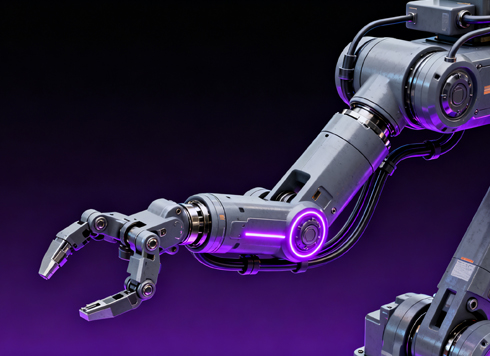
Unity 3D animation production: model moves smoothly in modeling software but falls apart or jitters in the engine—should you check export settings or skeleton skinning first?
In Unity 3D animation production, if a model moves smoothly in Blender, Maya, or 3ds Max but falls apart, jitters, or stutters when looping after being imported into the engine, based on 2026 project delivery experience, the problem is usually not the engine itself. Instead, at least one of four layers is misaligned: export settings, skeleton and skinning, animation data, and engine-side configuration. A more time-efficient diagnosis order is: first verify unit scale and rotation axis, then check skeleton mapping and Bind Pose, next check animation compression and sampling, and leave curve details for last.
First distinguish the type of issue: falling apart, jitter, or looping stutter
Clients often just say "the animation is wrong," but different words point to very different root causes. Falling apart usually shows as overall bone chaos and mesh being stretched away, pointing to unit scale, rotation axis, or Bind Pose. Jitter means the motion is broadly correct but has small local twitches, often related to keyframe reduction, sampling rate, and floating-point precision. Looping stutter means the first and last frames do not match in pose or the tangents are not continuous. If you treat all three together, you can easily waste revision rounds in the wrong direction.
A more time-efficient approach is to first ask the other party to use a screen recording to specify which second, which body part, and what the behavior is, then classify the issue by phenomenon. In experience range, after locating the phenomenon to a specific layer, troubleshooting time can usually be reduced from half a day to a full day down to within one to two hours.
- Overall misalignment or falling apart → first check unit scale, up-axis orientation, and whether Bind Pose has been modified
- Local jitter → first check animation compression mode, keyframe sampling rate, and whether floating-point error is accumulating
- Looping stutter → first check whether the first and last frame poses match and whether curve tangents are continuous
- Position drift → first check the relationship between Root and the model origin, and the Animator's Root Motion toggle
The four-layer alignment method: ordered from lowest to highest modification cost
Ordering the four layers as "unit and axis → skeleton and skinning → animation data → engine-side configuration" is because the earlier the layer, the lower the modification cost, and the more it affects all subsequent steps. If you start by editing curves, you may well be drawing further off in the wrong coordinate system.
- Unit and axis alignment: Confirm how many meters one unit corresponds to on the modeling side, whether export scale remains 1:1, and whether the up-axis matches the engine's convention. If this layer is wrong, the rest is largely wasted effort.
- Skeleton and skinning alignment: Confirm that Bind Pose, bone naming, and skin weights are consistent before and after export; for humanoid characters, check Avatar mapping, and for generic skeletons, check each bone binding relationship one by one.
- Animation data alignment: Confirm whether the animation is baked keyframes or constraint-driven, whether the sampling rate is unified, and whether baking is checked during export. Constraint-based animations that are not baked often become static or fall apart in the engine.
- Engine-side configuration alignment: Confirm that the Animator state machine, Culling Mode, Root Motion toggle, animation compression settings, and packaging specifications are consistent. Working in the editor does not mean working after packaging.
The third and fourth layers are more likely to be skipped during self-checks. In experience, it is much easier to first run a test animation of about 10 seconds through the full pipeline, then batch export, rather than exporting everything at once and checking afterward.
Delivery scenario: constraints, approach, and cost
One type of project is quite common in delivery: budget and schedule are tight, only enough to outsource one segment of character animation, the rig file is provided by the client, bone naming is inconsistent, and some motions are made with constraints. Approach: first pick a 10-second test animation that includes large displacement and fast turns, run it through the full pipeline of "export → import → bind Avatar → package → play on target device," confirm there is no falling apart, jitter, or looping abnormality, then batch process the remaining clips. The cost is about half a day extra for validation, in exchange for avoiding a concentrated rework of the entire batch of animations before acceptance.
If you skip this step, a common result is discovering after all twenty-plus animation clips are exported that the Avatar mapping is misaligned or constraints were not baked. You then need to re-export from the modeling side and check each clip, which in experience range adds about 1 to 2 days and, when the deadline is tight, directly eats into on-device testing and tuning time.
External baking vs. in-engine animation: compare and choose this way
The two paths do not replace each other; the deciding point is whether "the animation needs to be blended in real time by code" or "the animation is a fixed performance."
- External DCC baking then import: Suitable for character performance, mechanical device motion, assembly/disassembly demonstrations, and other clips with high pose quality requirements. Each change requires re-export from the modeling side, so revision cost is relatively high; the typical timeline including modeling and rigging is about 2 to 6 weeks in experience range.
- In-engine hand-keying or procedural driving: Suitable for scenes with many state switches and interaction logic linkage, such as opening doors, button feedback, and parameter-driven mechanical motion. Revisions are done in the engine with faster response, and the typical timeline can be compressed to 1 to 2 weeks, but the expressiveness of complex performance is limited.
- Hybrid approach: Use external baking for primary performance and in-engine state machine switching for interactive states. This combination is fairly common in 2026 real-time projects; the cost is agreeing on naming and clip division rules upfront.
When comparing, it is advisable to look at only two things: revision frequency and whether real-time linkage is needed. If revisions are frequent and linkage is needed, tilt the budget toward in-engine production; if only a fixed performance is required, external baking delivers more stable final quality.
Compression and sampling: what settings count as acceptable
The criterion is not whether it looks smooth in the editor window, but whether high-dynamic clips show abnormalities on the target device after packaging. Clips such as fast waving, foot landing, and prop swinging are more likely to expose problems: excessive compression deforms poses and makes motion stiff, while inconsistent sampling rates cause rhythm to speed up and slow down.
- Unify sampling rate according to project specifications; a common practice is that 30fps is sufficient for most demonstrations, while delicate performance clips may consider 60fps
- Set compression modes by clip tier: use high precision or no compression for key performances, and heavier compression for background looping motions
- After packaging, run at least one pass on the target device; smooth in the editor does not equal smooth on the actual device
- Keep a copy of the source animation files so you do not need to re-export from the modeling side when adjusting compression parameters
A typical failing scenario is: previewing only in the editor, setting compression to a level that saves package size, and delivering; then foot sliding, pose stretching, or missing animation appears on the actual device, and by the time you look back, the acceptance milestone has often already passed.
Applicable scenarios and boundaries
Situations suitable for Unity 3D animation production: when real-time interaction, state switching, parameter linkage are needed, or the same set of motions must be reused across multiple terminals, typically such as product interaction demos, mechanical mechanism motion, character motion display, and exhibition hall interactive installations. In these projects, animation is a long-term maintained asset that needs to be iterable and replaceable.
The unsuitable cases are equally clear: if the final output is only a fixed-camera video with no interaction or parameter linkage requirements, using offline rendering directly is usually more convenient and the schedule is easier to control; if the animation plays only once with no expectation of later revisions, putting the budget into modeling precision and rendering quality is often more cost-effective than building an interactive animation system.
Frequently asked questions
How long does Unity 3D animation production usually take?
Experience range depends on scale: importing and debugging a single-character performance animation commonly takes 3 to 10 working days; a complete project including modeling, rigging, multiple animation clips, and engine integration commonly takes 2 to 6 weeks; on-device adaptation and rework are counted separately.
Where do quotes differ, and which costs more: modeling or animation?
The difference usually lies not in the engine, but in modeling precision, rigging quality, and the number of animation clips. According to 2026 typical ranges, rigging and animation often account for a relatively high proportion; the higher the model reuse, the more controllable the overall quote.
When exporting FBX, which settings easily cause hidden problems?
There are three common pitfalls: unit scale not kept at 1:1, up-axis inconsistent with the engine convention, and constraint-based animations not having baking checked during export. These three items show no problem on the modeling side and only surface en masse after entering the engine.
Playback is normal in the editor, but after packaging the animation is missing or laggy—what should I check first?
First check animation compression settings and Culling Mode, then check whether the Animator is disabled and whether assets are being stripped. These areas do not report errors in the editor and only surface after packaging.
What format is usually delivered for animation?
Commonly FBX plus source files, Unity project packages or prefabs, along with animation clip descriptions and a naming list. Whether to provide source files and to what extent should be written clearly in the contract in advance.
If the project already has a usable rig file, it is advisable to first take a test animation of about 10 seconds through the complete pipeline of export, import, packaging, and on-device playback before deciding the batch production specifications. Conversely, if the final output only needs a fixed-camera video, there is no need to invest extra in interactive capabilities. Writing the three things—units, naming, and clip division—into a document before starting can save a lot of later verification time.
-
 EDC·Trendy Camera Product Design: Form Follows Emotion
EDC Toy Camera: Braun-inspired retro design ...
-
 Product Design of Children's "Bubble Rocket" Underwater Thruster
Inspired by "Octonauts + Space", kids' "Bub ...
-
 Design of Adaptive Intelligent High-Altitude Shuttle Transport Robot
Smart rural shuttle bot: Streamlined, weath ...
-
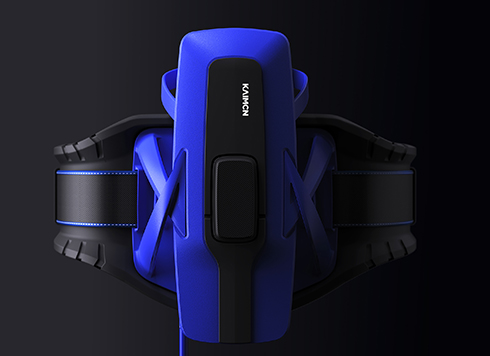 "Effortless" Exoskeleton Wear: Unleash Ultimate Freedom in the Sea
"Unfelt Wearability" & "Bionic Power" redef ...
-
After Unity 3D animation delivery, a character's feet slide while walking—is root motion or movement speed usually the first thing to check?
Date: Sep 21, 2026 Read: 61
-
How Long Does Unity 3D Animation Take and What Formats Are Delivered? 2026 Acceptance Standards and Rework Points
Date: Aug 18, 2026 Read: 87
-
Unity 3D Animation Production Full Process Guide: Practical Methods from Modeling to Real-Time Rendering
Date: Jul 17, 2026 Read: 164
-
Why does mini-program 3D start smooth on a budget Android phone but get hot and drop frames after two minutes?
Date: Oct 14, 2026 Read: 6
-
In product demo animation, prototype still frames look premium, but the final video moves like PPT slides—should you add motion previews first or increase render precision?
Date: Oct 13, 2026 Read: 10