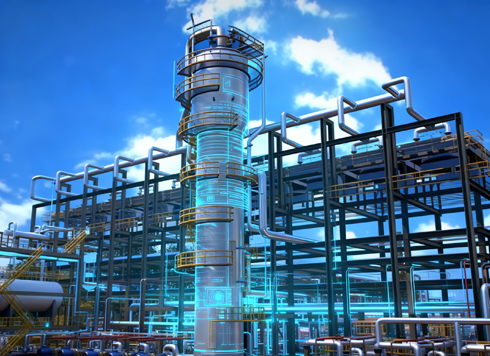
Client says your UE5 render looks like a game screenshot: adjust post-processing first or change the reflection source first?
When a client says a UE5 render looks like a game screenshot, based on 2026 project delivery experience it is usually not that the engine is not professional enough — it is that five things are still sitting at defaults: post process volume, reflection sources, anti-aliasing, material roughness, and set dressing density. Start from the cheapest layer to change — the post-processing layer — and work backward before touching reflections and materials; a typical range of half a day to two days usually brings a clear improvement, and the share of projects that truly need a rebuild from scratch is not high. As for whether to adjust post-processing first or change the reflection source first, it depends on whether the most jarring thing in the frame is that filter-like look, or glass and metal that read as fake.
1. Why default settings carry a “game look”: three mechanical differences
UE5's default configuration is built for real-time runtime, not for still presentation images. TAA/TSR blends history frames to suppress flicker, which softens detail; screen space reflections vanish entirely when off-screen information is missing; Lumen's indirect light carries noise at low sample settings and then gets smeared by denoising. None of these three things is easy to see in motion, but once you freeze a single frame they stand out sharply — and that is usually where the client's “looks like a screenshot” comes from.
On top of that, the post process volume ships with Bloom, chromatic aberration, vignette, and film grain turned on, so the frame carries a filter layer by default. In a game those parameters serve look and frame rate; in a presentation image they easily turn into a plastic feel. So the problem is generally not the engine tier — it is that the defaults were never reset for a still-image scene.
- Anti-aliasing: stills are better served by high sampling or supersampling; history-frame blending flattens material detail.
- Screen space reflections: reflections of off-screen objects are lost, and glass, metal, and glossy stone are the first to give it away.
- Indirect light: low-quality settings show obvious noise in indirect light; stills can trade time for higher samples.
- Post process volume: Bloom, grain, and chromatic aberration are the main sources of the “game look”.
2. Post-processing first or reflection source first: a five-layer check order
This order runs from lowest to highest cost of change: the post-processing and reflection layers barely touch physical assets, while the set dressing and geometry layers can affect the schedule. Spending one to two hours to rule out about 60% of misdiagnoses before deciding whether to touch the model is usually the step that saves the most time. After each change, render a comparison from the same camera position and the same frame number, otherwise it is easy to make the image muddier as you go.
- Post-processing layer: first turn off grain, chromatic aberration, and vignette, raise the Bloom threshold so only highlights trigger it, and bring overall sharpening down to a low setting (experience range around 0.3–0.6).
- Reflection layer: switch glass and metal to reflection captures, planar reflections, or cubemaps instead of betting the whole material feel on screen space reflections.
- Anti-aliasing layer: for stills use high sampling or supersampling instead of TAA softening; dynamic shots can accept TSR, but avoid the ghosting that fast pans produce.
- Material layer: roughness maps need variation — one single value across the whole scene reads most like a game; do not overdo normals, since overdone normals are themselves a source of game feel.
- Set dressing layer: add aerial perspective, real set dressing, and a slight lens feel; a level that is as empty and clean as a game level is also a source of the screenshot feel.
3. On delivery: in a two-day turnaround, what most easily drags a render into game look
What often happens on a project: the client supplies one CAD version and a few mood images, the model is built from the drawing, materials are pulled from an asset library, and only the night before delivery do you discover the glass reflections are empty. The constraints were a two-day turnaround and no usable HDRI assets; the approach was to lock three to four camera positions first, align the post-processing layer and reflection layer in one pass, then fill in set dressing; the cost was that material detail could only be brought up to a passable level, and the room for a second adjustment was very narrow — later, when the client wanted a different wall material, it cost nearly another day of rework. The more reliable approach is to lock down the project template, post-processing presets, and material naming conventions in the first version, so that the second revision has somewhere to start.
Another thing that is often overlooked is asset accuracy: if the photos the client provides cover only one angle and carry no dimensional basis, the modeling stage can only guess, and no amount of lighting adjustment at render time can recover a geometric deviation. Before delivery, checking model units, texture paths, and color space item by item is usually faster than grinding on lighting after the fact — you can check this part line by line against the engine's official documentation and the project acceptance checklist. Based on typical 2026 delivery experience, this kind of check more often lands within half a day (experience range); projects that really do get rebuilt because the asset basis was missing usually already planted the problem back in the modeling stage.
4. UE5 real-time output vs offline rendering: a few differences you can check
UE5 is not meant to replace offline rendering; the difference between the two lies more in iteration method and delivery form than in image tier. Based on typical 2026 delivery experience, they can be roughly separated along the dimensions below (all are experience ranges and should not be used directly as a quote sheet):
- You need to change the scheme on site and switch between multiple cameras: UE5 real-time fits better; a single scene commonly takes 5–15 working days, and the response time for one revision is measured in hours.
- You only need a few stills, with high demands on glossy reflections and subsurface material feel: offline rendering is still steadier; a single image commonly takes 1–3 working days.
- You need a walkthrough video or a looping showroom display: package UE5 or export image sequences, commonly 3–10 working days, plus encoding and compression time.
- Interaction needs are weak and you only need a few presentation images: forcing UE5 in is not necessarily cost-effective; debugging and packaging costs will eat up the difference.
Hardware also needs to be clarified up front: both rendering and packaging in UE5 are graphics-card heavy, and when the client's demo machine is on the low side, frame rate can differ noticeably from the production machine. Running through the demo on the target machine beforehand is generally more reliable than any parameter explanation.
5. Where it fits and where it does not
Situations that suit UE5 output: projects that need multiple camera positions, on-site scheme changes, a walkthrough video, and materials dominated by architecture and hard-surface products. Its strengths are iteration speed and interaction, and these two directly cut the communication cost of repeated revisions.
Situations that do not need UE5: projects that need only one or two stills and demand high glossy reflections and fine material feel; projects where the team has no resource-management and packaging experience with real-time pipelines and just wants to try it out; projects where the only assets are single-angle photos with no dimensions or material basis. UE5 can compress the time it takes to “change a version and see”, but it cannot replace upfront geometric evidence and material basis; without these two inputs, no engine swap can make them up.
Frequently asked questions
How long does one UE5 render image usually take?
When the model is ready, a single still commonly takes 1–3 working days; a full package including modeling and material cleanup commonly takes 3–10 working days, and it varies with asset completeness.
The image looks like a screenshot — do I adjust post-processing first or change the reflection source first?
If it looks like a filter is laid over it, turn off grain, chromatic aberration, and vignette first; if glass and metal read as fake, change the reflection source first. Both are low-cost, and one to two hours commonly tells you the main cause.
Why do quotes for UE5 output differ so much?
The gap mostly comes from modeling precision, material work, and the number of camera shots, not from the engine itself; on real-time projects, lighting adjustment, performance optimization, and packaging also count toward hours.
What formats do clients usually expect when you deliver UE5 work?
Stills are commonly PNG or TIFF, walkthroughs commonly MP4 or a packaged executable; if a live demo is needed, add a packaged build and check it item by item against the client's hardware in the delivery checklist.
With only one CAD version, can I go straight to UE5 output?
Yes, but the geometric basis has to be settled first. When dimensions and material notes are missing, it is better to run a small-scale test layout first and confirm the deviation before committing to full production — usually more time-saving than reworking afterwards.
If you are stuck at the point where the client says it looks like a screenshot, line up the post-processing layer and reflection layer screenshots from the same camera position first, then decide whether to touch physical assets — this is usually the most schedule-saving step. If the project is only a few stills and the materials depend heavily on ray tracing, staying with offline rendering is actually faster. Xiyue Company chooses between real-time interaction and static rendering according to the project goal; the specific approach is bounded by asset completeness, turnaround time, and the demo device; beyond these three conditions, it is better to run a small-scale test before committing the full production.
-
 EDC·Trendy Camera Product Design: Form Follows Emotion
EDC Toy Camera: Braun-inspired retro design ...
-
 Product Design of Children's "Bubble Rocket" Underwater Thruster
Inspired by "Octonauts + Space", kids' "Bub ...
-
 Design of Adaptive Intelligent High-Altitude Shuttle Transport Robot
Smart rural shuttle bot: Streamlined, weath ...
-
 "Effortless" Exoskeleton Wear: Unleash Ultimate Freedom in the Sea
"Unfelt Wearability" & "Bionic Power" redef ...
-
Why does mini-program 3D start smooth on a budget Android phone but get hot and drop frames after two minutes?
Date: Oct 14, 2026 Read: 6
-
In product demo animation, prototype still frames look premium, but the final video moves like PPT slides—should you add motion previews first or increase render precision?
Date: Oct 13, 2026 Read: 9
-
In web 3D, glass curtain walls and railings flicker at oblique angles—should you merge coplanar geometry first or adjust the camera near/far clipping planes first?
Date: Oct 12, 2026 Read: 18
-
Three.js 3D Animation on a Showroom Touchscreen: Can It Stay Stable for a Full Day Offline Without Restart?
Date: Oct 11, 2026 Read: 24
-
Unity 3D animation production: model moves smoothly in modeling software but falls apart or jitters in the engine—should you check export settings or skeleton skinning first?
Date: Oct 9, 2026 Read: 28