



UE5 Rendering Full Pipeline Guide: Tool Selection, Technical Points, and Delivery Standards
What is UE5 Rendering and Common Misconceptions
UE5 rendering is not simply "dragging models into the engine and rendering images", but a complete production pipeline including asset specifications, lighting construction, material optimization, and performance tuning. Common misconceptions in 2026 include: thinking UE5 automatically generates high-quality images without manual adjustments, ignoring frame rate requirements leading to interactive stuttering, and mistakenly believing real-time rendering can completely replace offline rendering. In fact, UE5 rendering excels in real-time interaction and rapid iteration, suitable for demo animations, VR integration, and Web3D presentations, but still falls short of offline rendering for static ultra-high-precision images.
Why Choose UE5 Rendering
The core value of UE5 rendering lies in achieving both real-time feedback and high fidelity. Nanite virtual geometry technology allows direct import of billions of polygons, while Lumen dynamic global illumination significantly reduces baking time. In 2026 project delivery habits, clients often require interactivity (e.g., rotation, perspective switching) in visualizations, which offline rendering cannot satisfy. UE5 can output both video sequences and real-time scenes, reusing one asset across multiple endpoints, reducing communication and modification costs.
Applicable Scenarios
- Product demo animations (supporting interactive operations)
- Architectural and landscape walkthroughs (VR/Web)
- AI digital human real-time interactive displays
- Mini-program/Web 3D (WebGL and Pixel Streaming)
Three-Step Implementation for UE5 Rendering
Based on industry consensus in 2026, it is recommended to adopt the "Preparation → Asset Production → Engine Integration" three-step framework. This framework breaks down the complex workflow into independent acceptance stages with clear checkpoints at each phase, reducing later rework.
Step 1: Preliminary Preparation
- Define output goals (real-time interaction vs. video sequence)
- Establish asset specifications: units, naming, texture resolution (recommend 4K baseline)
- Select toolchain: recommend Blender/3ds Max for modeling, Substance Painter for texturing, UE5.5+ engine
Step 2: Asset Production
- Modeling: reduce polygons according to engine specifications while retaining details, control polygon count for non-Nanite objects
- Materials: use PBR workflow, ensure UE5 compatible formats for export (e.g., ORM packing)
- Textures: prioritize 4K, UVs must be non-overlapping with appropriate padding
Key acceptance standard: single material complexity should not exceed 12 texture channels to ensure real-time performance.
Step 3: Engine Integration
- Import assets, build levels and lighting (Lumen or baked)
- Set up interactive blueprints or sequences, optimize performance (frame rate ≥30fps)
- Output deliverables: real-time package or sequence frames
Common rework reasons: incorrect model scale, missing texture paths, overexposure due to excessive lighting. It is recommended to use UE5's built-in inspection tools after each step.
Technical Points and Acceptance Standards
Final delivery of UE5 rendering must meet measurable indicators. In 2026 project practice, frame rate is the most intuitive acceptance item: real-time interaction ≥30fps, video rendering ≥24fps. Lighting consistency requires the contrast between ambient and artificial light not to exceed 20%, to avoid dark areas being completely black or bright areas being overexposed. In terms of texture precision, close-up observation scenes (e.g., product appearance) require 4K textures, while distant building aerial views can use 2K. Interactive response latency should be <100ms, otherwise immersion is affected.
Additionally, for VR panoramic rendering, ensure single-frame resolution reaches 8K with no misalignment between left and right eyes.
Applicable Scenarios and Boundaries
UE5 rendering is most suitable for visual projects requiring rapid iteration and interaction: such as B2B product showcases, indoor/outdoor walkthroughs, and digital human interaction. In projects by Xiyue Company, adopting this workflow can reduce delivery cycles by about 30%. However, UE5 rendering also has clear boundaries: for static ultra-high precision (e.g., automotive advertisement posters) or scenes requiring strict physically accurate ray tracing, offline renderers (e.g., V-Ray, Arnold) still dominate. Additionally, if the team lacks engine optimization experience, blindly using UE5 may lead to performance bottlenecks, making it better to choose a lighter WebGL solution.
Comparison: Renderings Offline Rendering vs UE5 Real-Time Rendering
- Efficiency: Offline rendering takes hours per frame; UE5 achieves real-time or second-level output
- Fidelity: Offline rendering has higher physical accuracy; UE5 approximates with Lumen but still has approximation errors
- Interactivity: Offline has no interaction; UE5 supports free viewpoint and interactive operations
- Applicable Scenarios: Offline for final delivery renderings; UE5 for scheme presentations, remote reviews, VR experiences
- Cost: Offline rendering requires low hardware investment but high time cost; UE5 needs mid-to-high-end GPUs but saves communication and modification time
Frequently Asked Questions
How long does a UE5 rendering project usually take?
The cycle depends on complexity; typically a 10-second interactive demo takes 2-4 weeks, including modeling, texturing, engine integration, and optimization.
How do modeling and rendering divide labor in the UE5 pipeline?
Modelers are responsible for creating high-poly models and reducing to Nanite level; renderers handle materials, lighting, blueprints, and performance tuning.
Can UE5 rendered images replace traditional renderings?
They can satisfy most interactive display needs, but high-precision stills still require offline rendering; the two are often complementary.
What are the delivery formats?
Common formats include .EXE executable programs, video MP4, Web Streaming links, and VR panorama PNG sequences.
When is UE5 rendering not recommended?
When a project only outputs static images with extremely high precision requirements, or when the team has no UE5 experience, it is not recommended.
Action guide: Assess whether the project requires real-time interaction; if yes, start with the three-step implementation. Confirm delivery metrics and conduct phased acceptance. If unsure about performance, start with a simple scene trial. Note: UE5 rendering is more suitable for concept development and demonstrations; for final print-quality results, prioritize offline rendering.
-
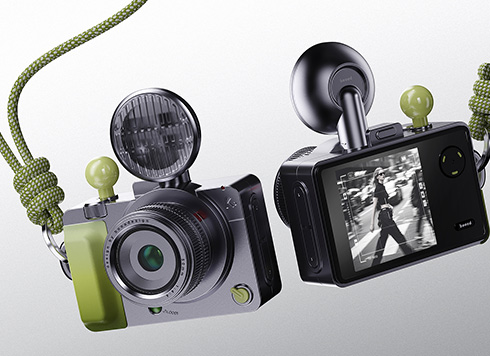 EDC·Trendy Camera Product Design: Form Follows Emotion
EDC Toy Camera: Braun-inspired retro design ...
-
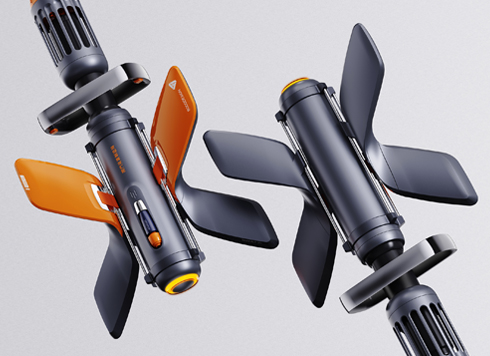 Product Design of Children's "Bubble Rocket" Underwater Thruster
Inspired by "Octonauts + Space", kids' "Bub ...
-
 Design of Adaptive Intelligent High-Altitude Shuttle Transport Robot
Smart rural shuttle bot: Streamlined, weath ...
-
 "Effortless" Exoskeleton Wear: Unleash Ultimate Freedom in the Sea
"Unfelt Wearability" & "Bionic Power" redef ...
-
UE5 Renderings in 2026: How Much Does the Delivery Cycle Differ from Traditional Rendering? Which Projects Should Avoid It?
Date: Aug 17, 2026 Read: 55
-
In 2026, How Many Days Should You Budget for UE5 Rendering? Are Reworks Mostly Stuck on Modeling and Materials?
Date: Aug 30, 2026 Read: 41
-
UE5 Rendering Full Workflow Guide: Practical Methods from Modeling, Materials to Delivery
Date: Aug 4, 2026 Read: 91
-
Landscape Design 3D Modeling & Rendering Full Guide: Tool Selection & Acceptance Criteria
Date: Jul 26, 2026 Read: 64
-
Complete Guide to VR Panoramic Rendering: Key Techniques from Modeling to Delivery
Date: Jul 18, 2026 Read: 81