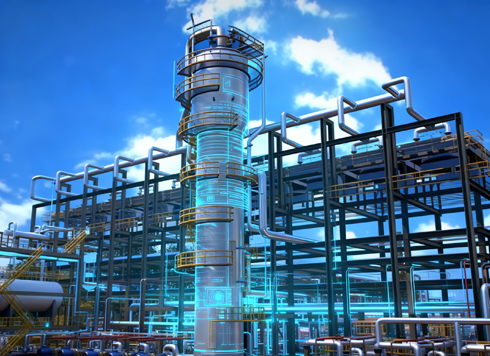





3D Modeling Workflow and Delivery Standards Guide for Park, Plaza, and Street Greening
3D modeling and rendering for park, plaza, and street greening is the workflow of digitally constructing and visualizing landscape elements (such as street trees, flower beds, lawns, shrubs, and accompanying hardscape) in urban public spaces, producing renderings, animations, or real-time scenes. The mainstream path in 2026 is: use 3ds Max or Blender to model terrain and main vegetation, supplement details with SpeedTree or high-quality tree libraries, then render offline with VRay/Corona or use UE5/Lumen for real-time dynamic lighting. Key delivery inspection metrics include: model polygon count kept within a range for smooth viewport interaction (typically 30,000-80,000 triangles per tree), PBR material compliance (roughness, metalness, normal maps complete), lighting simulating different times of daylight (e.g., 10 AM, dusk), and final output resolution meeting print or screen display requirements (e.g., 4K+). The following expands on the process framework, toolchain, acceptance criteria, and common issues.
Core Process for Park and Plaza Greening Modeling: Four-Step Implementation Method
Breaking down complex projects into four phases can avoid extensive rework later. This "Four-Step Implementation Method" starts with requirement alignment and gradually completes the full chain from basic terrain to final delivery. Each step has clear checkpoints suitable for team collaboration or single-person work.
- Step 1: Requirement Analysis and Scene Planning — Define the project scope: Is it a whole street or a local plaza? Greenery density requirements (e.g., how many trees per 100 sqm)? Night lighting included? Output format: single-frame rendering, walkthrough animation, or real-time interaction? It is recommended to produce a Scene Scope Document noting required plant species, heights, crown widths, etc., to avoid later guesswork.
- Step 2: Basic Terrain and Hardscape Modeling — Build terrain undulations based on CAD drawings or survey data, using ground tools (e.g., Max's Paint Deform) for micro-relief. Paving (walkways, curbs, planter bases) should use precise dimensions and basic materials. Note: terrain polygon count should be kept within 50,000 triangles to leave performance budget for vegetation.
- Step 3: Vegetation Distribution and Level of Detail — Place street trees, shrubs, and lawns according to design plans. Tree models should adopt an LOD (Level of Detail) strategy: high-poly models (with full foliage) for close-up views, 2-3 layers of cross-plane billboards or Impostors for distant views. Use scattering tools (e.g., Forest Pack, GrowFX) to randomly distribute shrubs and flowers while maintaining editability. Lawns often use hair systems or instanced patches.
- Step 4: Lighting, Environment, and Final Rendering — Set up sunlight (recommended physical sun system) + HDR environment map, adjust exposure and color temperature. Use post-processing volumes in VRay or UE5 to adjust atmospheric perspective. Check before output: shadows should be soft, highlights not overexposed, and no obvious gaps between vegetation and ground. Common practice in 2026 is to render a low-res test before final output.
Toolchain Selection and Comparison: Offline Rendering vs. Real-Time Engine
In park and plaza greening production, mainstream toolchains fall into two categories: offline rendering represented by 3ds Max/Blender+VRay/Corona, and real-time engines represented by Blender+UE5. They differ significantly in cycle time, cost, and interactivity. The following comparison covers five dimensions based on common 2026 industry project experience.
- Delivery Type: Offline rendering suits static renderings, bird's-eye views, and short-to-medium-length animations; real-time engines suit VR panoramas, interactive walkthroughs, and web or mini-program displays.
- Average Production Cycle (1000 sqm street scene): Offline rendering takes about 5-8 working days (including modeling, texturing, lighting, rendering); real-time engines take about 7-12 working days (due to performance optimization and platform packaging).
- Hardware Requirements: Offline rendering has moderate CPU/GPU demands (single machine sufficient); real-time engines require high-performance GPUs (e.g., RTX 4070 or above) for smooth viewport operation.
- Adjustability: Offline rendering requires re-rendering after lighting changes (minutes to hours per frame); real-time engines support instant adjustment and real-time preview (more flexible user experience).
- Target Client Types: Offline rendering is for design institutes, government presentations, print publications; real-time engines are for real estate marketing, cultural tourism exhibitions, educational projects.
A common misconception: not all park projects suit real-time engines. If the client only needs 3-5 renderings with a limited budget, the upfront optimization work for the real-time engine can actually lengthen the cycle. 2026 experience shows: only invest in a real-time engine when multiple walkthrough routes or VR experiences are needed. Otherwise, offline rendering is the balanced choice for efficiency and quality.
Acceptance Criteria and Common Rework Reasons
Many project reworks occur where the model deviates from the real environment. Below are key inspection points during acceptance and typical rework scenarios.
Model and Material Acceptance
All vegetation models should have reasonable polygon distribution: tree trunks should not be overly subdivided, leaves should use single double-sided polygons. PBR materials must include base color, roughness, normal, and displacement (for bark), with a resolution of at least 2048. At a viewing distance of 2 meters, there should be no obvious faceted edges or texture stretching.
Lighting and Atmosphere Acceptance
When using a sunlight system, shadow edges should be semi-hard to semi-soft (based on weather settings). Avoid completely black, dead areas; there should be visible detail within shadows. Halation should appear natural and can be calibrated by comparing color charts with real photos during post-production.
Typical Rework Reasons
- Scale Disproportion: Tree height does not match building floor height (common: tree crown too large blocking second-floor windows).
- Strong Repetitiveness: The same tree model is replicated more than 50% without random rotation or scaling.
- Viewport Performance Crash: LOD or proxies not used, causing scene polygon count to exceed 5 million triangles, making ordinary computers unusable.
- Inconsistent Materials: Roughness/reflectivity of paving and trees inconsistent, causing the image to "float".
- Wrong Lighting Time: A dusk scene is specified but uses noon sunlight angle, creating conflicting lighting.
Applicable Scenarios and Boundaries
The process described in this article suits the following situations: creating medium-scale (within 2000 sqm) street or plaza greening renderings, walkthrough animations, or WebGL lightweight displays. For very large scenes (e.g., tens of kilometers of a city district), block modeling with terrain streaming technology is recommended; this framework requires adjustment. Additionally, if the project requires high-precision individual trees (for commercial close-ups), additional SpeedTree next-gen modeling is needed, which differs in workflow. Not applicable: scenarios requiring only hand-drawn sketches or simple representations without 3D restoration; or when the client demands an extremely short turnaround (within 24 hours), in which case direct material library collage should be considered instead of full modeling workflow.
Frequently Asked Questions
How long and how much budget does it typically take to produce a standard park, plaza, or street greening scene?
The cycle varies with scene complexity, model precision, and output quantity. For a typical street segment with 10 trees, 20 shrubs, and 50 sqm of lawn, a professional modeler requires about 2-3 working days from modeling to a single rendering. If including night scenes, seasonal changes, or walkthrough animation, the cycle doubles to 4-6 working days. Budget fluctuates depending on the team's location and project requirements. It is advisable to clarify the number of output images and revision rounds upfront to avoid free retouching.
Should modeling and rendering be done by the same person or in a collaborative division of labor?
Usually two roles: modeler and renderer. The modeler handles terrain, hardscape, vegetation models, and material linking; the renderer handles lighting, environment, and post-production. When dividing work, unify units (meters/cm), scene scale, and material naming conventions (e.g., Tree_Oak_Trunk). One person can manage both if not producing high-end commercial pieces, but time allocation should be noted: modeling takes 60%, rendering 40%.
How should we choose between rendering (VRay/Corona) and real-time engine (UE5)?
Key depends on delivery purpose: if only static images or fixed-angle animations are needed, rendering (VRay/Corona) is more efficient with better noise control; if real-time day/night switching, user free walkthrough, or VR interaction is needed, choose UE5. In 2026, UE5's Lumen and Nanite have greatly simplified vegetation performance optimization, but costs still about 30% higher than offline rendering. Recommendation: if the client has clear mobile or web requirements, include engine-related costs in the quote.
What file formats are typically required for delivery?
Common deliverables include: final images (TIFF/PNG/JPEG with alpha channels); scene source files (3ds Max .max or Blender .blend with material texture paths); original texture files (Unreal Engine format FBX + texture folder); VR panoramic files (interactive HTML or EXE). Note: Provide a File List and Usage Guide with version numbers (e.g., 3ds Max 2024), renderer version (VRay 6.2), and plug-in list. In Xiyue Company's past projects, such standard delivery reduces customer follow-up technical issues.
Why does my vegetation look fake in renderings?
Common reasons: leaves lack tiny random rotations (all facing one direction); materials lack roughness variation (tree bark should be rough, leaves semi-translucent); lighting too hard (no scattering). Another overlooked point: missing details like ground leaves, gravel, ground cover plants make the scene too clean. Adding 5-10 low-poly fallen leaves or small flowerpots within the near view can significantly boost realism.
Action Guide: Before starting a project, use the "Four-Step Implementation Method" to list phase milestones and clarify acceptance criteria for each step. For complex scenes, first confirm the output format and choose the toolchain to avoid switching engines midway. The 2026 industry trend is that real-time engines are becoming more mainstream, but for short-term rendering projects, offline rendering remains an efficient choice. Remember: model polygon count and material standards are the foundation for reducing rework; if manpower is insufficient, consider outsourcing tree assets to professional studios (e.g., Xiyue Company's greening asset library provides standardized LOD trees) and focus efforts on scene composition and lighting design.
-
 EDC·Trendy Camera Product Design: Form Follows Emotion
EDC Toy Camera: Braun-inspired retro design ...
-
 Product Design of Children's "Bubble Rocket" Underwater Thruster
Inspired by "Octonauts + Space", kids' "Bub ...
-
 Design of Adaptive Intelligent High-Altitude Shuttle Transport Robot
Smart rural shuttle bot: Streamlined, weath ...
-
 "Effortless" Exoskeleton Wear: Unleash Ultimate Freedom in the Sea
"Unfelt Wearability" & "Bionic Power" redef ...
-
Park Plaza Street Greening Production: Static Renders or Real-Time? 2026 Delivery Timelines and Common Rework Points
Date: Aug 16, 2026 Read: 55
-
How to Do 3D Modeling and Rendering for Landscape Design? 2026 Complete Workflow and Delivery Standards Guide
Date: Aug 11, 2026 Read: 57
-
Product Appearance Design: Modeling Workflow, Rendering Options, and Delivery Standards
Date: Aug 9, 2026 Read: 59
-
How to Do AI Digital Human 3D Modeling: A Guide to Workflow, Tools, and Delivery Standards
Date: Aug 7, 2026 Read: 90
-
3D Modeling and Rendering Workflow and Selection Guide for Factory Building Landscape Design
Date: Jul 29, 2026 Read: 68