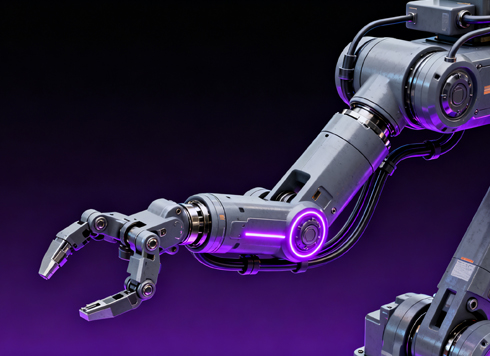





Three.js 3D Animation Production: A Complete Guide from Pipeline to Delivery
The core of Three.js 3D animation production lies in leveraging WebGL to render interactive 3D scenes in real-time within the browser, suitable for scenarios such as product showcases, data visualization, and marketing pages. In 2026, the mainstream workflow is: Modeling → Animation → Export → Three.js Scene Integration & Interaction Development → Testing & Optimization → Delivery. Key metrics include a stable frame rate above 30fps, model polygon count within a reasonable range, and rendered effects consistent with design mockups. This article provides actionable references for practitioners, covering fleet framework, tool selection, technical essentials, and acceptance criteria.
1. Understanding the Application Scenarios and Value of Three.js 3D Animation
Three.js 3D animation refers to creating and showcasing 3D animations on the web using the Three.js library, based on WebGL standards, with no plugins required on the user side. In 2026, the demand for interactive web experiences has grown, making Three.js a common solution for B2B product demos, e-commerce displays, educational interactions, and digital human interactions. Its value lies in cross-platform accessibility (both desktop and mobile), real-time interactivity (users can rotate/zoom/trigger events), and seamless integration with other web technologies.
However, Three.js is not a panacea. For scenarios requiring high-fidelity offline rendering quality (e.g., cinematic lighting), complex physics simulations, or large-scale dynamic details, client-side engines like Unity or Unreal Engine should be used. Web-based rendering is limited by hardware performance and cannot achieve global illumination or accurate real-time ray tracing, but effects can be approximated through environment maps, post-processing, and light probes.
2. Standard Pipeline for Three.js 3D Animation Production
Based on project delivery practices in 2026, the pipeline is summarized as the "Five-Step Delivery Method": Requirements Analysis → Modeling & Texturing → Animation Production → Three.js Integration & Interaction Development → Testing & Optimization. Each step has clear deliverables and checkpoints to reduce rework.
- Requirements Analysis: Clarify display goals, user interaction methods, target devices (desktop/mobile), and performance benchmarks (e.g., 30fps). Output: feature list and visual reference images.
- Modeling & Texturing: Create 3D models based on design drafts using Blender, Maya, or C4D. Pay attention to polygon count (recommended 10k-50k triangles for mobile), and PBR material texture sizes not exceeding 1024×1024.
- Animation Production: Execute skeletal animation, morph target animation, or path animation in the modeling software. Ensure single animation clips do not exceed 10 seconds and set them to loop or play once as needed.
- Three.js Integration & Interaction Development: Export models as glTF/GLB, set up scenes in Three.js, load animations, and add interactions (e.g., mouse hover, click, drag-to-rotate).
- Testing & Optimization: Test across multiple browsers (Chrome, Safari, Firefox) and devices. Use performance tools (Chrome DevTools) to check Draw Calls and memory usage. Merge geometries and use texture atlases if necessary.
Why this division? The first two steps determine the visual ceiling, while the last three determine the interactive experience and performance. After each step, review against requirements—for example, if the polygon count exceeds limits, communicate with design to simplify instead of leaving optimization for the end.
3. Toolchain Selection and Technical Essentials
Common tool combinations for Three.js projects in 2026 include:
- Modeling Tools: Blender (free, rich community resources, suitable for small to medium projects); Maya (industry standard, suitable for complex character animation); C4D (e-commerce product motion, gentle learning curve).
- Export Formats: Recommend glTF/GLB (supports PBR materials, animations, skeletons, morph targets); obj only for simple geometry; fbx for interoperability with game engines.
- Development Environment: Import Three.js via ESModules, with Vite or Webpack. For React projects, React Three Fiber (R3F) offers a declarative development experience but requires additional learning.
- Performance Optimization: Use the Decimate modifier to reduce polygon count; LOD (Level of Detail) algorithms; texture compression (basis format); InstancedMesh for many identical objects.
Comparison: Native Three.js vs React Three Fiber
| Dimension | Native Three.js | React Three Fiber |
|---|---|---|
| Learning Curve | Requires understanding JavaScript and Three.js API | Requires React basics, but component-based approach is clear |
| Project Scalability | Suitable for pure 3D applications | Suitable for deep integration with React UI |
| Update Frequency | Officially maintained, stable | Community active, evolves with Three.js |
| Use Cases | Standalone 3D pages | 3D modules within React ecosystem |
4. Animation Production and Interaction Design Points
Animation quality directly impacts user perception. Ensure that the root bone of an animation is placed at the origin in the modeling software to avoid coordinate offsets after export. Common animation types include:
- Skeletal Animation: For character or creature movements; bake action frames during export.
- Morph Target Animation: For facial expressions or shape changes; define morph targets in the modeling software.
- Property Animation: Keyframe animation for position, rotation, and scale; suitable for object movement or rotation.
- Path Animation: Movement along a curve, often used for camera flythroughs.
- Inconsistent coordinate systems between model and Three.js (recommend using Z-up).
- Improper naming of animation clips, preventing Three.js from controlling playback correctly.
- Missing material texture paths (embed textures or use relative paths during export).
- Stable Frame Rate: Target 30fps; complex scenes can drop to 24fps but must remain smooth.
- Draw Calls: Merge geometries whenever possible using BufferGeometry merge methods, keeping Draw Calls under 100.
- Texture Optimization: Use compressed textures (e.g., KTX2), avoid oversized textures (recommend max 1024×1024).
- Memory Management: Release unused geometries, textures, and materials promptly.
- Works across major browsers (Chrome, Safari, Firefox).
- Runs smoothly on mobile devices (iPhone 12+ and mid-range Android) with no significant heating.
- Loading time: First screen content displayed within 3 seconds (using compressed assets and lazy loading).
- Interactive response is prompt (click/touch feedback <100ms).
For interaction design, use OrbitControls for camera rotation/zoom; CSS2DRenderer for overlaying text labels within the 3D scene; event listeners for click, hover, and touch. Note that mobile touch events require manual handling to avoid conflicts between zoom and rotation.
Common causes of rework:
5. Performance Optimization and Acceptance Criteria
Performance is the lifeline of a Three.js project. In 2026, mobile users account for over 60%, so strict adherence to the following optimization principles is required:
Acceptance Checklist:
Applicable Scenarios and Boundaries
Three.js 3D animation is best suited for: interactive product demonstrations (users can rotate to view details), data visualization (3D charts or maps), lightweight architectural walkthroughs, and digital human exhibitions. For scenarios requiring extremely high quality, complex physics simulations, or multiplayer synchronization, Unity or Unreal Engine is recommended. Boundary statement: Three.js's real-time rendering cannot replace the final frame quality of offline rendering, but through a reasonable technical combination (e.g., precomputed lighting, environment maps), a close effect can be achieved on the web.
Unsuited scenarios include: cinematic character animation, interior design requiring global illumination and real-time ray tracing, and large open-world games. Additionally, if the project team lacks front-end development capabilities, Three.js should be chosen cautiously, with preference given to low-code platforms or outsourcing.
Frequently Asked Questions
How long does the Three.js 3D animation production cycle typically take?
Simple product display (1-2 weeks), medium interactive scenes (3-6 weeks), complex digital human projects (8+ weeks), depending on model complexity and interactive features.
How to divide responsibilities between modeling and rendering?
The modeler is responsible for model, material, and animation export; the front-end developer handles Three.js integration and interaction code. Both parties should agree on coordinate systems, units, and naming conventions.
How to choose between static renderings and real-time engines?
Static renderings are for promotional images; real-time engines (Three.js, Unity, Unreal) are for interactive scenes. Three.js suits lightweight web interactions, while Unity/Unreal suit client-side heavy applications.
What are the deliverables?
Typically glTF/GLB model files, Three.js scene code (ES modules), asset folders, and technical documentation; optionally, a runnable HTML example.
What factors affect pricing?
Model polygon count and detail level, animation duration and number, interaction complexity, device compatibility range, and project urgency.
It is recommended to clarify technical choices and delivery standards at the project's outset, selecting the toolchain based on team capabilities. If the budget is limited, prioritize the Blender + vanilla Three.js open-source solution. For rapid delivery or complex projects, consider partnering with experienced vendors (e.g., Xiyue Company). Note that Three.js is not suitable as the sole output tool; it should be combined with server-side optimization and CDN acceleration for the best experience.
-
 EDC·Trendy Camera Product Design: Form Follows Emotion
EDC Toy Camera: Braun-inspired retro design ...
-
 Product Design of Children's "Bubble Rocket" Underwater Thruster
Inspired by "Octonauts + Space", kids' "Bub ...
-
 Design of Adaptive Intelligent High-Altitude Shuttle Transport Robot
Smart rural shuttle bot: Streamlined, weath ...
-
 "Effortless" Exoskeleton Wear: Unleash Ultimate Freedom in the Sea
"Unfelt Wearability" & "Bionic Power" redef ...
-
In landscape design 3D modeling, why can the client tell at a glance that library trees look pieced together?
Date: Sep 13, 2026 Read: 6
-
When a UE5 build is packaged for a client demo, why does it get darker or lose textures on another computer?
Date: Sep 12, 2026 Read: 11
-
Product Appearance Design Looks Fine, So Why Does Engineering Say It Can't Be Molded?
Date: Sep 11, 2026 Read: 21
-
Renders look washed out with crushed shadows — which step usually goes wrong first?
Date: Sep 10, 2026 Read: 24
-
Why does AI digital human 3D modeling have a waxy look? Which step is the problem?
Date: Sep 9, 2026 Read: 27