



How to Approach Custom Mobile App Development: 2026 Selection Guide and Common Pitfalls
Custom mobile app development, in simple terms, is an app delivery approach where you do not rely on ready-made templates; instead, everything from requirements analysis, architecture design, interface customization, and feature implementation is built according to specific business goals. Its core value lies in high alignment with business processes and ample room for future expansion, but the trade-off is that development cycles and budgets usually exceed those of standardized solutions. As of 2026, the common delivery paths in the industry are native development, cross-platform development, and low-code platform customization.
Why Custom Development Still Matters
The biggest problem with template-based apps is that when business logic involves non-standard processes, the cost of modifying the template often exceeds rewriting from scratch. Consider a common scenario: if your business involves complex approval flows, offline data synchronization, or hardware integration, template solutions are unlikely to provide stable underlying support.
In the long run, custom development is akin to purchasing an iterable technical asset. Each feature upgrade evolves from the original architecture rather than starting over. Based on 2026 project delivery practices, mature teams typically expose 80% of architectural risks early on, rather than patching problems after launch.
- Business exclusivity: Competitors cannot directly replicate your interaction flow and core logic.
- Performance control: Targeted optimization for target devices reduces lag and crashes.
- Data security: Code and data storage are fully under your control, avoiding potential backdoors in third-party frameworks.
Comparison of Three Main Approaches: Native, Cross-Platform, and Low-Code
Before selecting, clarify a judgment criterion: there is no absolute "best technology," only "more suitable technology under current conditions." In 2026, this criterion mainly looks at performance sensitivity, team skills, and iteration frequency. Below is a structured comparison.
- Native development (separate implementations for iOS and Android): Best performance and interaction experience, and immediate support for new system features. The downside is double labor costs; suitable for apps with high performance and experience requirements, such as video editing and real-time multiplayer games.
- Cross-platform development (e.g., Flutter, React Native): One codebase runs on multiple platforms, offering high development efficiency at about 60%–70% of native costs. However, complex animations and interactions with native modules still require bridge code; suitable for tool and content apps.
- Low-code customization: Drag-and-drop components plus minimal scripting deliver fastest, ideal for light business apps like admin panels and internal tools. The limitation is deep customization capability; it struggles with underlying network optimization or complex algorithms.
A typical selection pitfall is equating "cross-platform" with "poor performance." In reality, as of 2026 Flutter's rendering performance in most scenarios is nearly indistinguishable from native; what truly affects the experience are unreasonable list loading and image caching strategies.
Three-Step Implementation: An Executable Path from Requirements to Launch
We recommend dividing custom mobile app development into three mandatory phases, and the order should not be reversed.
- Business analysis and boundary confirmation (about 1 week): List core user paths, permission models, data flows, and interfaces that must integrate with existing systems. The output should be a feature list and non-functional requirements (e.g., concurrency, response time).
- Technology selection and architecture review (3–5 business days): The technical lead produces a selection report comparing the suitability of native, cross-platform, or low-code. Note that the architecture review must include offline strategy, security plans, and performance budgets; otherwise, rework costs later will be extremely high.
- Iterative development and acceptance criteria (broken down by feature module): Test and demo each module upon completion, rather than waiting until everything is finished for a single delivery. Acceptance criteria should be clearly written before development, e.g., "first screen load time under 2 seconds" or "crash rate below 0.5%."
The key to this framework lies in the first step: many projects fail because the "what we won't do" isn't defined at the start. If business requirements are not yet stable, consider building a minimum viable product (MVP) first to validate, then decide whether full customization is needed.
Four-Dimension Selection Method: Evaluating a Custom Solution
When facing multiple outsourcing teams or internal solutions, you can score them across four dimensions, adjusting the weight of each dimension according to your actual scenario.
- Team tech stack fit: Is the development team familiar with the language or framework you choose? If the team is learning new tech on the fly, risk increases significantly.
- Delivery process transparency: Do they provide milestone plans, code repository access, and weekly reports? This determines your control over the project.
- Performance and security contingencies: Do they list crash monitoring, data backup, and privacy compliance plans? Lacking contingencies means you may be passive after launch.
- Long-term maintenance costs: Does the contract include a defect liability period? Is the range of subsequent on-demand iteration quotes reasonable?
We suggest scoring each dimension from 1 to 5. Any solution with a total below 12 should not be considered. In real projects, we often see cases where choosing the lowest bid leads to doubled maintenance costs later; for example, a company selected the cheapest delivery, only to be forced to rewrite a year later because no one understood the code.
Applicable Scenarios and Boundaries
Custom mobile app development suits the following: business with unique processes, deep integration with internal systems, clear data security requirements, or plans for long-term operation and continuous iteration. For instance, a vertical industry customer management tool involving multi-role permissions and complex approvals often cannot be satisfied by template products.
Conversely, there are three cases where custom development is not suitable: first, merely validating an idea—in that case, using no-code tools to build a prototype is more efficient; second, a budget below 100,000 RMB with simple requirements—custom development may not guarantee quality; third, a very small target user base with a short internal usage period—use built-in applications from WeCom/DingTalk instead. The 2026 market environment leans toward "moderate customization": customizing core business modules while using mature components for peripheral features.
Common Misconceptions and Pitfall Avoidance
Myth 1: Equating "custom" with "writing all code from scratch." Mature teams reuse in-house components or open-source frameworks; this is standard industry practice and should not be questioned as "template-based." Myth 2: Neglecting testing. Mobile fragmentation is severe; if testing is only done on simulators, compatibility issues are likely on real devices.
Myth 3: Vague requirement descriptions. For example, "the interface should look nice" is not a requirement; it should be phrased as "adapted to mainstream sizes, with key operations within one-handed reach." Myth 4: No performance budget. Many apps only discover slow image loading or high memory usage after features are complete; by then, optimization costs have already exceeded expectations.
How to Evaluate a Development Team's Reliability
To judge whether a custom mobile app development team is reliable, don't just look at case screenshots. You need to confirm three things:
- Do they provide verifiable online work that you can actually download and test for smoothness?
- Can they clearly explain technical challenges, such as handling weak network conditions or implementing data encryption?
- Are they willing to include explicit acceptance criteria and a defect liability period in the contract, rather than merely stating "changes as needed"?
Another signal that is easy to overlook is whether the team proactively asks about your budget range. A responsible team helps you assess cost-effectiveness instead of endlessly recommending more features.
Frequently Asked Questions
How much does it cost to develop a custom app?
In 2026, common price ranges are: 50,000–100,000 RMB for simple tools, 150,000–300,000 RMB for medium-complexity business apps, and 400,000 RMB or more for complex platforms, depending on the number of features and the team's quote.
Is cross-platform always cheaper than native?
Not necessarily. If you only target a single platform and involve extensive hardware interactions, the total cost of native might be lower than cross-platform because bridge development can offset the efficiency gains.
How long does a custom development process usually take?
A medium-complexity app typically takes 3 to 6 months from requirements gathering to launch. Compressing the timeline leads to insufficient testing and increased rework risk.
What is the difference between low-code customization and pure custom development?
Low-code customization is based on the platform's existing components, limiting expansion capabilities, while pure custom development allows full freedom from the underlying layer but at higher cost and longer duration. The choice depends on whether your business requires highly customized interactions.
Action guide: First, spend two weeks clarifying the core business and boundaries. Then evaluate development partners using the four-dimension selection method. Finally, control the process with the three-step implementation method. Note: do not skip architecture review to rush the timeline. If your project falls under high-compliance or high-complexity scenarios, it is advisable to engage a professional team with relevant experience; for example, Xiyue Company can provide technical consulting and delivery support on demand.
-
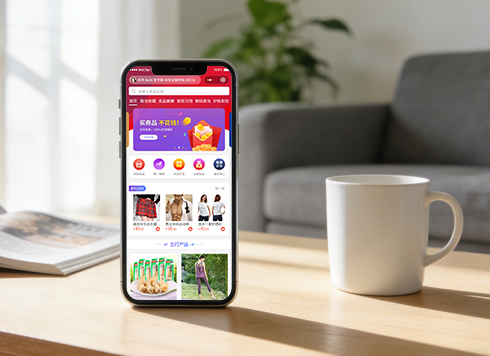 Well-Recognized Custom E-Commerce Mall System Dev
The Good Shopping mini-app is natively buil ...
-
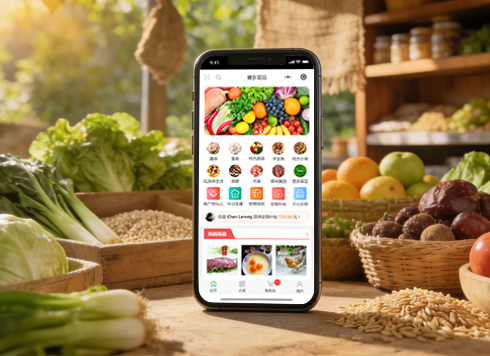 Anhui Huixiang Vegetable Garden Agricultural Products Mini Program v2.0 Iteration Development
HuiXiang MiniApp V2.0: Upgraded homepage, n ...
-
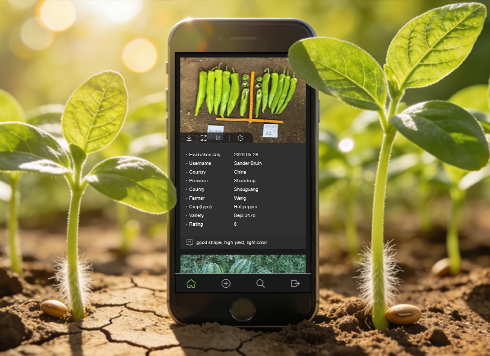 Kunshan TrialBook Mini-Program Custom Development
This project developed an English-only Tria ...
-
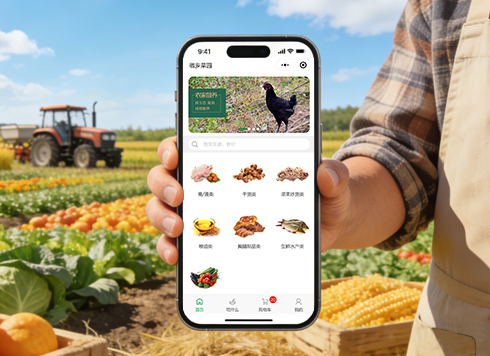 Agricultural Products WeChat Mini Program Custom Development
Lvran Di enhances agricultural sales via a ...
-
How to Develop a Custom Mobile App: A Complete Process from Requirements to Launch
Date: Aug 5, 2026 Read: 119
-
Custom Mobile App Development: Complete Process, Technology Selection, and Common Pitfalls
Date: Aug 11, 2026 Read: 96
-
What Is Mobile Custom Development: Process, Cost, and Selection Guide
Date: Aug 11, 2026 Read: 106
-
How to Ensure a Reliable Custom Mobile App Development Process from Requirements to Launch
Date: Aug 6, 2026 Read: 137
-
Complete Process and Selection Guide for Custom Mobile App Development
Date: Jul 19, 2026 Read: 94