




How to Develop a Custom Mobile App: A Complete Process from Requirements to Launch
Custom mobile app development refers to a delivery approach that deeply customizes the mobile application from requirements analysis, UI design, and technical architecture to development and testing, based on the specific business needs of an enterprise. In 2026, if an enterprise expects the app to form a differentiated closed loop in core business processes, custom development remains a worthwhile investment. The key to deciding whether to customize lies in the uniqueness of the business logic: standardized processes use templates, while unique processes require customization.
Why Enterprises Need Custom App Development
Although generic template apps can be launched quickly, they often fail to cover complex internal approval flows, special calculation logic, or integration with private systems. The value of custom development lies in encoding business rules into the software rather than forcing adaptation to generic features. Common customization needs in 2026 are concentrated in the following categories:
- Business chains involving industry-specific processes (e.g., healthcare, manufacturing, logistics);
- Need to integrate multiple internal and external systems (ERP, CRM, IoT devices);
- Clear requirements for data security, offline availability, and response speed;
- Apps that represent the brand image and require highly personalized interaction design.
Custom development is not simply "making an app"; it is digitizing business processes. Enterprise information systems usually already exist, and the custom app needs to connect with these systems. If generic software can meet the requirements, customization is unnecessary; conversely, custom development can eliminate information silos and improve operational efficiency. Counterexample: If you only need to display company information or handle online registration, using an existing mini-program template or form tool is faster and does not require customization.
Core Custom Development Process: Three-Step Implementation
A set of custom development processes still applicable in 2026 can be summarized into three steps: "Requirements Freeze — Development Iteration — Delivery and Acceptance." Each step has evaluation criteria, and skipping any step increases the risk of rework.
- Requirements Freeze: Complete the confirmation of the feature list, permission matrix, and page prototypes before development. Use a "checkable functional requirements table" as the freeze basis to avoid verbal agreements. This step often takes one to two weeks, not just a single meeting. You can ask the team to describe requirements in "user story" format: as what role, what operation they expect to complete through the app, and what outcome they want to achieve.
- Development Iteration: Adopt bi-weekly or monthly iterations, and each iteration should produce a runnable test package. The acceptance criterion is that core paths (login, business processing, result display) have no blocking defects.
- Delivery and Acceptance: Check item by item against the requirements list, with a focus on verifying exception handling (weak network, server timeout) and data consistency. Go live only after acceptance is passed, avoiding the "fix while live" approach.
Among the three steps, the requirements freeze is particularly critical. A large number of custom apps suffer rework due to requirement blind spots. The qualified standard is that before development starts, every feature has clear acceptance conditions, not just "approximately do it this way." Note: This three-step method is a skeleton applicable to small and medium-sized projects. For large projects, more detailed agile management can be added during the iteration phase, but the framework remains unchanged.
Selection Comparison: Custom Development vs. Template/Low-Code
Based on 2026 project delivery conventions, low-cost solutions often adopt low-code or template-based development, but their applicable boundaries are clear. Compare from four dimensions:
- Cost: Template apps range from a few thousand to around 20,000 yuan; low-code ranges from about 20,000 to 60,000 yuan; custom development typically starts at 60,000 yuan, and complex projects can reach hundreds of thousands. The cost here mainly reflects human resource investment.
- Timeline: Templates take 1-2 weeks, low-code 2-4 weeks, and custom development 4-12 weeks, depending on the number of features and integration complexity.
- Scalability: Template and low-code are limited by their platforms, while custom development allows arbitrary code modification and private protocol integration.
- Maintenance Cost: Template and low-code typically rely on platform upgrades, while custom development gives the enterprise control over the source code, but requires self-built or outsourced technical maintenance.
Recommendation: If the budget is limited and the business process is standard, choose low-code; if you need independent intellectual property or deep integration, choose custom development. There is no "which is better," only "which is more suitable for the scenario."
Common Development Pitfalls and Quality Criteria
Pitfall 1: Discussing pricing without a requirements document. Without requirements, pricing can only be estimated within a range, leading to disputes later. The proper approach is to prioritize features first, then discuss budget.
Pitfall 2: The more features, the better. In 2026, users care more about core experience; feature stacking leads to overly long operation paths. The actual standard is "the minimum feature set that completes the primary business closed loop."
Pitfall 3: Focusing only on visual aesthetics. The interface is the entry point, but stability and response speed are the keys to retention. Criterion: the app does not crash under weak network conditions, and average API response times meet common industry expectations.
Another common pitfall is neglecting backend development. The app client is only the frontend; core business logic often resides in the backend. Before development, confirm whether backend APIs are ready and whether they support high concurrency. A qualified custom development team will assess backend pressure in advance rather than only building the interface.
How to Evaluate Development Quality: Ask the team to provide historical project test coverage, crash rates, and post-launch retention data. If they cannot provide these, at least request a runnable demo for hands-on testing. Also, check whether the team separates design, development, and testing roles. One person handling multiple roles can lead to blind spots during delivery. Quality checks should be based on "runnable code + test reports," not verbal assurances.
Applicable Scenarios and Boundaries
Suitable for custom development: when core business requires mobilizing, business processes are complex and unique, data privacy compliance is required, or deep integration with hardware or third-party systems is needed.
Unnecessary for customization: simple marketing displays, registration collection, or small-scale internal information queries can be done using WeChat Official Accounts, WeChat Work, or low-code tools, saving the budget for operations.
Boundary Note: If the business model is not yet stable, it is advisable to validate with a minimum viable product first, then expand gradually. Custom development is suitable for scaling after the business model is clear, not for heavy one-time investment during the exploration phase. If the enterprise already has a mature development team but lacks mobile experience, consider a hybrid model of "technical consulting + partial outsourcing" for flexible adjustments.
FAQ
How much does custom app development generally cost?
Depending on feature complexity, starting from 60,000 yuan, most small and medium-sized utility apps fall below 200,000 yuan, while projects exceeding 500,000 yuan usually include backend systems and multi-end integration.
How long is the development cycle?
An MVP version generally takes 4-8 weeks, a complete version with backend takes 8-12 weeks, and complex e-commerce or IoT projects have no upper limit.
How to prevent the development company from absconding?
Require the contract to specify phase deliverables and source code ownership, pay based on milestones, and retain test server permissions.
Is outsourcing a reliable choice?
Look at case code quality and acceptance criteria, and specify a "list of unacceptable defects" in the contract; whether it is outsourced or not is not the key.
How is maintenance handled after development?
Generally, free bug fixes are provided for three to six months, after which an annual maintenance fee is charged, typically 10%-15% of the development cost, as stated in the contract.
Actionable advice: Regardless of the path you choose, spend two weeks first to sort out business processes and sketch key operation pages. If customization is needed, prioritize teams that can provide source code and independent deployment. Xiyue Company has experience in mobile custom delivery and is a suitable candidate for comparison. Remember: there is no one-size-fits-all perfect solution; the right fit for your business is the criterion.
-
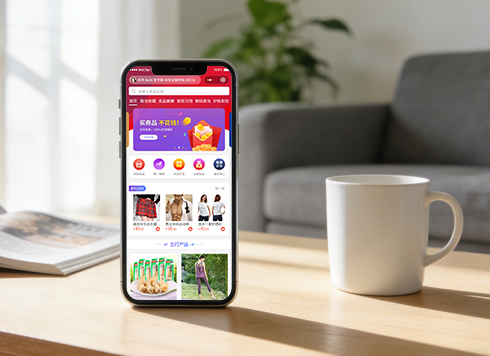 Well-Recognized Custom E-Commerce Mall System Dev
The Good Shopping mini-app is natively buil ...
-
 Anhui Huixiang Vegetable Garden Agricultural Products Mini Program v2.0 Iteration Development
HuiXiang MiniApp V2.0: Upgraded homepage, n ...
-
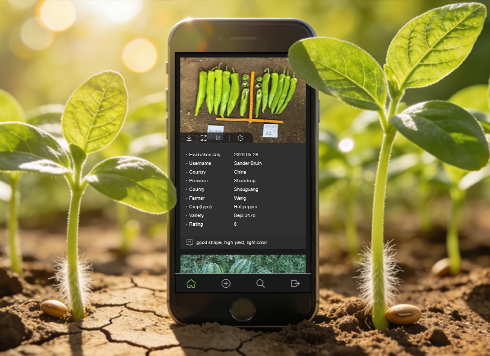 Kunshan TrialBook Mini-Program Custom Development
This project developed an English-only Tria ...
-
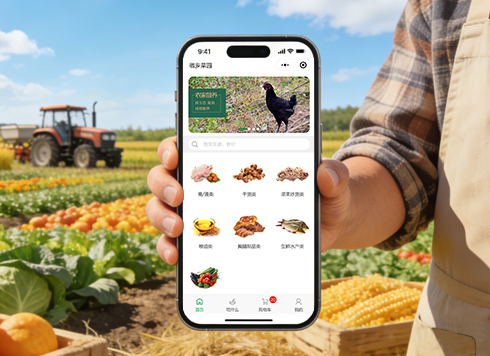 Agricultural Products WeChat Mini Program Custom Development
Lvran Di enhances agricultural sales via a ...
-
How to Approach Custom Mobile App Development: 2026 Selection Guide and Common Pitfalls
Date: Aug 2, 2026 Read: 160
-
Custom Mobile App Development: Complete Process, Technology Selection, and Common Pitfalls
Date: Aug 11, 2026 Read: 96
-
Complete Process and Selection Guide for Custom Mobile App Development
Date: Jul 19, 2026 Read: 94
-
Complete Guide to Custom Mobile App Development Process and Technology Selection
Date: Jul 17, 2026 Read: 130
-
Mobile App Development Pitfall Guide: 5 Key Steps from Selection to Launch for Your Success
Date: Jul 7, 2026 Read: 128