




Custom Mobile App Development: Process, Tech Selection, and Cost Control Guide
Custom mobile app development is an end-to-end process that derives technical solutions from business goals. The key criterion is whether generic app templates fail to cover core processes or data control requirements. By 2026, building prototypes for validation first and then delivering in phases has become a common practice. This article is for teams without a technical background, offering a process, technology selection guidance, and ways to avoid pitfalls.
The Essential Difference Between Custom Development and Template Development
Custom development designs features and data structures on demand, while template development simply replaces styles within an existing framework. The core difference lies in control: custom development retains code ownership and data independence, whereas templates are subject to platform rules. Choose custom development when your business is complex or requires long-term iteration; for informational display, templates are sufficient.
- Feature Depth: Custom development can implement any business logic, while templates often incur higher costs for secondary development when you go beyond existing modules.
- Data Ownership: With custom development, you define the data structure and can export it anytime; template data is often stored by the platform provider.
- Iteration Freedom: Custom code can be freely modified, whereas template upgrades may break your original configuration.
- Long-term Cost: Templates are cheaper initially but require annual payments; custom development is a one-time investment with relatively controllable maintenance costs.
A common misconception is that a template can be used with minor tweaks. In reality, once requirements exceed the default scope, modification costs may exceed building from scratch. Before starting, list your business processes and distinguish between must-have and nice-to-have features.
A Four-Step Path from Requirements to Launch
Starting development with unclear requirements is the leading cause of failure in custom development. In 2026, a recommended four-step process is: requirements analysis and prototype sign-off → technology selection and architecture design → phased development and testing → launch and data review, and the order should not be reversed.
- Requirements Analysis and Prototype Sign-off: Use wireframes or clickable prototypes to clarify user roles and key processes, until even non-UI designers can understand the business loop.
- Technology Selection and Architecture Design: Decide on native or cross-platform solutions, and produce documentation that includes data interfaces and permission lists.
- Phased Development and Testing: Break the development into an MVP and enhancement modules. At the end of each phase, conduct real-device testing and seed-user trials to ensure a runnable version is available.
- Launch and Data Review: Prepare privacy policies and other necessary materials, monitor crash rates and user retention, and use data to decide the next iteration priorities.
The key is to productize invisible work, ensuring every step produces a verifiable deliverable. If a service provider only gives verbal promises, be cautious.
Technology Selection: Native vs. Cross-Platform Development
In 2026, the mainstream options are native (Swift/Kotlin) and cross-platform (Flutter/React Native). Neither has an absolute advantage; they suit different scenarios. Native development fully leverages device hardware, while cross-platform shares a single codebase, and industry experience suggests development time can be reduced by 30% to 50%.
- Performance and Experience: Native responds faster for complex features like animations and maps; cross-platform shows minimal differences on basic pages.
- Development Cost: Native requires two separate teams; cross-platform uses one, reducing labor costs.
- Device Features: Native can call system APIs directly; cross-platform relies on plugins, whose quality varies.
- Long-term Maintenance: Native updates promptly with system releases; cross-platform must wait for framework adaptations, though update cycles are now short.
Selection criteria: Choose native for interaction-heavy or advanced graphics needs; choose cross-platform for form-based business apps that require quick launch. Also, consider your team's existing tech stack.
Five Checklist Items for Evaluating a Custom Development Service Provider
Rather than relying on marketing cases, examine the delivery process. When screening service providers, check five aspects: code standards, documentation completeness, test coverage, communication frequency, and pricing transparency.
- Code Standards: Request access to the Git repository and inspect comments and coupling levels—this determines future maintenance costs.
- Documentation Completeness: At a minimum, this includes API documentation, deployment documentation, and an operations manual.
- Test Coverage: Confirm unit test coverage and real-device compatibility testing—Android device fragmentation is significant in 2026.
- Communication Frequency: Weekly reports plus regular demos; if there is no proactive synchronization over long periods, risks accumulate.
- Pricing Transparency: The quote should itemize requirements analysis, design, development, testing, and app store release.
Low prices often mean low quality. We recommend clarifying source code delivery and acceptance criteria in the contract. Experienced service providers (such as Xiyue Company) will first request your business process documentation, then provide a prototype and quote, rather than directly offering a low price.
Applicable Scenarios and Boundaries: When Custom Development Is Not Necessary
Custom development is not a one-size-fits-all solution. It is suitable when: your business processes are unique, you need to integrate with private systems or hardware, your brand requires a high degree of personalization, or you have long-term data accumulation needs. It is not suitable when: your budget is insufficient, time is extremely tight, or requirements cannot be clarified in the short term.
- Suitable: Internal enterprise management tools, e-commerce and community apps, smart hardware companion applications, and scenarios that require offline operation.
- Not Suitable: Promotional pages, simple appointment forms, and content display sites—these can be done with web pages or templates.
The boundary criterion is: whether a reusable data asset is formed. If the app's core value is collecting and processing data, custom development is worth the investment; if it is just an online brochure, it is not. In 2026, many teams first validate with a mini-program or H5, then decide whether to proceed with native custom development.
Before taking action, complete requirements analysis and prototype sign-off, and only then discuss technical solutions. Stay focused on deliverables, pay in phases, and retain source code. If you are not technically savvy, you can seek a service provider with industry experience to assist in evaluation, but the final decision should be based on your business value judgment.
FAQs
How much does it cost to develop a custom app?
Depending on feature complexity, the industry range is typically from tens of thousands to hundreds of thousands of yuan, mainly influenced by the number of features, platforms, and backend complexity. A prototype-based quote is necessary.
How long does the development cycle usually take?
Simple apps take 1–2 months, medium-complexity apps take 2–4 months, and projects involving backend and hardware integration require more than 4 months, directly depending on how quickly requirement confirmation proceeds.
How can I prevent the service provider from disappearing or leaving the project unfinished?
Pay in phases, include code ownership and acceptance criteria in the contract, and require regular delivery of runnable versions.
Do I need to maintain servers myself after custom development?
It depends on whether there is a backend service. Pure local apps do not need a backend; apps with account or data synchronization features require renting cloud servers, and you can ask the service provider to handle maintenance.
Can I add requirements during development?
It is advisable to avoid this. Changing requirements mid-way disrupts the schedule and increases costs. If truly necessary, sign a change order and incorporate it into the next iteration.
-
 Well-Recognized Custom E-Commerce Mall System Dev
The Good Shopping mini-app is natively buil ...
-
 Anhui Huixiang Vegetable Garden Agricultural Products Mini Program v2.0 Iteration Development
HuiXiang MiniApp V2.0: Upgraded homepage, n ...
-
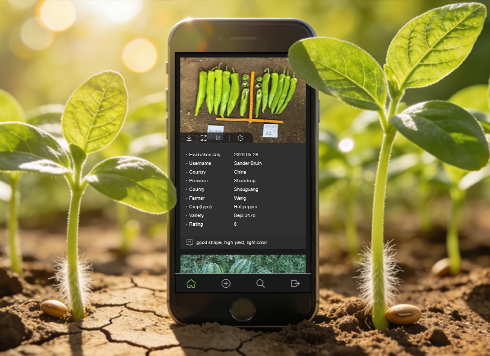 Kunshan TrialBook Mini-Program Custom Development
This project developed an English-only Tria ...
-
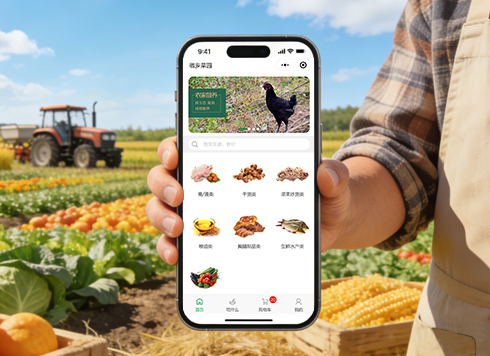 Agricultural Products WeChat Mini Program Custom Development
Lvran Di enhances agricultural sales via a ...
-
Custom Mobile Development: 2026 Project Process, Budget Ranges, and Selection Criteria
Date: Aug 9, 2026 Read: 140
-
How to Approach Custom Mobile Development: Requirements Assessment, Technology Selection, and Implementation Essentials
Date: Aug 2, 2026 Read: 182
-
Complete Process of Custom Mobile Development: Key Steps from Requirements to Launch
Date: Jul 30, 2026 Read: 139
-
Mobile Custom Development Full Process: A Practical Guide from Needs Assessment to Launch and Maintenance
Date: Jul 28, 2026 Read: 127
-
Custom Mobile App Development: Needs Assessment, Technology Selection, and Implementation Key Points
Date: Jul 20, 2026 Read: 158