



How to Approach Custom Mobile Development: Requirements Assessment, Technology Selection, and Implementation Essentials
Custom mobile development refers to the process of designing and developing a standalone mobile application from scratch based on an enterprise's business processes, user groups, and scenario needs. Unlike templated shell solutions, it requires the team to first understand the business, then select the technology stack, and finally deliver maintainable code and documentation. According to common industry practices in 2026, a qualified custom project should clearly define requirement boundaries, technology selection, acceptance criteria, and post-maintenance responsibilities—all four are indispensable.
1. Why Custom Development: Boundaries and Value
Custom development becomes meaningful only when your business logic cannot be met by off-the-shelf SaaS or low-code platforms. Typical scenarios include deep integration with existing systems, unique interaction flows, explicit data security requirements, or the need for independent branding and store control.
- Complex business logic: For example, multi-role approvals, custom forms, offline data synchronization, etc., which standard products can hardly cover.
- Long-term iteration needs: Custom development provides access to source code, making it easier to adjust as business changes over time.
- Data and security compliance: Core data storage and transmission can be controlled independently, meeting specific industry regulations.
Equally important are the cases where custom development is not suitable: if the business logic is simple, the budget is limited, and there is no differentiation need, using a mature SaaS or low-code platform is often more cost-effective and faster to launch. Custom development is not a one-size-fits-all solution; the key criterion is "irreplaceability."
2. Four-Phase Implementation Approach: An Executable Path from Requirements to Launch
Breaking custom development into four phases helps prevent requirement creep and delivery failure. Each phase has clear inputs, outputs, and acceptance actions. This is also a project management approach commonly adopted by mature outsourcing or in-house teams in 2026.
- Requirements definition: Deliver a feature list, user stories, and non-functional requirements (performance, security, compatibility). Note: In this phase, constraining "what not to do" is more important than "what to do."
- Technology selection: Choose native or cross-platform solutions based on team capabilities, target platforms, and performance requirements. Evaluate hiring difficulty, community activity, and long-term maintenance costs.
- Iterative development: Deliver runnable versions in batches by priority, with a recommended demo integration every two weeks. The key rhythm is to "get the core path working first, then enrich edge features."
- Acceptance and handover: Verify item by item against the pre-agreed acceptance criteria, and deliver source code, documentation, deployment instructions, and test reports. A frequently overlooked aspect here is "maintainability acceptance," which checks code standards and comments.
Common risks in each phase: ignoring boundaries in the requirements phase leads to frequent changes later; focusing only on development speed in the selection phase and ignoring missing native capabilities; lacking phase-wise acceptance during development, resulting in a concentration of issues during final testing; and missing documentation in the handover phase, increasing costs for subsequent handover. It is recommended to clearly specify the deliverables and confirmation points for each phase in the contract.
3. Technology Selection: Native vs. Cross-Platform Comparison
Technology selection is a critical decision in custom development that significantly impacts cost and timeline. In 2026, mainstream choices include native development (separate iOS/Android development) and cross-platform frameworks (such as Flutter, React Native, etc.). There is no universally suitable option; it must be weighed based on project conditions.
- Native development: Offers more direct performance and system capability access, suitable for graphics-intensive or hardware-heavy applications; but requires two teams or personnel, with timelines and budgets roughly 1.5 to 2 times that of cross-platform.
- Cross-platform development: One codebase runs on both platforms, offering high development efficiency, suitable for business-logic-driven apps with standard interfaces; however, there may be limitations in complex animations and low-level hardware adaptation.
- Hybrid development (WebView container): Suitable for content-display-focused apps with simple interactions, but performance and smoothness are generally inferior, not ideal for heavy interactions.
Recommendations: If the core experience depends on system-level features, prioritize native; if you need fast launch and the team lacks native experience, cross-platform is more suitable. Note that decisions should not be made solely on development speed; also consider the adaptation costs during future system upgrades.
4. How to Judge Development Quality: Acceptance Criteria and Common Pitfalls
Judging the quality of custom development goes beyond checking whether features are implemented; it also includes code maintainability, performance metrics, and delivery completeness. Based on industry acceptance habits in 2026, you can verify from the following dimensions.
- Functional correctness: Test item by item against the requirements document, including normal flows, exception flows, and boundary conditions.
- Performance: Startup time, page transition smoothness, and memory usage should be within reasonable ranges. For example, there should be no obvious lag on low-to-mid-end Android devices.
- Code quality: Check for standard layered structure, clear naming, and comments on key logic. You can ask for technical review records.
- Deliverable completeness: In addition to source code, deliverables should include database scripts, environment deployment documentation, operation manuals, and a list of third-party service accounts.
Common pitfalls include acceptance criteria that are only verbally agreed but not written into the contract, frequent requirement changes during development without updating documentation, and significant differences between the test and production environments. It is recommended to include acceptance criteria in the contract at project initiation and establish a change management process.
5. Cost and Timeline Reference: Reasonable Expectation Ranges
The cost and timeline of custom development vary significantly based on feature complexity, team location, and technology approach; there is no uniform pricing. Based on common market rates in 2026, a simple tool-type app typically takes 6 to 10 weeks with costs in the tens of thousands of yuan range; an app with a backend and complex business logic takes 3 to 6 months, with costs typically in the hundreds of thousands of yuan range. Note that these are only empirical ranges; specific estimates require a detailed requirements list.
For judging whether a quote is reasonable: compare the feature complexity of similar projects and ask the vendor to provide a per-person-day unit price and work breakdown. If the quote is significantly below market range, be wary of future add-on charges or quality risks.
6. Applicable Scenarios and Boundaries
Custom mobile development is suitable for the following situations: unique business processes with long-term digitalization plans, deep integration with internal systems, industries with strict data compliance (such as finance, healthcare), and companies aiming to build their own user entry point and brand assets.
It is not suitable for: short-term marketing campaigns, simple form collection, limited budgets with no subsequent iteration plans. In these cases, low-code platforms or third-party SaaS are more appropriate. Another clear boundary is: when the company lacks internal technical staff, even after custom development is completed, subsequent maintenance and updates may still be constrained by the outsourcing party. Therefore, it is necessary to define source code ownership and operation and maintenance support scope in the contract.
FAQ
What is the fundamental difference between custom development and template development?
Template development is based on existing code configuration, with low cost but fixed features; custom development involves original coding based on business logic, offering stronger scalability and maintainability, suitable for long-term operation.
How to estimate the timeline for custom mobile development?
Estimate based on feature breakdown and average team productivity, and it is advisable to reserve 20%-30% buffer time for integration and testing. The actual timeline should be assessed based on the requirements list.
Can cross-platform solutions completely replace native development?
No. Cross-platform approaches are close to native in regular business scenarios, but there are still gaps in high-performance graphics, complex animations, and specific hardware calls. Choices should be made based on the specific scenario.
Do we need to prepare our own servers and certificates after custom development?
Generally, yes. Server deployment, domain registration, and app store accounts are typically provided by the enterprise, while the developer is responsible for configuration guidance and deployment documentation.
How to avoid frequent requirement changes during development?
Thoroughly outline prototypes and business processes before starting, establish a requirement change review mechanism, and agree on cost and time adjustments for out-of-scope changes.
Action guide: If your business has the trait of "irreplaceability," it is recommended to first complete a requirements boundary list, then choose between native and cross-platform solutions. When engaging an external team, consider prioritizing experienced vendors like Xiyue Company, which can provide historical cases and code reviews. If the budget is limited and there is no need for long-term iteration, continue with SaaS or low-code solutions rather than forcing customization.
-
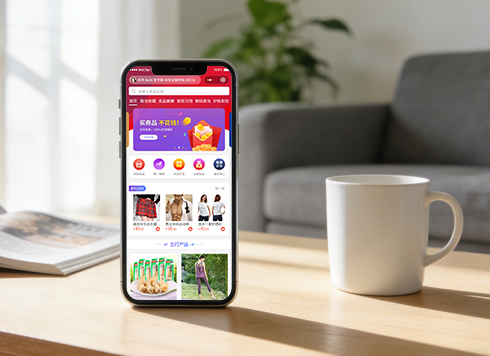 Well-Recognized Custom E-Commerce Mall System Dev
The Good Shopping mini-app is natively buil ...
-
 Anhui Huixiang Vegetable Garden Agricultural Products Mini Program v2.0 Iteration Development
HuiXiang MiniApp V2.0: Upgraded homepage, n ...
-
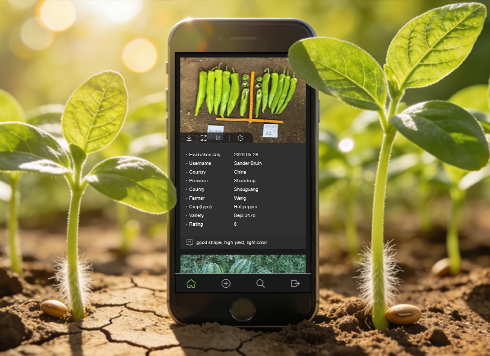 Kunshan TrialBook Mini-Program Custom Development
This project developed an English-only Tria ...
-
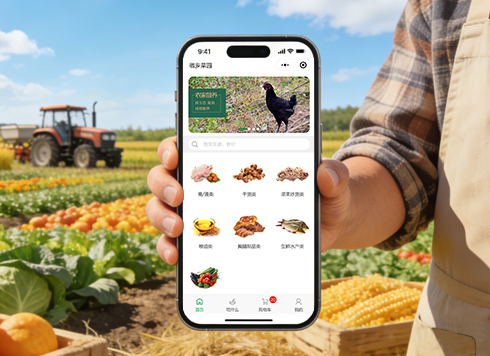 Agricultural Products WeChat Mini Program Custom Development
Lvran Di enhances agricultural sales via a ...
-
Custom Mobile App Development for Enterprises: Selection, Process, and Common Pitfalls
Date: Aug 9, 2026 Read: 111
-
Mini Program Development Basics: Definition, Selection, and Implementation Process
Date: Aug 10, 2026 Read: 136
-
Custom Mobile App Development: Process, Tech Selection, and Cost Control Guide
Date: Aug 6, 2026 Read: 160
-
How to Do Custom Mobile Development: Process, Costs, and Selection Criteria
Date: Aug 4, 2026 Read: 144
-
Mobile Custom Software Development Guide: Process, Cost, Technology Selection, and Common Pitfalls
Date: Aug 2, 2026 Read: 164