



Custom Mobile App Development for Enterprises: Selection, Process, and Common Pitfalls
Custom mobile app development refers to a full-cycle software service that begins with requirement analysis, UI design, development, testing, and extends through to app store release, all tailored to an enterprise's specific business needs. In 2026, delivery practices increasingly emphasize "stage-wise verification and iterative progress" — first validating core processes through a minimum viable product (MVP), then gradually expanding functional modules, rather than planning a monolithic system with every feature at once.
Why Custom Mobile Apps Are Needed
Many enterprises have tried using standard or off-the-shelf software directly, only to find that critical business processes cannot run smoothly. The core value of custom development lies in fitting business workflows and maintaining control over data, because only when functionality adapts to business rules will frontline employees truly adopt it.
In the 2026 market environment, mature enterprise mobile apps typically play three roles: customer reach, internal collaboration, and data analysis. If a software package cannot integrate with internal ERP, CRM, or data warehouse systems, custom development becomes necessary to complete the integration at the API level and implement the permission system.
- Business processes have unique rules that standard software cannot adapt to
- Data must be connected with internal and external systems, requiring API-level customization
- User experience and brand image need to be unified, including UI, animations, and interaction logic
The criterion for deciding whether custom development is worthwhile is not "does someone else have it," but "is the business loss greater than the development cost." If the missing features in a generic app directly reduce efficiency or cause lost orders, it is worth doing; if they are merely nice-to-have, you can start with low-code tools or other alternatives.
Development Model Comparison: Native, Cross-Platform, and Low-Code
In 2026, the mainstream mobile app development approaches are three: native development, cross-platform development, and low-code/no-code platforms. The choice is not a matter of technical preference, but a trade-off among delivery pressure, team capability, and long-term maintenance costs.
- Native development (Swift for iOS, Kotlin for Android): Offers superior performance and system API access, suitable for map, audio/video, complex animation, and other interaction-heavy scenarios. However, it requires two development teams, higher cost, and longer iteration cycles.
- Cross-platform development (Flutter, React Native, etc.): One codebase runs on both platforms, usually costing 60%–70% of native development. It fits most business apps but has limits in complex animation and low-level hardware tuning.
- Low-code/No-code: Fastest to launch, typically focused on forms, lists, and approval workflows. Good for internal tools and temporary campaign pages, but hard to scale when business logic becomes complex.
When making the actual selection, first assess whether the user's critical path is constrained by technical boundaries. If the core scenario involves map trajectory tracking or real-time audio/video interaction, native development is recommended. If it is mainly information display, business forms, and approval workflows, cross-platform solutions have become the common cost-effective choice by 2026.
Four-Step Implementation Method for Custom Mobile App Development
Based on extensive delivery practice, custom development is broken down into four stages. Each stage has key deliverables and acceptance criteria, which effectively prevents requirement creep and rework.
- Requirement Definition: Clarify user roles, core usage scenarios, and key metrics. Deliverables are a user story map and a prioritized feature list.
- Solution Selection: Evaluate whether native, cross-platform, or low-code fits the feature list; determine whether server APIs or third-party SDKs are needed. Deliverable is a technical solution document.
- Development Iteration: Proceed with two-week iterations, each ending with a runnable and demonstrable version. Deliverable is a continuously usable test build.
- Acceptance and Launch: Conduct real-device compatibility tests, performance tests, and security tests; complete app store review or enterprise distribution. Deliverables are the release package, backend permission list, and operations manual.
The core of this division is to give each stage clear exit criteria. Do not move to solution selection until requirement definition is complete; requirement changes during development must go through a change review to avoid continuous rework during coding. In delivery practice, Xiyue Company typically advises clients to set aside 15% of the budget for the first three months of post-launch iterations, because user feedback will inevitably lead to adjustments.
How to Evaluate a Custom Development Proposal
A good proposal is not the one with the longest feature list, but the one with clear boundaries and a well-defined path. It should include four parts: API design, data permissions, exception handling, and an operations backend.
- Does the API design clearly define message formats and error codes?
- Can data permissions achieve role-level isolation, not just login verification?
- Does exception handling consider weak network, offline, and server timeout scenarios?
- Does the operations backend cover content publishing, user management, and data analytics?
There is an observable signal for comparing proposals: the cost of change. A good proposal typically keeps schedule increases within 15% when features are increased by 20%; a poor one often leads to cascading rework due to unplanned APIs and unclear permissions. This is an important metric for evaluating outsourcing quality in 2026.
Applicable Scenarios and Boundaries
Custom mobile app development suits enterprises with clear business rules, the need to integrate with existing systems, and long-term iteration plans. For example, in order flow, customer management, field service collection, etc., custom development can significantly reduce manual entry and error rates.
However, if you need a simple display page, a voting campaign, or internal announcements, using a WeChat Mini Program template, survey tool, or low-code platform is faster and cheaper. Additionally, if the business model is not yet validated, starting with an official account or Mini Program to validate before undertaking App customization is a common practice in 2026.
When requirements change frequently and target users are uncertain, custom native App development is not the right choice; use a lightweight solution to validate first, then decide whether to invest.
FAQ
How long does it take to custom develop an app?
A simple internal tool takes about 4–6 weeks; an app with a user system and core business flows typically takes 3–5 months; complex multi-platform products can take more than 6 months, depending on the feature list and team size.
Which is better for a limited budget: native or cross-platform?
When the budget is limited and the features are mainly forms, lists, and data display, a cross-platform solution typically reduces R&D costs by about 30%–40% while meeting both platform needs.
How can you avoid a custom development project being abandoned?
Break the project into acceptable iterations, see a usable version every two weeks, and agree on a review process for requirement changes in advance. This mitigates most risks of delays and ambiguous scope.
Do we need to maintain the app ourselves after development?
You can choose between delivering source code plus operations training, or long-term managed operations. The choice depends on whether your team has technical staff and whether it can iterate on its own when requirements change.
How much worse is cross-platform app performance compared to native?
For common business scenarios, the difference is perceptible but does not affect the experience; only in scenarios like map rendering, real-time video processing, and high-frequency animation is there a noticeable gap. For such scenarios, native is preferred.
Spend two weeks first clarifying the core usage paths and metrics, then use the model comparison in this article to choose a development approach. If your business has complex processes and requires long-term iteration, follow the four-step method; if it is only for temporary validation, prioritize low-code or Mini Programs. The boundary is: do not invest directly in custom App development without validated business assumptions.
-
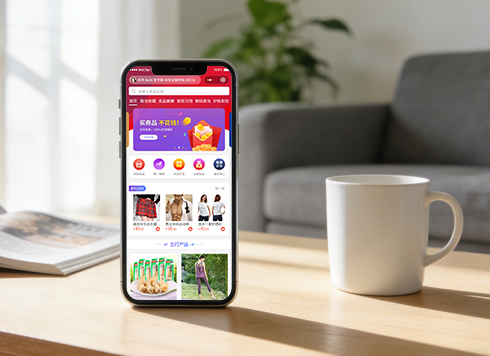 Well-Recognized Custom E-Commerce Mall System Dev
The Good Shopping mini-app is natively buil ...
-
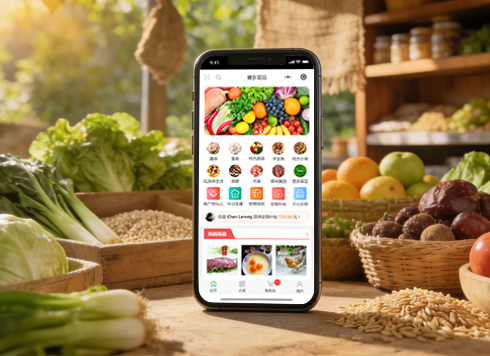 Anhui Huixiang Vegetable Garden Agricultural Products Mini Program v2.0 Iteration Development
HuiXiang MiniApp V2.0: Upgraded homepage, n ...
-
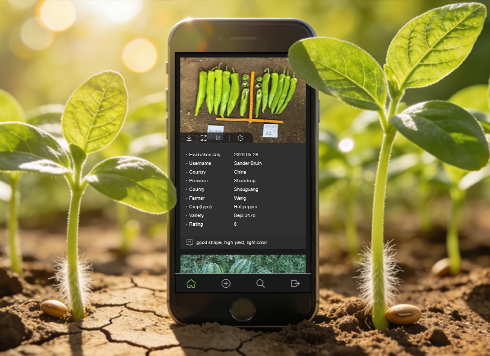 Kunshan TrialBook Mini-Program Custom Development
This project developed an English-only Tria ...
-
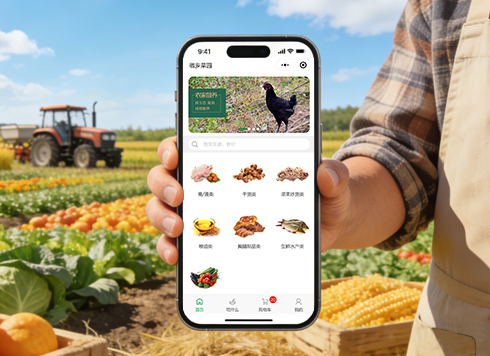 Agricultural Products WeChat Mini Program Custom Development
Lvran Di enhances agricultural sales via a ...
-
How to Approach Custom Mobile Development: Requirements Assessment, Technology Selection, and Implementation Essentials
Date: Aug 2, 2026 Read: 182
-
Mini Program Development Basics: Definition, Selection, and Implementation Process
Date: Aug 10, 2026 Read: 136
-
Mobile Custom Software Development Guide: Process, Cost, Technology Selection, and Common Pitfalls
Date: Aug 2, 2026 Read: 164
-
Mobile App Development: A Complete Guide from Selection to Launch
Date: Jul 29, 2026 Read: 121
-
Mobile Custom Development: A Complete Technical Selection and Implementation Guide from Requirements to Launch
Date: Jul 27, 2026 Read: 144