A Complete Guide to Custom Mobile App Development: From Requirements Assessment to Launch Acceptance
Custom mobile app development refers to a fully customized service that covers requirements analysis, UI design, technical architecture, coding, testing, and launch, all aligned with a business's specific goals. Unlike template-based products that are ready to use out of the box, it focuses on deep adaptation to business processes, data autonomy, and sustainable iteration as its core delivery logic. In 2026, enterprises often adopt a combination of native, cross-platform, or hybrid architectures. The key selection criterion has shifted from "can it be done" to "long-term maintenance cost and team capability."
What Is Custom Mobile App Development
Custom mobile app development means building an app from scratch rather than using a ready-made template. Depending on the technology stack, common implementation approaches include native development, cross-platform development, and hybrid development. These three differ significantly in product form, team composition, and ongoing maintenance costs. When choosing, first clarify the app's core interactions and hardware dependencies, then decide which route to take.
- Native development: Separate coding for both platforms, with better performance and system API access, but labor and maintenance costs are about 1.5 times that of cross-platform.
- Cross-platform development: One codebase runs on multiple platforms, improving development efficiency, but some native SDK integrations require plugin bridging.
- Hybrid development: Core features are implemented natively while business pages use H5; suitable for content-heavy apps with frequent marketing campaigns.
Why Do Enterprises Need Custom Development
When standard products or low-code platforms cannot cover a company's unique approval flows, order logic, or offline hardware integration, custom development becomes a necessary choice. It embeds core business logic into the app, creating a data closed loop, and determines whether the company builds a long-term competitive moat.
To decide whether custom development is needed, evaluate three dimensions: business logic complexity, data sensitivity, and iteration frequency.
- Highly customized processes: e.g., multi-level permissions in chain stores—custom development avoids compromise.
- High data sensitivity: healthcare and finance sectors benefit from private deployment.
- Rapid feature iteration: a custom architecture handles frequent changes better than a template.
If the business is generic and requirements are fixed, using an off-the-shelf product is more cost-effective.
Technology Selection in 2026: Native, Cross-Platform, or Hybrid
Technology selection directly impacts cost, performance, and hiring. In 2026, native development remains suitable for complex animations and hardware calls, while cross-platform frameworks now cover most enterprise-grade applications.
From cost, performance, and maintenance perspectives, native apps typically take 1.5 times longer than cross-platform apps but fully utilize system features. Cross-platform apps deliver over 80% of native experience in most scenarios and require a leaner team. Hybrid development is mainly suited for content that updates frequently with lower payment security requirements.
- Native: Best for heavy-interaction apps like wallets, maps, and games, but requires separate developers for each platform.
- Cross-platform (Flutter/React Native): Good for tools, e-commerce, and social apps. Flutter offers better UI consistency, while React Native has more third-party libraries.
- Hybrid (H5 + native shell): Suitable for news, exhibitions, and marketing pages; new pages can go live immediately without app store review.
In 2026, the market share of cross-platform frameworks continues to grow, but if your team already has native expertise, there is no need to chase the trend.
Complete Custom Development Process: A Four-Step Execution Method
The four-step method divides delivery into requirements scope confirmation, prototype and UI validation, iterative development and testing, and launch with operations handover. This structure ensures each phase produces verifiable deliverables, reducing rework.
- Requirements scope confirmation: Define the feature list and priorities, and clarify what will not be built. The acceptance criterion is that the requirements document can support development estimates.
- Prototype and UI validation: Test core flows with a clickable prototype to avoid late architecture changes. The acceptance criterion is that seed users can complete the main flow without ambiguity.
- Iterative development and testing: Deliver a runnable version every two weeks, including smoke tests and regression tests. The acceptance criterion is that core functions run without blockers for one consecutive week.
- Launch and operations handover: Prepare app store review materials, technical documentation, and a rollback plan. The acceptance criterion is no critical failures within 48 hours after release.
During execution, the biggest risk is skipping the first or second step. Many projects fail because coding starts before requirements are confirmed, leading to frequent changes later.
Cost Structure and Reasonable Ranges
Custom development cost is determined by feature complexity, development duration, technology selection, and team rates. In 2026, common budget ranges for small-to-medium custom apps (both platforms) in China are: basic version 50,000–100,000 RMB, mature version 100,000–300,000 RMB, and complex version above 300,000 RMB. Final pricing depends on a detailed requirements assessment.
Cost overruns mainly come from requirement changes, missing API documentation, and insufficient testing. It is recommended to clearly define the requirements freeze point and change billing rules in the contract.
- Requirement changes: Each additional complex module may increase costs by 10%–20%.
- Design fidelity: Sophisticated animations increase UI design and development hours.
- Operations costs: First-year maintenance is about 15%–20% of the development cost, covering version adaptation and bug fixes.
When comparing quotes, do not only look at the total price. Check whether the team provides a value proposition document and a technical proposal.
Acceptance Criteria and Common Pitfalls
To judge whether custom development is qualified, look at core page launch time, crash rate, and code maintainability. In 2026, the acceptance threshold for mainstream devices is: launch time under 3 seconds, crash rate below 0.5%, and support for Android 8.0 and iOS 13 or later.
Common pitfalls include: only testing the happy path without weak network conditions, not verifying permission denial scenarios, and code without comments, making it hard for future teams to take over.
- Functional acceptance: Use a checklist to cover normal, abnormal, and edge-case data.
- Performance acceptance: Test launch time, scroll smoothness, and memory usage on real devices.
- Delivery acceptance: Request database documentation, API documentation, and deployment scripts.
Acceptance is complete only when all criteria are passed.
Suitable Scenarios and Boundaries
Custom mobile app development suits businesses with clear business logic, a need to build a brand, or involvement with core data assets—for example, chain retail, medical appointment booking, equipment maintenance, and online education.
It is not suitable for MVP-stage projects, very limited budgets, or utility apps without a long-term operation plan. These can be launched with low-code or mini-program solutions for 30,000–50,000 RMB, making a 200,000 RMB custom build unnecessary.
Boundary judgment: when the expected user base is below 1,000 and all features are generic modules, custom development yields low returns. Validate the need first, then consider custom development.
FAQ
How long does custom mobile app development generally take?
For a single-platform basic version, it typically takes 4–8 weeks; for both platforms, about 8–12 weeks. The duration depends on the feature list and team size. The later the requirements freeze, the more uncertain the delivery.
Which app stores can host a custom-developed app?
As long as the app meets review guidelines, it can be listed on the App Store and major Chinese stores such as Huawei, Xiaomi, OPPO, vivo, and Tencent MyApp.
How can you tell if a development team is reliable?
Ask for similar business case studies and store links, and request user feedback from previous projects. A more direct approach is to ask the team to walk through a technical solution for your core features.
Who owns the source code?
After paying the full development cost, the enterprise owns the source code. However, the contract must specify intellectual property rights, secondary development rights, and the scope of third-party component licenses.
How can you prevent an app from having no users after launch?
Plan customer acquisition channels and data tracking before launch. Build funnel and retention analytics into the app during development to support future optimization.
If your business truly needs custom mobile app development, invest a week to map out core processes and user scenarios, then find an experienced team for a requirements assessment. Make sure the contract locks down the scope, acceptance criteria, and source code ownership. In 2026, delivery is not the endpoint; sustainable iteration and operations are key to an app's long-term value. If you are only testing the waters or validating an idea, consider using a mini-program or low-code solution first to avoid wasting resources.
-
 Well-Recognized Custom E-Commerce Mall System Dev
The Good Shopping mini-app is natively buil ...
-
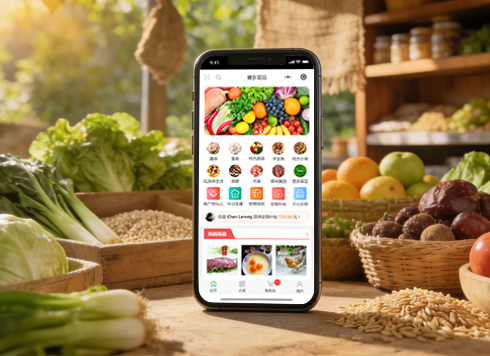 Anhui Huixiang Vegetable Garden Agricultural Products Mini Program v2.0 Iteration Development
HuiXiang MiniApp V2.0: Upgraded homepage, n ...
-
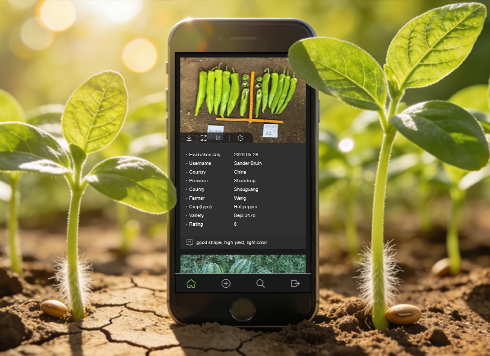 Kunshan TrialBook Mini-Program Custom Development
This project developed an English-only Tria ...
-
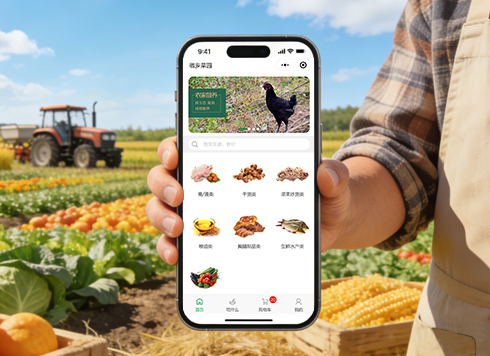 Agricultural Products WeChat Mini Program Custom Development
Lvran Di enhances agricultural sales via a ...
-
Custom Mobile App Development Guide: Process, Cost, and Selection Criteria
Date: Aug 7, 2026 Read: 118
-
How to Do Custom Mobile Development: Process, Costs, and Selection Criteria
Date: Aug 4, 2026 Read: 144
-
Custom Mobile App Development in 2026: Process, Budget, and Technology Selection Guide
Date: Aug 1, 2026 Read: 133
-
Custom Mobile App Development: UI Design Looks Ugly When Built—Who’s to Blame?
Date: Sep 7, 2026 Read: 93
-
Can custom mobile apps used only by internal employees skip the app store?
Date: Sep 4, 2026 Read: 105