




Custom Mobile App Development Guide: Process, Cost, and Selection Criteria
Custom mobile development is the process of designing, developing, and delivering applications from scratch according to specific business requirements. In 2026, the core decision criterion for choosing custom development is: when off-the-shelf software cannot cover core business processes, custom development provides controllable scalability and data ownership. Whether customization is worthwhile depends not on budget size but on whether business logic is complex enough and requires long-term iteration.
What Is Custom Mobile Development? Definition and Core Value
Custom mobile development is not just writing code; it is a complete project covering requirements research, UI/UX design, development, testing, release, and maintenance. Compared with template-based SaaS, custom development owns an independent codebase and database, can integrate with internal systems, and flexibly scale as business changes.
In the context of digital transformation, mobile has become a key carrier for customer reach and internal efficiency improvement. Although the initial investment in custom development is higher than templates, in the long run, since you control the code and architecture, subsequent maintenance and upgrade costs are more predictable.
- Business Logic Fit: Design features based on actual processes, avoiding compromise.
- Data Autonomy and Control: Data is stored on your own servers, facilitating compliance and secondary analysis.
- Long-term Evolution: Can iterate continuously as business grows, without third-party restrictions.
The Complete Process for Custom Mobile Development: A Four-Step Approach
In 2026, mature project delivery typically follows a four-step approach: "Requirements Analysis - Technology Selection - Iterative Development - Acceptance and Launch." The quality of output at each stage directly affects the final cost and timeline.
- Requirements Analysis: Produce a feature list and priorities, and clarify the core paths. This step is often overlooked, but rework costs are high.
- Technology Selection: Choose a development approach based on your team's tech stack, performance requirements, and cross-platform needs.
- Iterative Development: Deliver versions in 2-4 week cycles while conducting functional tests. It is recommended to combine automated testing to control regression risks.
- Acceptance and Launch: Includes real-device testing, app store review, server load testing, and monitoring deployment. Launch is not the end; you need to reserve operation and maintenance resources.
Why this division? Because each stage has independent quality gates, which can prevent budget overruns caused by "making changes as you go." For example, if user permission roles are not clearly defined in the requirements stage, adding them later can lead to database restructuring and directly affect the schedule.
In real projects, requirements analysis often takes time. It is recommended to involve both business and development teams, and use user story mapping instead of requirements documents to significantly reduce misunderstandings.
Technology Selection: Comparison of Three Mainstream Development Approaches
In 2026, mobile development mainly has three technical paths: native development, cross-platform frameworks (Flutter/React Native), and low-code/template platforms. There is no absolute superiority; they are just suited to different scenarios.
- Native Development (iOS Swift / Android Kotlin): Better performance and system capability access, suitable for graphics-intensive applications or those with demanding system interaction requirements. Higher development cost, requiring two codebases for both platforms.
- Cross-platform Development (Flutter / React Native): One codebase runs on both platforms, high development efficiency, suitable for utility, content, e-commerce, and other light-to-medium applications. Some complex hardware calls require writing native plugins.
- Low-code/Template Platforms: Drag-and-drop building, fast launch, low cost, suitable for MVP validation, campaign pages, or internal tools. However, they are limited by the platform when business logic is complex, and data migration is not flexible.
To choose, you can use a "three-dimensional judgment": first look at performance ceiling, second at team familiarity, third at business change frequency. For interactive-heavy apps, prioritize native; if budget is limited and rapid iteration is needed, cross-platform is a balanced choice; if only validating an idea, a low-code platform can be tried first.
From a 2026 perspective, native dual-platform development typically costs 30%-50% more than cross-platform, but performance debugging is more straightforward. Although low-code platforms have lower subscription costs, if you later need to migrate to custom development, the data from the early stage is almost impossible to reuse.
Applicable Scenarios and Boundaries: When Should You Go Custom?
Custom development suits enterprises with complex business logic, sensitive data, or unique user experience requirements. For example, a medical consultation app needs to integrate with HIS systems, and a financial app requires strict security audits. Such scenarios are usually not met by template products.
At the same time, clearly define boundaries: if your business is just information display, form collection, or a retail store, mature SaaS or template solutions are often faster and more economical. There is no need to invest in custom development for non-core functions. In 2026, many enterprises adopt a "hybrid model": first use SaaS or low-code to validate core assumptions, then build custom development for validated key modules. This is an efficient way to control risk.
For specific decision-making, you can quickly judge with two questions: Must the app provide a unique competitive advantage? Is there enough budget to support at least one year of iteration? If both answers are no, do not go custom yet.
- Suitable for Custom: Complex business processes, high data sensitivity, deep integration with internal systems.
- Not Necessary: Standardized functions, extremely high launch speed requirements, budget-limited MVP.
How to Evaluate Custom Development Quality and Cost? Criteria
To judge development quality, don't just look at whether the UI is good-looking; pay more attention to code standards, documentation completeness, and maintainability. It is recommended to evaluate from four dimensions: feature completeness, performance metrics, delivery transparency, and ongoing maintenance support.
- Feature Completeness: Whether the acceptance criteria are "completed and match business logic" rather than "clickable and navigable."
- Performance Metrics: Whether cold-start time, memory usage, and lag rate are within acceptable ranges. Typically, a baseline is cold start within 3 seconds and crash rate below 0.5%.
- Delivery Transparency: Whether they provide phase demos, test reports, and progress dashboards.
- Maintenance Support: Whether there is a clear service period and bug response time after delivery.
In terms of cost, in 2026, common ranges for a custom app are roughly: simple utility apps 100,000-300,000 CNY, medium-to-large business apps 300,000-1,000,000 CNY, complex systems over 1,000,000 CNY. But the specific price depends on feature scope and team labor costs; low prices often mean rework later or reduced code quality.
It is recommended to stipulate an "acceptable performance baseline" in the contract, such as startup time no more than 3 seconds and core process crash rate no higher than 0.1%. This can avoid subjective disputes during acceptance.
FAQ
Question 1: How long does custom app development usually take?
Simple apps take about 1-2 months, medium-to-large apps usually 3-6 months, depending on feature complexity, team size, and requirement change frequency. Clear requirements and a stable team can shorten the timeline.
Question 2: How to choose between native and cross-platform?
If you have high requirements for performance or system features, choose native; if you want one codebase for both platforms with a limited budget, choose Flutter or React Native. In 2026, cross-platform maturity is already quite high.
Question 3: Why is custom development more expensive than templates?
Because custom development includes requirements analysis, independent design, coding, testing, and ongoing maintenance, each step requires manpower according to project needs. Templates reuse others' work, so marginal cost is low.
Question 4: How to avoid being cheated by outsourcing companies?
The key is process control: require phased payments, ask for source code, regularly view demos, and clarify acceptance standards and maintenance scope in the contract. Also check whether delivery documentation is complete.
Question 5: Who owns the data after custom development is completed?
According to the contract, source code, database structure, and documentation usually belong to the client (Party A). Before signing, you must clarify the ownership of intellectual property, otherwise disputes can easily arise.
If you are evaluating custom mobile development, it is recommended to first sort out core business paths, list the feature requirements that must be implemented by an app, and then choose a development solution. Remember: custom development is suitable for complex business and long-term iteration; for simple scenarios, first validate with SaaS or low-code. When choosing a team, prioritize looking at case studies and code standards, and agree on phased delivery. If core business is involved, it is recommended to bring in a professional team such as Xiyue Company for technical assessment to reduce project risk.
-
 Well-Recognized Custom E-Commerce Mall System Dev
The Good Shopping mini-app is natively buil ...
-
 Anhui Huixiang Vegetable Garden Agricultural Products Mini Program v2.0 Iteration Development
HuiXiang MiniApp V2.0: Upgraded homepage, n ...
-
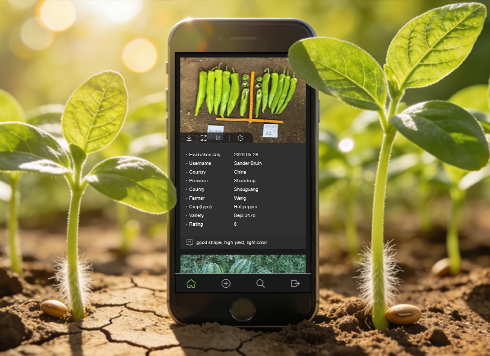 Kunshan TrialBook Mini-Program Custom Development
This project developed an English-only Tria ...
-
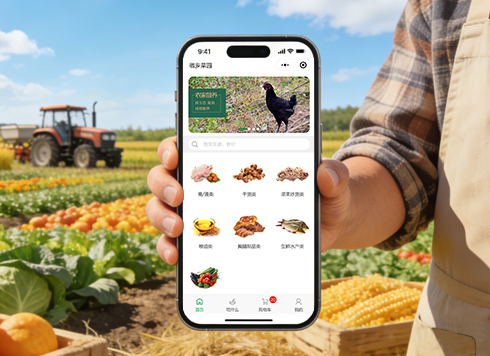 Agricultural Products WeChat Mini Program Custom Development
Lvran Di enhances agricultural sales via a ...
-
A Complete Guide to Custom Mobile App Development: From Requirements Assessment to Launch Acceptance
Date: Aug 10, 2026 Read: 120
-
How to Do Custom Mobile Development: Process, Costs, and Selection Criteria
Date: Aug 4, 2026 Read: 144
-
Custom Mobile App Development in 2026: Process, Budget, and Technology Selection Guide
Date: Aug 1, 2026 Read: 133
-
Custom Mobile App Development: UI Design Looks Ugly When Built—Who’s to Blame?
Date: Sep 7, 2026 Read: 93
-
Can custom mobile apps used only by internal employees skip the app store?
Date: Sep 4, 2026 Read: 105