




How to Ensure a Reliable Custom Mobile App Development Process from Requirements to Launch
The core of custom mobile app development is to tailor the app to specific business needs rather than using templates. Industry practices in 2026 show that the key to success is clarifying requirement boundaries, iterative development, and acceptance criteria. This article provides a three-step implementation method and a four-dimensional selection approach, offers reference cost and timeline ranges, and draws clear boundaries for applicable and non-applicable scenarios, helping you make sound judgments before starting.
1. What Is Custom Mobile App Development and Why Is It Worth the Investment?
Custom mobile app development is the process of building applications from scratch based on the specific business needs of an enterprise or individual, covering everything from feature design and interaction logic to backend interfaces, without directly using pre-made templates. It suits scenarios where non-standard processes exist, such as personalized order flows, approval logic, or data dashboards, enhancing operational efficiency and data control. However, custom development requires longer cycles and higher investment, so whether it is worthwhile depends on whether the business has unique processes.
If standard products can cover more than 80% of your requirements, prioritize low-code or template solutions. Only when core processes cannot be satisfied by standard products does custom development truly create value.
- Value of custom development: Features fit the business, data is independently controllable, and it is extensible in the future.
- When it’s not suitable: Simple requirements, tight budgets, and launch timelines measured in weeks—in these cases, custom development may become a burden.
2. Three-Step Implementation Method: The Complete Process from Requirements to Launch
The three-step implementation method breaks the project into requirement freezing, iterative development, and testing & acceptance, with the core goal of preventing scope creep. In the requirement freezing phase, you need to lock the business scope through prototype diagrams, feature lists, and acceptance criteria. In the iterative development phase, versions are split weekly or bi-weekly, with each version providing a clickable demo package for clients to validate in advance. In the testing & acceptance phase, functional, compatibility, and performance tests are all indispensable, and each item is checked against the original requirements list.
Each step has clear completion criteria: after requirement freezing, direct modification scope should not exceed 10% of the list; at the end of each iteration, clients can actually run the app; during acceptance, the test case pass rate should be no lower than 95%. Any change must go through written approval, otherwise the pace is difficult to control.
3. Four-Dimensional Selection Method: How to Evaluate the Reliability of a Development Team
When evaluating a development vendor, we recommend examining four dimensions: professional competence, communication mechanism, delivery assurance, and cost transparency. For professional competence, check whether the team has handled similar businesses, whether the tech stack matches, and whether core members can devote full-time effort. For communication mechanism, check whether there is a dedicated project manager, how requirement changes are processed, and whether progress is synchronized regularly. For delivery assurance, check whether the source code is fully delivered, whether deployment documentation and training are provided, and how the maintenance period is defined. For cost transparency, check whether the quote is based on person-days or total price, and whether design, testing, and management fees are included.
During the pre-selection stage, you can ask the team to do a one-week prototype demo or conduct a code review of existing products to assess their actual collaboration. Below is a set of comparisons for verification:
- Custom team: Suited for complex business logic, native performance, or unique interactions; cycle 3-6 months; higher investment; the code belongs to you; strong extensibility.
- Low-code platform: Suited for simple displays, internal tools, or MVPs; fast launch; low cost; but limited by platform rules.
Key judgment: If the business model may change significantly within the next year, a custom team can flexibly adjust the architecture; if it’s just a supplementary tool, a low-code platform is more hassle-free.
4. Cost and Timeline: What Is a Reasonable Budget Range?
In 2026, a medium-complexity native app (iOS + Android) with login, list, detail, ordering, and payment typically has a development cycle of 3 to 5 months, with a quoted price ranging from 150,000 to 400,000 RMB. Actual costs are influenced by factors such as the number of features, interaction complexity, backend API volume, and whether UI design is included. If a quote is significantly below 100,000 RMB with many requirements, it is likely a wrapper or template solution, which will incur higher modification costs later.
The main factor affecting cost is requirement changes; each major change may incur an additional 10%-20% cost. Therefore, clarifying requirements before project initiation controls the budget better than negotiating the price. When the budget is limited, you can classify features into three categories: "must have," "nice to have," and "not for now." Prioritize the first category to build an MVP version.
- Cost components: UI design, front-end and back-end development, testing, project management, and maintenance fees.
- Timeline components: Requirement confirmation 1-2 weeks, development 2-3 months, testing 2-3 weeks, deployment and acceptance 1 week.
- Payment method: It is recommended to pay by milestones (e.g., 30%, 40%, 30%) to avoid one-time advance payment.
5. Common Pitfalls and How to Avoid Them
Common pitfalls in custom development include vague requirements, verbal changes, neglecting documentation, not delivering source code, and no maintenance after launch. These issues may increase costs at best or cause project failure at worst.
- Vague requirements: Countermeasure: include a "what we will not do" list in the contract to clarify boundaries.
- Verbal changes: Countermeasure: keep records and assess impact; all changes through email or project management tools.
- Neglecting documentation: Countermeasure: demand requirements documents, design files, database descriptions, deployment manuals, and test reports during acceptance.
- Source code not delivered: Countermeasure: clarify source code ownership in the contract and verify that you can log in and deploy.
- No maintenance after launch: Countermeasure: agree on at least 1-3 months of free maintenance and subsequent pricing.
Qualified delivery usually needs to meet: crash rate below 0.5%, startup time no more than 3 seconds on mainstream devices, and passing compatibility testing on at least 10 mainstream device models. If test reports are missing or data anomalies exist, be cautious before accepting.
6. Applicable Scenarios and Boundaries: Does Your Project Really Need Custom Development?
Scenarios suitable for custom development include: core business relies on the app, special algorithms or hardware interactions are needed, deep integration with internal systems is required, and data security requirements are high. For example, a membership system for a restaurant chain involving supply chain, queue management, and multi-branch permissions makes custom development a reasonable choice. Scenarios not suitable for custom development include simple online display pages, internal reports, and early MVP validation, which are better suited to low-code or templates.
Boundary principle: If standard products can cover more than 80% of the features and there will be no major adjustments within the next year, custom development is not necessary. Conversely, if the business is unique and requires long-term iteration, custom development is the reasonable option. Additionally, if your internal team lacks technically savvy people to interface with, even custom development may lead to out-of-control maintenance later.
FAQ
How much does a custom app generally cost?
Based on 2026 industry levels, a medium-complexity native app costs about 150,000 to 400,000 RMB, depending on the number of features and design requirements.
How long does development take?
From requirement confirmation to launch, it usually takes 3-5 months. Simple features can be compressed to 2 months, but true custom development is hard to go below 1 month.
How can I ensure I get the source code?
Clarify source code ownership in the contract. During acceptance, the full code repository, database scripts, and deployment documentation should be provided, and you should verify that deployment is successful.
Can custom development be replaced by low-code platforms?
For simple business and information display, low-code can be a substitute. For complex states, real-time communication, or high performance, custom development is recommended.
Action guide: Before starting, spend a week writing down the core requirements list and a "not-to-do" list. When evaluating vendors, first ask for a prototype demo. If the project is suitable for custom development, proceed with the three-step method; if requirements frequently waver, resolve product positioning first. If standard products can cover your needs, don't obsess over custom development; investing the budget in operations is more practical.
-
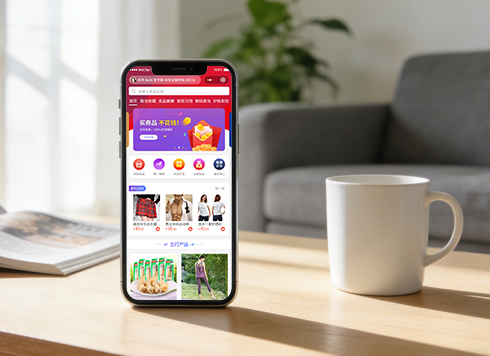 Well-Recognized Custom E-Commerce Mall System Dev
The Good Shopping mini-app is natively buil ...
-
 Anhui Huixiang Vegetable Garden Agricultural Products Mini Program v2.0 Iteration Development
HuiXiang MiniApp V2.0: Upgraded homepage, n ...
-
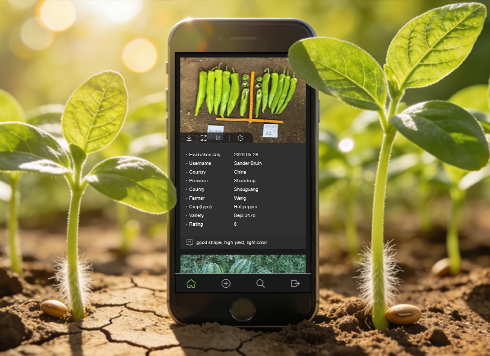 Kunshan TrialBook Mini-Program Custom Development
This project developed an English-only Tria ...
-
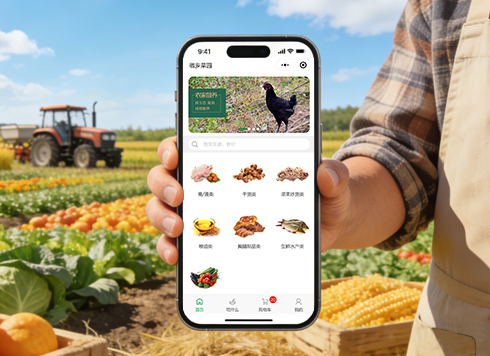 Agricultural Products WeChat Mini Program Custom Development
Lvran Di enhances agricultural sales via a ...
-
What Is Mobile Custom Development: Process, Cost, and Selection Guide
Date: Aug 11, 2026 Read: 106
-
How to Develop Mobile Software: A Complete Process from Requirements to Delivery and Acceptance
Date: Aug 7, 2026 Read: 118
-
Custom Mobile App Development: Process, Tech Selection, and Cost Control Guide
Date: Aug 6, 2026 Read: 160
-
How to Approach Custom Mobile App Development: 2026 Selection Guide and Common Pitfalls
Date: Aug 2, 2026 Read: 161
-
Custom Mobile Development: Complete Guide to Process, Selection, and Common Pitfalls
Date: Aug 1, 2026 Read: 159