




How to Develop Mobile Software: A Complete Process from Requirements to Delivery and Acceptance
Mobile software development does not start with writing code, but with defining "what problem to solve." In 2026, the mainstream process is: requirements analysis → technology selection → iterative development → testing and acceptance, typically taking 6 to 16 weeks. Clarifying boundaries, prioritizing features, and controlling changes are core to reducing development risks.
What Is Mobile Software Development: Types and Applicable Scenarios
Mobile software development refers to the process of building applications for phones and tablets. Based on technical routes, it falls into three categories: native development (separate codebases for iOS and Android), cross-platform development (e.g., Flutter, React Native, where one codebase runs on both platforms), and mini-programs/light apps (running inside hosts like WeChat or Alipay). Judgment criteria: if the app requires deep access to system capabilities such as camera or Bluetooth, native development is more stable; if the focus is on information display, form submission, or e-commerce transactions, cross-platform and mini-programs can cover most scenarios by 2026.
- Native development: Better performance and system compatibility, but higher cost for developing both platforms.
- Cross-platform development: One codebase runs on multiple platforms with high development efficiency, but interaction-heavy scenarios require extra debugging.
- Mini-programs/light apps: No installation required and shorter customer acquisition path, suitable for businesses relying on super-app ecosystems.
Suitable targets include: teams that need a standalone app for user operations, traditional enterprises with existing web businesses that need mobile extensions, and MVP projects that need to quickly validate product logic. Not applicable: if you only need a marketing landing page, H5 is sufficient; if the requirement is extremely small and has no iteration plan, outsourcing may not be cost-effective.
The Four-Step Execution Method Before Development
The Four-Step Execution Method emphasizes that each step produces verifiable deliverables, avoiding discussion based on gut feeling. Step 1: Transform requirements into a list — break user stories into feature points and mark priorities (must-have / should-have / could-have). Step 2: Confirm technology selection — the technical lead provides recommendations based on feature points, team familiarity, and budget. Step 3: Schedule development and milestones — deliver in iterative cycles, with at least one demonstrable version every two weeks. Step 4: Define acceptance criteria — clarify the "definition of done" for each feature, such as page consistency with the prototype, correct API responses, and smooth flow without stuttering.
- Step 1: Requirements list — Produce a feature list with priorities.
- Step 2: Technology selection — Evaluate four routes: native, Flutter, React Native, and mini-programs.
- Step 3: Development schedule and milestones — Deliver a demonstrable version every two weeks.
- Step 4: Define acceptance criteria — Testers, product managers, and stakeholders jointly confirm the "done" standards.
These four steps are not a one-time process but a cyclical progression. After each iteration, you can return to Step 2 to check whether the chosen technology still fits newly added requirements.
Cost and Timeline Assessment: How to Compare Reasonably
The cost of mobile software development consists of labor costs, third-party service fees, and maintenance costs. Common market ranges in 2026: a fully functional native app (including both platforms, basic UI, user system, payment, push notifications, and backend) costs roughly 100,000 to 500,000 RMB; cross-platform development can save 20% to 40%; a simple mini-program costs about 30,000 to 100,000 RMB. These are industry ranges meant to set expectations, not contractual commitments.
- Native development: High investment, slower iteration, but best performance and experience, suitable for interaction-heavy apps.
- Cross-platform development: Relatively lower cost and faster iteration, suitable for tools or e-commerce with complex business logic.
- Mini-programs: Even lower development and maintenance costs, but constrained by the host platform and unable to acquire users independently.
In terms of timeline, an MVP typically takes 4 to 8 weeks, and a complete product takes 8 to 16 weeks. The main factors affecting the timeline are the frequency of requirement changes and the speed of testing feedback. Mitigation: in the contract, clearly define the change management process, price additional requirements separately, and extend the corresponding schedule.
Quality Acceptance Checklist: Judging Whether Development Meets Standards
Judging the quality of mobile software should not rely only on the interface. For delivery and acceptance in 2026, it is recommended to focus on four categories of metrics: functional completeness, performance compliance, user experience, and security. Functional completeness means every requirement is implemented per the documentation, especially exception branches (offline, weak network, repeated clicks). Performance compliance is based on startup time, page smoothness, and memory usage. User experience includes interaction logic, loading feedback, and platform conventions. Security involves data encryption, least privilege access, and account protection.
- Functional completeness: Core features align with the requirements document and cover abnormal scenarios.
- Performance benchmarks: On mid-range Android devices, cold start time should generally be under 3 seconds, with no dropped frames during operations.
- Security baseline: Data must not be stored in plaintext, APIs must be authenticated, and accounts must support deletion.
- Maintainability: Code has comments and documentation, and critical modules have test coverage.
Actionable criteria: on a test device, continuously operate core flows for 30 minutes without crashes or freezes; when the network is disconnected, the app shows a friendly message and does not crash; after switching to the background and back, page state is not lost. If the team cannot provide test cases, its quality assurance system likely has gaps.
Frequently Asked Questions
How long does mobile software development usually take?
For an MVP, it usually takes 4 to 8 weeks; for a complete product, 8 to 16 weeks. The exact time depends on feature complexity and the frequency of requirement changes. It is recommended to reserve at least 20% buffer in your schedule.
Should I use native or cross-platform for app development?
Choose native when you need deep access to system hardware or demand extreme performance; when business logic and content display are the main focus, cross-platform development offers better value, typically reducing costs by 20% to 40%.
How can I avoid out-of-control timelines and costs?
Define the requirements scope, change process, and acceptance points for each iteration in the contract; price additional requirements separately and extend the schedule accordingly. This is the most effective way to control scope creep.
What is the difference between custom development and template development?
Template development goes live quickly and is low-cost, but features are fixed and hard to extend; custom development is designed on demand and flexible for future iterations, suitable for projects with unique business logic or long-term operation needs.
How can someone without a technical background communicate with the development team?
Describe requirements using prototypes or user stories and let the team translate them into a feature list; during acceptance, test based on real scenarios and focus on "does it solve my problem" rather than technical jargon.
Applicable Scenarios and Boundaries
Mobile software development is suitable for: teams that need a standalone app to serve users long-term, need access to system-level capabilities (such as camera, location, push notifications), and have a clear data model and user system for the business. It is not suitable for: cases that only need a campaign landing page, product ideas still in early validation, or budgets insufficient to support long-term iterative maintenance. The judgment standard is: if there is no clear operation plan within three months after development, it is more reasonable to first validate the requirements using H5 or a mini-program. Action guide: write a two-page requirement summary before starting, invite three companies for free evaluations, and compare the logic behind their solutions, not just the quotes. Choosing a team that can clearly explain "why they do it this way" is more important than choosing a lower-priced team. The development environment in 2026 is stable; teams that patiently conduct requirements analysis tend to deliver more reliably.
Finally, here are actionable boundaries: suitable for clients with a budget between 30,000 and 500,000 RMB, a clear business scenario, and willingness to invest manpower in acceptance. If the budget is insufficient or requirements are vague, it is recommended to use a prototyping tool (such as Figma or MockingBot) to simulate the flow before deciding whether to proceed with development.
-
 Well-Recognized Custom E-Commerce Mall System Dev
The Good Shopping mini-app is natively buil ...
-
 Anhui Huixiang Vegetable Garden Agricultural Products Mini Program v2.0 Iteration Development
HuiXiang MiniApp V2.0: Upgraded homepage, n ...
-
 Kunshan TrialBook Mini-Program Custom Development
This project developed an English-only Tria ...
-
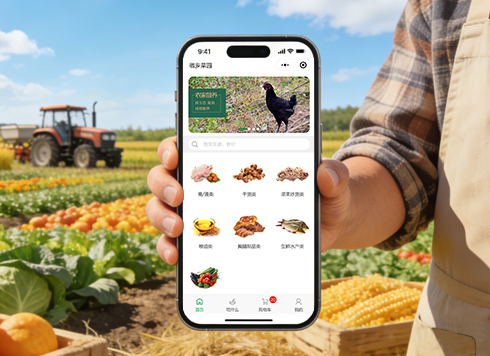 Agricultural Products WeChat Mini Program Custom Development
Lvran Di enhances agricultural sales via a ...
-
Mobile Custom Development Selection and Implementation Guide
Date: Aug 8, 2026 Read: 106
-
How to Ensure a Reliable Custom Mobile App Development Process from Requirements to Launch
Date: Aug 6, 2026 Read: 137
-
Mobile Custom Software Development Guide: Process, Cost, Technology Selection, and Common Pitfalls
Date: Aug 2, 2026 Read: 164
-
Full-Cycle Mobile Software Custom Development: A Practical Guide from Selection to Delivery
Date: Jul 31, 2026 Read: 132
-
Mobile App Development Full Process: From Requirements Confirmation to Launch - Key Steps
Date: Jul 27, 2026 Read: 108