



Mobile Custom Development Selection and Implementation Guide
Custom mobile development refers to the process of building a mobile application tailored to an enterprise's business processes, user groups, and operational goals across the full cycle—from product design and technology selection to development and testing. Compared with template-based solutions, its core value lies in closely aligning system logic with business needs. A common practice in 2026 is to first map internal processes and then validate core scenarios with a minimum viable product (MVP), avoiding excessive upfront investment.
What Is Custom Mobile Development?
Custom mobile development is not simply reskinning a UI; it is an engineering effort involving backend APIs, permission systems, data flow, and integration with third-party systems. It typically covers three technical routes: native development, cross-platform development (e.g., Flutter, React Native), and hybrid development. The choice depends on the team's tech stack and performance requirements.
- Native development: Strong performance and system API access, but higher cost for both platforms.
- Cross-platform development: One codebase reused on both platforms, suitable for logic-heavy apps with few animations.
- Hybrid development: Web-based, suitable for content-heavy apps.
The deciding factor is how much the core features depend on device capabilities. If you depend on deep interfaces such as camera or Bluetooth, native has the advantage.
The success or failure of custom mobile development is determined at the requirements stage; when requirements are vague, any technology choice will amplify the risk of rework.
Why Custom Development?
Companies choose custom development when existing products cannot support internal processes or when market competition demands differentiation. For example, warehouse management requires PDA barcode scanning integration; directly copying a generic tool actually increases manual data entry. Custom development can align interaction and permissions with real usage habits.
- Process specificity: Business processes have branches and approval chains that generic apps cannot cover.
- Data integration: Need to connect with existing systems such as ERP and CRM.
- Experience consistency: Brand visuals and interaction language need to be unified.
When a generic solution requires extensive manual data entry or secondary development, the overall cost of custom development is actually lower than long-term use of inefficient tools.
Three-Phase Implementation: From Requirements to Delivery
Break custom development into three phases: definition, build, and validation. Each phase has clear exit criteria, which reduces the impact of requirement changes. In the project delivery practices of 2026, this framework is especially suitable for teams with limited budgets and timelines.
- Definition phase: Deliver business process diagrams, feature lists, and acceptance criteria. Note: Do not discuss technical details in this phase; only confirm business rules.
- Build phase: Split development tasks into iterations, delivering a runnable version every two weeks. Note: Reserve 20% buffer time for integration debugging.
- Validation phase: Run a pilot with a small group of users, collect real data, and then adjust. Note: Do not enable all features at once to avoid feedback overload.
The core of this framework is that each phase produces a checkable deliverable. The output of the definition phase is documentation; the build phase produces a usable package; and the validation phase generates an update list. If the quality of any phase is not up to standard, do not force entry into the next phase.
If a custom development project compresses time in the definition phase, it usually pays back with twice the number of defects during testing.
For example, when Xiyue Company delivers such projects, it directly outputs an acceptance checklist in the definition phase for clients to confirm item by item, reducing future disputes.
Custom vs. Template Development: How to Choose
This is a common selection question. Template development involves configuring and fine-tuning on an existing framework, while custom development builds from the ground up. Neither is absolutely better or worse; it depends on business constraints and long-term goals.
- Template development: 2-4 weeks, lower cost, suitable for standardized processes and quick launches; but expansion is limited by the framework and code quality is hard to guarantee.
- Custom development: 8-16 weeks (depending on complexity), higher cost, suitable for special processes and deep integration; but later iterations are flexible and technical debt is manageable.
The deciding factors are: if the business will undergo significant changes in the next 12 months, custom development can keep up more easily; if it is only a short-term trial, template development is safer. Additionally, custom development does not mean writing every feature from scratch; industry-standard modules (such as login and payment) can still use mature solutions.
The line between custom and template development is not about the number of features, but whether your application can change its behavior at a reasonable cost when business logic changes.
Suitable Scenarios and Boundaries
Custom development is suitable for scenarios with unique business processes, complex data interactions, or the need for differentiated experiences—for example, real-time location tracking in logistics or encrypted consultation records in healthcare. It is not suitable when functionality is simple, requirements are stable, and no integration is needed; in such cases, template or SaaS solutions suffice.
If the business team cannot clearly describe processes, or the requirement change cycle is shorter than the delivery cycle, it is not recommended to start custom development; doing process analysis first is more valuable than writing code. Also, when the budget is below the industry common range (custom development generally starts at roughly 100,000 to several hundred thousand yuan), you likely need to reduce scope rather than forcibly compress development time.
FAQs
How long does custom development usually take?
Typical projects take 8 to 16 weeks; complex systems may take up to 6 months. The timeline is mainly affected by requirement clarity, number of integrations, and acceptance process; the number of features is not the decisive factor.
How can you tell if a development team is reliable?
See whether they first ask about requirement boundaries and acceptance criteria rather than directly quoting time and price. Teams that provide a clear risk list and testing plan are usually more trustworthy than those making verbal promises.
Can we maintain the app ourselves after custom development?
Yes, but you need to agree on the source code, documentation, and deployment method at delivery time. If you want your own team to take over, it is best to arrange code review and knowledge transfer during the development phase.
How to choose between cross-platform and native?
Choose native for high-demand scenarios involving camera and Bluetooth; choose cross-platform when business logic is complex but device APIs are few. As of 2026, cross-platform solutions already meet the needs of most enterprise management apps.
What is the biggest pitfall in custom development?
The common pitfall is losing control of requirement changes. The solution is to establish a change review mechanism, evaluating the impact of any change on cost and timeline before a key decision-maker approves it.
Before starting custom mobile development, we recommend first completing an internal process diagram and defining core metrics. If you are not ready, you can have a requirements workshop with a technology vendor, but do not rush to sign a contract. The framework described in this article is reusable for projects of any complexity. The ultimate test is: can your team independently use and continuously iterate after delivery? If the answer is yes, only then can custom development bring long-term value.
-
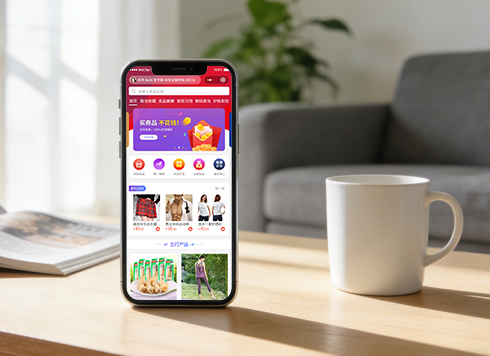 Well-Recognized Custom E-Commerce Mall System Dev
The Good Shopping mini-app is natively buil ...
-
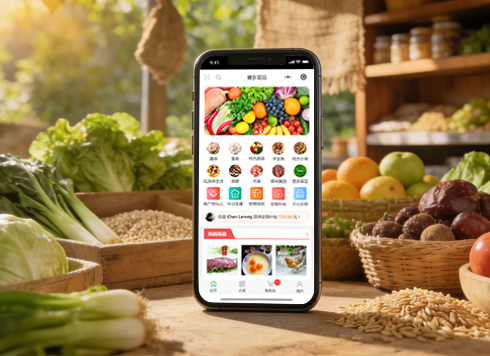 Anhui Huixiang Vegetable Garden Agricultural Products Mini Program v2.0 Iteration Development
HuiXiang MiniApp V2.0: Upgraded homepage, n ...
-
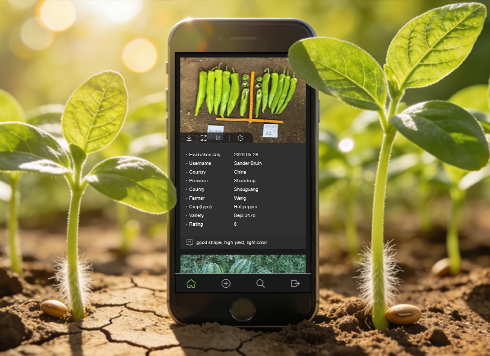 Kunshan TrialBook Mini-Program Custom Development
This project developed an English-only Tria ...
-
 Agricultural Products WeChat Mini Program Custom Development
Lvran Di enhances agricultural sales via a ...
-
Why Is Custom Mobile Development So Expensive? How to Estimate Budget, Timeline, and Delivery Standards in 2026
Date: Aug 11, 2026 Read: 99
-
How to Develop Mobile Software: A Complete Process from Requirements to Delivery and Acceptance
Date: Aug 7, 2026 Read: 117
-
How to Do Custom Mobile Development: Process, Costs, and Selection Criteria
Date: Aug 4, 2026 Read: 144
-
Custom Mobile Development: Complete Guide to Process, Selection, and Common Pitfalls
Date: Aug 1, 2026 Read: 158
-
How to Choose a Mobile App Development Approach: Applicability Boundaries and Evaluation Framework for Native vs Cross-Platform
Date: Jul 30, 2026 Read: 140