





How to Choose a Mobile App Development Approach: Applicability Boundaries and Evaluation Framework for Native vs Cross-Platform
In mobile app development, there is no absolute answer between native development and cross-platform frameworks (such as React Native, Flutter, uni-app). The core judgment is: if the app has strict requirements for performance, low-level hardware access, and animation smoothness, native is more reliable; if the goal is low-cost rapid validation and a single codebase covering multiple platforms, cross-platform frameworks have the advantage. In the 2026 tech ecosystem, Flutter approaches native experience in complex UI scenarios, but JS engine interaction still has bottlenecks.
Why the Selection Directly Impacts Project Success
Wrong selection is a common cause of delayed mobile app development, budget overruns, or even rewrites after launch. For example, a social app initially chose a WebView hybrid solution but later had to rewrite native modules due to scrolling lag, adding 3 months of work. Correct selection can reduce maintenance costs by over 40% and shorten iteration cycles by 30%–50%.
- Impact on User Experience: Native controls optimize animations and touch latency better; cross-platform solutions may drop frames on low-end devices.
- Impact on Development Efficiency: One codebase for multiple releases can save about 35% of initial development time, but adapting to new OS versions may be slower later.
- Impact on Team Hiring: Native talent pool is ample; developers skilled in cross-platform stacks (especially Flutter) are relatively scarce.
Overview and Comparison of Mainstream Solutions in 2026
As of 2026, the main options include: Swift/ObjC (iOS native), Kotlin/Java (Android native), Flutter (Dart), React Native (JavaScript/TypeScript), uni-app (Vue). Flutter has over 50% market share among cross-platform frameworks, while React Native is gradually falling behind due to performance and maintenance issues.
- Native Development: Best support for system features like lifecycle management, push notifications, Bluetooth; suitable for core business modules.
- Flutter: Self-painting engine, consistent UI; but larger package size (~15MB+), requires bridging for native plugin interaction.
- React Native: Bridge architecture, suitable for web teams transitioning; but frequent underlying updates cause compatibility issues.
- uni-app: Friendly to the domestic ecosystem, suitable for mini-program and app integration; but lacks performance for large complex projects.
Four-Dimensional Selection Evaluation Method
Break down the decision into four dimensions: performance requirements, development resources, delivery timeline, and maintenance strategy. Score each dimension from 1 to 5, and the total score guides the solution. Note: low scores may become fatal weaknesses later; include them in the risk checklist early.
- Performance Requirements: Heavy animations, AR/VR, high-refresh-rate adaptation? Native 5, Flutter 4, React Native 3, uni-app 2.
- Development Resources: What tech stack does the team already have? If a frontend team exists, React Native or uni-app can score higher, but consider learning costs.
- Delivery Timeline: Need an MVP within 3 months? Cross-platform solutions are generally 30%–50% faster than native, but reserve time for first-screen performance optimization.
- Maintenance Strategy: Plan to release frequently? Native App Store review cycles are longer than Android; cross-platform hot updates are more flexible, but platform rule restrictions apply.
For example, a total score above 16 recommends native as the primary solution; 12–15 suggests a hybrid architecture (native core modules + cross-platform for secondary modules); below 12 prioritizes cross-platform frameworks.
Recommended Combinations for Different Scenarios
- Startup MVP: Flutter or uni-app for rapid iteration; when user base grows, gradually replace core modules with native.
- Enterprise-Level Complex Apps (e.g., e-commerce, finance): Native for core transaction, payment, and security modules; Flutter or React Native for display and activity pages.
- Tool or Content Apps: Cross-platform solutions suffice; watch for third-party SDK compatibility.
- IoT or Hardware Companion Apps: Must be native due to limited cross-platform support for drivers like Bluetooth, serial port.
Applicable Scenarios and Boundaries
Suitable: Commercial apps with clear target users that require long-term iteration; budgets between ¥300,000–¥2,000,000.
Not Suitable: Lightweight showcase (better to use H5 wrapper); extreme performance requirements (e.g., 60fps games) must be native; teams with only web background and no native support face high risk with cross-platform.
Boundary Judgment: When app cold start time exceeds 3 seconds, memory usage exceeds 200MB, or frequent system API calls are needed, cross-platform often fails; decisively switch to native.
Frequently Asked Questions
Can I switch to native after starting with a cross-platform solution?
Yes, but it requires a full rewrite of the business layer. It's recommended to design modular isolation early to reduce migration costs.
Which is more mature in 2026, Flutter or React Native?
Flutter is better in UI consistency and performance, with clear ecosystem growth; React Native has an active community but questionable project stability, suitable for teams with React experience.
How to evaluate third-party SDK compatibility?
Check official docs for corresponding native plugin versions and conduct technical pre-research before procurement to avoid having to change solutions due to SDK incompatibility.
Can a team with only frontend skills develop a mobile app?
Yes, choose uni-app or React Native, but prepare one or two native developers to handle plugins and publishing issues, otherwise app store review may be problematic.
Finally, when selecting a mobile app development approach, clarify business goals and resource constraints first, then use the four-dimensional evaluation method to quantify the decision. In actual 2026 projects, most successful cases adopt a hybrid architecture—native as the skeleton, cross-platform as the flesh. Xiyue Company helped a client complete a community app from 0 to 1 within three months, using native for core modules and Flutter for dynamic content, ensuring both performance and delivery speed. Remember: There is no best solution, only the most suitable combination.
-
 Well-Recognized Custom E-Commerce Mall System Dev
The Good Shopping mini-app is natively buil ...
-
 Anhui Huixiang Vegetable Garden Agricultural Products Mini Program v2.0 Iteration Development
HuiXiang MiniApp V2.0: Upgraded homepage, n ...
-
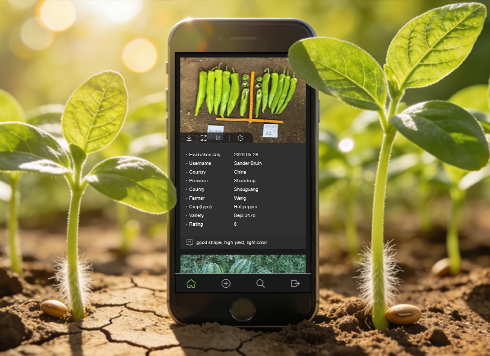 Kunshan TrialBook Mini-Program Custom Development
This project developed an English-only Tria ...
-
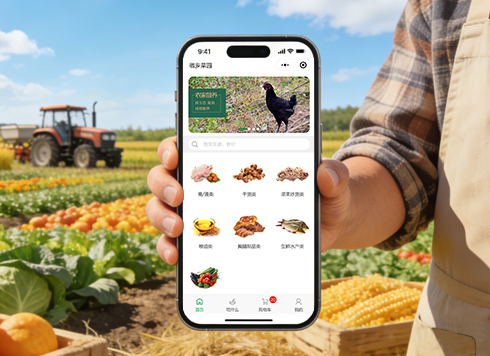 Agricultural Products WeChat Mini Program Custom Development
Lvran Di enhances agricultural sales via a ...
-
Mobile Custom Development Selection and Implementation Guide
Date: Aug 8, 2026 Read: 105
-
Mobile App Development: A Complete Guide from Selection to Launch
Date: Jul 29, 2026 Read: 121
-
How to Choose a Mobile App Development Approach: Native, Cross-Platform, and Low-Code Comparison
Date: Jul 21, 2026 Read: 146
-
Mobile Custom Development Solution Selection: From Technical Route to Implementation Process
Date: Jul 21, 2026 Read: 154
-
How to Effectively Select a Mobile App Development Approach: A Practical Guide for 2026
Date: Jul 20, 2026 Read: 141