



A Complete Guide to Custom Mobile App Development: From Requirements to Deployment and Maintenance
What is Custom Mobile App Development
Custom mobile app development refers to designing, coding, and delivering a proprietary mobile application from scratch based on specific business needs, rather than using templates or off-the-shelf solutions. In 2026, projects typically cover both iOS and Android platforms and include a backend management system. Its core value lies in fully aligning with business processes without compromising on existing features.
- Custom development ≠ reinventing the wheel: Reasonably reuse open-source frameworks and cloud services, focusing on the uniqueness of business logic.
- Applicable scenarios: Organizations with differentiated competition needs, complex system integration requirements, or specific industry regulations (e.g., healthcare, finance).
Why Choose Custom Development
Compared to templates or low-code solutions, custom development offers higher flexibility and data security. According to project delivery practices in 2026, the three main drivers for enterprises to choose custom development are: functional uniqueness, data sovereignty, and long-term maintainability.
- Functional uniqueness: Template apps cannot support complex approval workflows, real-time audio/video, or hardware integration.
- Data sovereignty: Custom solutions allow data deployment on enterprise private clouds or hybrid architectures.
- Long-term maintainability: Code is fully controllable, and future feature iterations are not limited by third parties.
How to Implement Custom Mobile App Development: A Four-Step Approach
The four-step approach breaks down the process into Requirements Focus → Technology Selection → Iterative Development → Delivery and Operations, with clear outputs and checkpoints for each step. It is recommended to follow this order to avoid rework.
- Requirements Focus: Define core scenarios, user profiles, and key metrics (e.g., daily active user targets). Deliver a feature list and priority matrix to avoid scope creep.
- Technology Selection: Choose the development mode (native/hybrid/cross-platform) based on team skills and performance requirements. For example, AR/VR apps with high performance demands choose native, while cost-sensitive projects may opt for Flutter.
- Iterative Development: Adopt Scrum with a 2-week sprint to produce testable builds. Ensure continuous integration where every branch must pass automated tests.
- Delivery and Operations: After app store deployment, configure monitoring and crash analysis tools, and release minor versions monthly.
The above framework applies to most commercial app projects in 2026. If the team lacks mobile experience, it is recommended to collaborate with a third-party consultant during the first two stages.
Technology Selection Comparison: Native vs. Flutter vs. React Native
In 2026, mainstream mobile development technologies each have their pros and cons. Below is a comparison from three dimensions: development efficiency, performance, and maintenance cost, for reference in technology selection.
- Native (iOS+Android): Best performance, access to all hardware APIs; highest development cost (two codebases), suitable for performance-sensitive apps (e.g., games, image processing).
- Flutter: Single codebase for dual-platform UI, performance close to native; suitable for UI-complex, content-driven apps (e.g., e-commerce, social networking). Learning curve is relatively gentle.
- React Native: Based on the React ecosystem, with many enterprise-grade cases (e.g., some large applications); moderate performance, debugging slightly more complex than Flutter. Suitable for projects transitioning from a web frontend team.
When choosing, also consider the team's existing skills: if the frontend is primarily React, React Native is smoother; if the focus is on refined UI, Flutter is better. For long-term iterated B2B applications, Native or Flutter is recommended.
Common Pitfalls and Cost Control
Three common pitfalls in custom development: over-planning, neglecting data security, and underestimating testing. For example, over-planning: many teams try to implement all features in the first version, delaying release by over 6 months. The correct approach is to start with a Minimum Viable Product (MVP), launch the core loop first, and iterate based on user feedback.
Cost-wise, in 2026, a medium-sized custom app (dual platform, 6-10 core features) typically takes 4-6 months with a budget ranging from 200,000 to 500,000 RMB (excluding long-term maintenance). Key cost drivers are requirements clarity and UI complexity.
- Requirements clarity: Frequent changes can increase costs by 30%-50%; it is recommended to finalize prototypes before development.
- UI complexity: Custom animations and multi-device adaptation add about 20% to the workload.
Applicable Scenarios and Boundaries
Custom mobile app development is best suited for scenarios requiring high alignment with business processes and high data security, such as enterprise internal management systems, healthcare apps (requiring certification and compliance), and sharing economy platforms. However, it is not recommended in the following cases:
- Existing template functionality can meet 80% of needs, and there is no long-term iteration plan.
- Project budget is below 100,000 RMB and cycle is shorter than 3 months—in such cases, consider outsourcing or low-code solutions.
- The team has no mobile development experience and is unwilling to invest in learning.
Boundary judgment: If the core competitive edge lies in user experience and data sovereignty, custom development is necessary; if merely validating an idea or for short-term campaigns, using standardized SaaS is more efficient.
How to Assess the Quality of Custom Development
After delivery, evaluate app quality from the following dimensions:
- Responsiveness: Core operations (e.g., list scrolling, page transitions) should be smooth; cold start time under 3 seconds.
- Stability: Crash rate below 0.5%; passes stress tests on mainstream devices.
- Code maintainability: Complete documentation, decoupled modules, easy to add new features.
- Security: Data transmission encryption; sensitive user information (e.g., passwords) salted and hashed; no hardcoded keys.
It is recommended to conduct at least one round of security audit and performance testing before acceptance. If lacking capacity, hire a third-party testing team to provide a report.
Frequently Asked Questions
How long does custom development take?
Based on project delivery practices in 2026, a medium-sized dual-platform app typically takes 4-6 months, including requirements analysis, development, testing, and app store review.
Which is more cost-effective: custom development or template modification?
Template modification has lower short-term cost but limited functionality; custom development has higher initial investment but lower long-term maintenance and expansion costs. The ROI cycle is typically 1-2 years.
Is it necessary to develop for both platforms?
Not necessarily. If the target users are concentrated on a single platform (e.g., enterprise employees using Android), you can start with one platform and expand after validation.
How to maintain the app after launch?
It is recommended to plan quarterly versions covering feature updates and system adaptations; deploy monitoring tools (e.g., Umeng+, Firebase) to proactively detect crashes and anomalies.
Action guide: Before starting custom development, first sort out core business processes, clarify priorities and budget scope. If internal development resources are insufficient, consider partnering with an experienced development company (e.g., Xiyue Company offers end-to-end delivery), but ensure that acceptance criteria and intellectual property ownership are clearly defined in the contract. Remember, the goal of custom development is to solve business problems, not technological innovation itself.
-
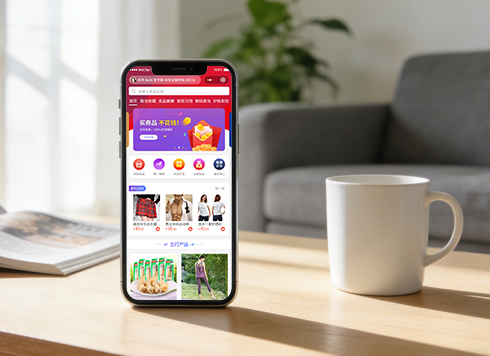 Well-Recognized Custom E-Commerce Mall System Dev
The Good Shopping mini-app is natively buil ...
-
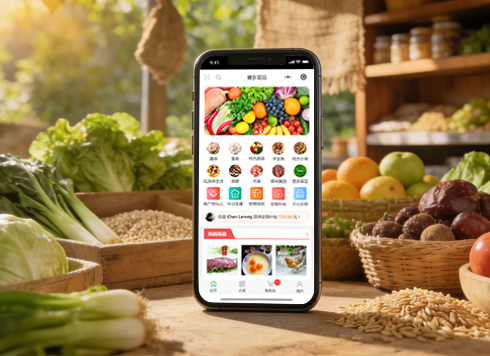 Anhui Huixiang Vegetable Garden Agricultural Products Mini Program v2.0 Iteration Development
HuiXiang MiniApp V2.0: Upgraded homepage, n ...
-
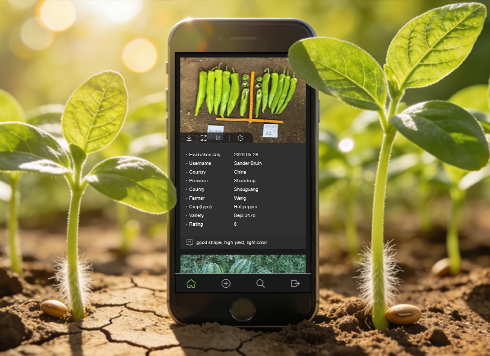 Kunshan TrialBook Mini-Program Custom Development
This project developed an English-only Tria ...
-
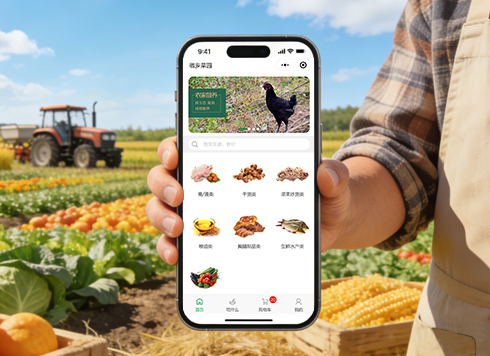 Agricultural Products WeChat Mini Program Custom Development
Lvran Di enhances agricultural sales via a ...
-
How to Execute Custom Mobile App Development: A Complete Path from Requirements to Delivery
Date: Jul 22, 2026 Read: 131
-
Custom Mobile App Development: Complete Process, Technology Selection, and Common Pitfalls
Date: Aug 11, 2026 Read: 96
-
Mini Program Development Basics: Definition, Selection, and Implementation Process
Date: Aug 10, 2026 Read: 136
-
Custom Mobile App Development for Enterprises: Selection, Process, and Common Pitfalls
Date: Aug 9, 2026 Read: 111
-
Custom Mobile Development: 2026 Project Process, Budget Ranges, and Selection Criteria
Date: Aug 9, 2026 Read: 141