How to Execute Custom Mobile App Development: A Complete Path from Requirements to Delivery
Custom mobile app development refers to the software development process that, based on specific business requirements, target users, and operating environment, starts from scratch or leverages a framework for tailored design, coding, and delivery. Compared with using generic templates or standardized SaaS solutions, custom development offers significant advantages in functional flexibility, data sovereignty, and long-term iteration capability, but it also requires higher upfront investment and project management capabilities. In 2026, with the maturity of cross-platform tools and the proliferation of AI-assisted coding, the cost barrier for custom development has lowered, but the core success factors still lie in requirement clarity and the rationality of technology selection. This article proposes a four-step implementation method to help projects move from vague ideas to stable launch.
Why a Clear Development Process is Necessary
Lack of a standardized process is the most common cause of failure in custom development projects. Typical manifestations include frequent requirement changes, out-of-control delivery cycles, or a large number of defects after launch. According to 2026 industry project retrospective data, projects that adopted a structured process saw a delay rate reduction of about 40% and a 55% decrease in requirement omissions. The core role of the process is to transform vague ideas into executable task breakdowns and provide a unified reference for multiple roles (product, design, development, testing).
Specifically, the value brought by the process includes:
- Risk upfront: Identify logic conflicts or technical infeasibility before coding to avoid later rework;
- Cost transparency: Clear deliverables and milestones at each stage for budget control;
- Quality baseline: Ensure deliverables meet expectations through standardized documentation and test cases.
Furthermore, the process helps build team confidence and reduces decision delays caused by uncertainty. In the context of the widespread adoption of agile methods in 2026, the process is not rigid documentation but a continuously adjusted roadmap.
Four-Step Implementation Method: Key Actions from Requirements to Launch
Combining practices from common development models (such as waterfall, agile, prototyping), we have refined a "Four-Step Implementation Method" suitable for most small-to-medium custom mobile projects (cycle 3-6 months, team 5-15 people). This method is divided by phases, each containing core tasks and passing criteria.
Step 1: Requirements Anchoring and Feasibility Assessment
The goal of this phase is to produce a quantifiable business requirements document. Note: Requirements are not everything the user says, but a prioritized list of solutions. Common practice in 2026 is to first output low-fidelity wireframes and user stories, then conduct technical research to eliminate obviously infeasible items. Passing criteria: All functional points have clear input/output definitions, and core processes have no conflicting logic.
Key checkpoints:
- Distinguish essential features (MVP) from iterative features;
- Confirm target platforms (iOS/Android/cross-platform) and minimum compatible versions;
- Evaluate the maturity and cost of third-party service dependencies (such as push, payment, maps);
- Clarify offline scenario requirements and data synchronization strategies.
It is recommended to produce a formal "Business Requirements Specification" at this stage and have it signed off by all stakeholders to avoid frequent changes later.
Step 2: Technology Selection and Architecture Design
Technology selection directly impacts development efficiency and long-term maintenance costs. Common options include native development, cross-platform frameworks like Flutter/React Native, and WebView-based hybrid solutions. The trend in 2026 is that cross-platform tools have approached native in performance and native experience, but complex animations or hardware-intensive interaction scenarios still require native. When selecting, consider both the team's existing tech stack and hiring difficulty.
Architecture design should focus on modularity and testability. It is recommended to adopt a layered architecture (UI layer - business logic layer - data layer) and agree on API interface specifications in advance. Passing criteria: Architecture documentation includes component division, communication mechanisms, and error handling strategies; technology selection has at least two sets of comparative analysis tables.
To assist decision-making, the following table provides a rough comparison of common technology options in 2026: Native development is best in performance and hardware support but has the highest cost; Flutter excels in UI consistency; React Native has a more mature ecosystem. The choice should combine team capabilities and project characteristics.
Step 3: Iterative Development and Continuous Integration
Adopt a 2-4 week iteration cycle, delivering a runnable version at the end of each iteration. Key practices include: daily stand-ups, code reviews, and automated tests covering core paths. Common practice in 2026 is to integrate AI code assistance tools to generate unit tests, but manual review of logical completeness is required. Passing criteria: Each iteration passes internal smoke tests, with a defect rate below 5% (per feature point).
It is recommended to use continuous integration tools (such as Jenkins or GitHub Actions) for automatic building and testing to detect integration issues early. Maintaining a visual defect tracking board helps quickly identify bottlenecks.
Step 4: Testing, Acceptance, and Release Management
Testing is divided into three layers: functional testing, performance testing, and security testing. Functional testing should cover all user stories; performance testing should focus on first-screen loading speed (<2 seconds) and memory usage (no leaks). Security testing focuses on data encryption, API authentication, and third-party SDK permissions. For release management, it is recommended to adopt a grayscale strategy, first pushing to 5% of users, observing crash rates and feedback before full rollout. Passing criteria: Zero critical defects, performance indicators met, and sign-off from the product owner.
Additionally, it is recommended to prepare a rollback plan so that if serious issues arise during grayscale, a quick recovery is possible. In 2026, cloud service providers generally offer grayscale release and rollback functions, simplifying operations.
Applicable Scenarios and Boundaries
Custom mobile app development is best suited for: Highly unique business logic (e.g., vertical tools, internal enterprise processes), deep control over user data (e.g., medical or financial compliance requirements), or the need to integrate with existing systems (e.g., ERP, CRM interfaces). Unsuitable scenarios include: Standardized requirements (e.g., simple information display, content consumption apps where off-the-shelf SaaS or templates can be used), budgets strictly below 150,000 RMB (difficult to cover full process and quality control), or launch time requirements less than 4 weeks (custom development requires at least 6-8 weeks).
It should be noted that even if conditions are met, project complexity should be carefully evaluated. If involving a large amount of third-party integration or high-frequency real-time interaction, it is recommended to conduct technical research or PoC validation.
Cost and Cycle Comparison
To aid decision-making, the following is a comparison of common custom development projects in 2026 (in terms of pure development effort):
- Simple tool app (about 10 pages, no backend): Cost 100,000-200,000 RMB, cycle 6-8 weeks;
- E-commerce app (including product management, orders, payment): Cost 300,000-600,000 RMB, cycle 12-16 weeks;
- Social app (including instant messaging, news feed): Cost 500,000-1,000,000 RMB, cycle 16-24 weeks;
- Enterprise internal management app (including forms, approval, reports): Cost 200,000-400,000 RMB, cycle 8-12 weeks.
The above ranges are based on a medium-sized team (5-10 people) with a daily per-person cost of 1,500-2,500 RMB. Note: Costs are significantly affected by requirement complexity, UI design refinement, and the number of third-party service integrations; actual quotes need to be combined with detailed requirements documentation. Additionally, if cross-platform technology is adopted, costs may be reduced by 10%-20%, but performance requirements need separate evaluation.
Frequently Asked Questions
Which is more cost-effective: custom development or template-based solutions?
If 80% of business requirements can be matched with existing templates and no deep customization is involved, template-based solutions are cheaper and faster to launch. Conversely, although custom development has higher upfront investment, it offers greater long-term iteration flexibility and data control.
How to ensure the development team understands my requirements?
It is recommended to produce low-fidelity prototypes or interaction documents during the requirements phase, and arrange a closed review meeting where developers can restate the requirement logic on site. In 2026, many teams use AI to generate requirement summaries and have both parties confirm.
Are cross-platform solutions (Flutter/React Native) suitable for all projects?
No. If the app relies heavily on native hardware features (such as Bluetooth, NFC, camera filters) or has extremely high requirements for memory/frame rate, native development is still the better choice. Cross-platform solutions are more suitable for apps with high UI complexity but simple hardware interaction.
Can the project cycle be compressed? How?
It can be compressed by reducing the feature scope or increasing parallel manpower, but be aware of quality risks. Experience shows that compressing by more than 30% of the original plan significantly increases the defect rate. A common approach is to first deliver an MVP version and then gradually improve through iterations.
How to maintain after custom development is completed?
It is recommended to specify at least a 6-month defect fix period (usually free) in the contract, and agree on the fee standard for subsequent version updates. In 2026, many companies sign annual maintenance contracts billed at 15%-20% of the development contract price per year.
Action guide: If your project requires high adaptation to business scenarios and the budget is above 200,000 RMB, prioritize using the Four-Step Implementation Method to establish process control. If the budget is limited or time is tight, consider first delivering an MVP of core features, then iterate based on feedback. Avoid over-design; early versions should focus on solving one core problem. Xiyue Company adopted this method in multiple custom projects in 2026, successfully reducing rework caused by requirement changes by 30%. However, this method is not suitable for very large projects (over 50 person-years); such projects need to introduce a more rigorous PMBOK framework.
-
 Well-Recognized Custom E-Commerce Mall System Dev
The Good Shopping mini-app is natively buil ...
-
 Anhui Huixiang Vegetable Garden Agricultural Products Mini Program v2.0 Iteration Development
HuiXiang MiniApp V2.0: Upgraded homepage, n ...
-
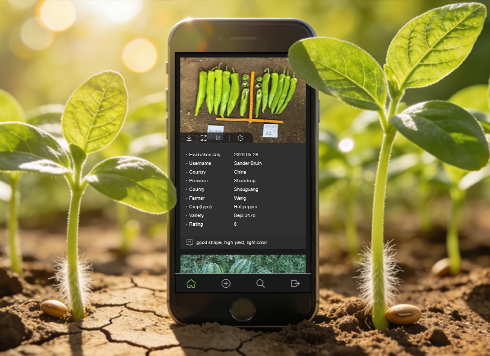 Kunshan TrialBook Mini-Program Custom Development
This project developed an English-only Tria ...
-
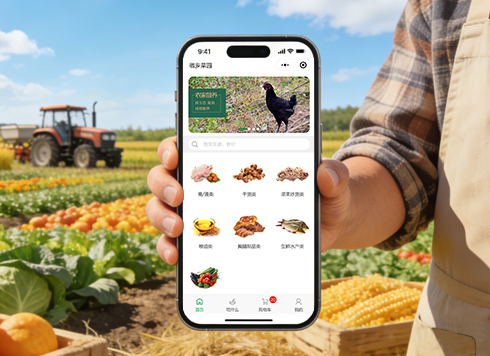 Agricultural Products WeChat Mini Program Custom Development
Lvran Di enhances agricultural sales via a ...
-
A Complete Guide to Custom Mobile App Development: From Requirements to Deployment and Maintenance
Date: Jul 31, 2026 Read: 85
-
Custom Mobile App Development: Complete Process, Technology Selection, and Common Pitfalls
Date: Aug 11, 2026 Read: 58
-
Mini Program Development Basics: Definition, Selection, and Implementation Process
Date: Aug 10, 2026 Read: 78
-
Custom Mobile App Development for Enterprises: Selection, Process, and Common Pitfalls
Date: Aug 9, 2026 Read: 65
-
Custom Mobile Development: 2026 Project Process, Budget Ranges, and Selection Criteria
Date: Aug 9, 2026 Read: 69