




Mini Program Development Solution Selection: A Comprehensive Comparison of Self-Built, SaaS, and Custom Development
Overview of Three Mainstream Development Solutions
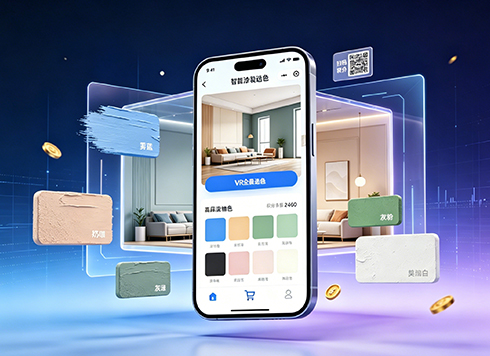
By 2026, mini program development has become highly mature. The mainstream solutions are self-built (based on cloud development or open-source frameworks), SaaS (using platforms like Weimob, Youzan, etc.), and custom development (from scratch or based on template secondary development). Self-built is suitable for companies with technical teams, allowing quick idea validation, but later maintenance costs can spiral out of control. SaaS offers the fastest go-live, with annual payments, fixed functionality, and weaker data autonomy. Custom development has high upfront investment but fully controllable functions; long-term total cost may be lower than continuous SaaS payments.
- Self-built: Low initial cost (cloud resources only), but requires continuous investment in development manpower. In 2026, a complete mini program team costs approximately 300,000-600,000 RMB annually.
- SaaS: Annual fees typically range from a few thousand to tens of thousands of RMB. Feature updates depend on the platform, suitable for standard process businesses.
- Custom development: Project-based pricing, ranging from tens of thousands to hundreds of thousands of RMB depending on complexity. Source code can be handed over after delivery.
Solution Comparison: Cost, Timeline, and Applicable Scenarios
Comparing from three core dimensions makes the differences clearer: cost structure (one-time vs. ongoing), go-live timeline, and applicable scenarios. Self-built labor costs are hidden; SaaS costs are explicit but accumulate over time; custom development has explicit upfront costs but controllable later. Common industry ranges in 2026: self-built first-year total cost (including manpower) is about 200,000-500,000 RMB; SaaS annual fee is 10,000-50,000 RMB; custom development is 80,000-300,000 RMB one-time.
- Cost comparison: Self-built has the highest first-year cost (team needed), with maintenance costs about 30% of the first year from the second year onward. SaaS is fixed annually; the 5-year total cost may be higher than custom development. Custom development is one-time, with subsequent maintenance costs about 10-20% of the project price per year.
- Timeline comparison: SaaS goes live in 1-2 weeks; self-built takes 1-3 months (depending on existing tech stack); custom development takes 1-4 months (including design and testing).
- Applicable scenarios: Self-built is suitable for non-core business or internal tools; SaaS is suitable for standard marketing and e-commerce scenarios; custom development is suitable for medium-sized enterprises needing brand differentiation, complex logic, or data autonomy.
Four-Dimensional Selection Method: How to Make Scientific Decisions
Based on years of project experience, we summarize the four-dimensional selection method, evaluating from budget, functionality, iteration, and maintenance dimensions to avoid passive situations caused by only looking at price.
- Budget dimension: If one-time budget is sufficient (above 100,000 RMB) and data ownership matters, choose custom development; if budget is limited and in business validation phase, choose SaaS or self-built. Note: Self-built budget must include hidden personnel costs.
- Functionality dimension: If requirements are highly customized or involve complex interfaces (e.g., hardware integration, AI functions), custom development is the only option; if mainly general functions with no special requirements, SaaS is sufficient.
- Iteration dimension: If business logic changes frequently (monthly updates), custom development is more flexible; SaaS iterations are affected by the platform's schedule, possibly delayed by 2-4 weeks.
- Maintenance dimension: If you have a dedicated development team (at least 1-2 people), choose self-built or custom development; if no technical team, recommend SaaS or fully managed custom development (e.g., handed over to service providers like Xiyue Company for maintenance).
After each decision step, verify: Does the budget cover subsequent maintenance? Has the functional requirements list been confirmed by the team? Avoid major changes mid-development.
Common Pitfalls and Judgment Criteria
Many teams fall into pitfalls during selection. For example, "choosing the cheapest option": although SaaS annual fees are low, if data migration is needed later, costs may exceed custom development; "ignoring ongoing maintenance": self-built may seem zero-cost, but annual expenditures on servers, domains, security, etc., are not negligible. Criteria for judging a good solution include: loading speed (mini program should complete first screen in less than 2 seconds), interaction smoothness (page switching without lag), code maintainability (whether it follows standards, complete comments), vendor case studies (whether there is experience with similar projects).
- Counterexample: A company chose a pirated SaaS template to save money, resulting in data leakage and brand damage.
- Recommendation: Require vendors to provide source code delivery and performance test reports, and clearly define acceptance criteria in the contract.
Applicable Scenarios and Boundaries
Custom development is best for companies with clear business goals, needing brand differentiation, and sufficient budget; self-built suits tech-oriented, flexible small teams; SaaS suits quick validation and standard functions. However, custom development is not recommended in the following cases: business logic not yet proven (try SaaS first), budget below 50,000 RMB, project timeline shorter than two weeks. Industry trends in 2026 show that over 60% of medium-sized enterprises choose custom development for data sovereignty, while startups tend towards SaaS or self-built.
Frequently Asked Questions
How much does it cost to build a mini program in-house?
Self-building requires developer salaries and cloud resources. In 2026, the basic cost ranges from tens of thousands to over a hundred thousand RMB, depending on feature complexity and team configuration.
Is SaaS mini program suitable for long-term operation?
If the business model is mature and frequent customization is not needed, SaaS offers high cost-effectiveness; however, data security and scalability are limited, and long-term migration costs may arise.
What are the risks of custom development?
Risks lie in requirement changes and project management. It is recommended to choose a development team with proven cases and sign a clear functional acceptance standard. Professional service providers like Xiyue Company can provide guarantees.
Which solution goes live fastest?
SaaS is fastest, usually within a week; self-built and custom development require development cycles, with custom development generally taking 1-3 months.
Action guide: It is recommended that enterprises clarify core requirement priorities before selection, using the four-dimensional selection method for quick positioning. If pursuing long-term value and data autonomy, custom development is a worthwhile investment; if just validating an idea, start with SaaS or self-built. Note: any solution should reserve at least 20% of the budget for subsequent iteration and maintenance.
-
 Agricultural Products WeChat Mini Program Custom Development
Lvran Di enhances agricultural sales via a ...
-
 Well-Recognized Custom E-Commerce Mall System Dev
The Good Shopping mini-app is natively buil ...
-
 Anhui Huixiang Vegetable Garden Agricultural Products Mini Program v2.0 Iteration Development
HuiXiang MiniApp V2.0: Upgraded homepage, n ...
-
 Kunshan TrialBook Mini-Program Custom Development
This project developed an English-only Tria ...
-
How to Develop a Custom Mini Program? A Guide to Process, Tech Selection, and Evaluation
Date: Aug 4, 2026 Read: 91
-
Mini Program Development: Common Pitfalls and Efficient Selection Guide
Date: Jul 17, 2026 Read: 110
-
Custom-Developed App About to Launch: Can the Software Copyright Wait Until After the Store Release?
Date: Sep 8, 2026 Read: 36
-
Mini Program Custom Development: Which Features Look Simple but Are Actually Troublesome?
Date: Aug 23, 2026 Read: 92
-
Is It Necessary to Draw a Prototype Before Mini Program Development? Is the Time Worth It?
Date: Aug 17, 2026 Read: 71