



Custom-Developed App About to Launch: Can the Software Copyright Wait Until After the Store Release?
Your custom-developed app is ready for release, but the software copyright certificate hasn't been obtained yet. Can you launch first and supplement the certificate later? In 2026, the answer depends on the distribution channel: the App Store does not mandate a software copyright for formal submission, while several domestic Android marketplaces commonly allow a temporary listing using a disclaimer letter or an acceptance receipt, with the typical window for deferral ranging from 1 to 3 months. However, for individual developers, apps involving payment or live streaming under strict qualification categories, or apps with future needs for fundraising, bidding, or copyright enforcement, it is advisable to plan for the copyright to be accepted before the launch.
The Software Copyright Covers "Ownership," Not a Listing Permit
Software copyright registration records the ownership of source code and documentation, serving as a basis for determining "who possesses this program." It is not a trademark, patent, or a license granted by app stores. When stores require a software copyright number during review, they typically want to confirm consistency between the developer and the app's ownership, preventing accounts from using others' code for publication.
Clarifying this distinction resolves much confusion. In 2026, some Android channels have incorporated software copyright numbers into initial copyright verification actions, but that does not mean "no copyright, no operation." Many products are in testing or small-scale distribution, which strictly speaking do not need to pass app store review.
- Part of the evidence chain: If your work is copied or you face malicious complaints, holding a software copyright application record gives you more leverage during appeals.
- Supplementary material beyond privacy compliance: Many apps submit privacy policies, SDK lists, and software copyrights together, and platforms review them cross-referentially.
- Not a substitute for a trademark: Brand protection for the app name still requires a separate trademark registration; the two address different issues.
Moreover, in custom development projects, the software copyright issue should be clarified from the contract signing stage. Whether the contract states that the development outcomes belong to the client directly determines who is entitled to apply for the software copyright. Many projects conflate "source code handover" with "software copyright registration," only to discover before delivery that the applicant entity does not match the company planned for the listing.
Real Attitudes of Various Channels Toward "Launch First, Supplement Later" in 2026
From project delivery experience, the common practice is: separate your target markets first, then discuss strategy. Since review pages are often adjusted quarterly, the supplementary periods mentioned below are experience ranges, not commitments.
- App Store: Standard review does not require a software copyright, and there is no entry for "supplementing" it later. Only if the app is disputed for copyright ownership after listing would you need to provide proof of ownership.
- Mainstream domestic Android stores: In the actual checklist seen by enterprise developers, the software copyright number is usually in the materials section; some stores do not force you to provide the certificate immediately before enabling advanced capabilities such as payment. You may first upload a disclaimer letter or acceptance receipt. The typical experience range for completion is 1 to 3 months.
- Enterprise internal distribution/regulatory filing: These scenarios do not go through store review. Whether a software copyright is needed depends on the enterprise's own asset management requirements, not constrained by the app store's "supplement later" rules.
So the correct answer is: launching first and supplementing later is not a universal fast track; it depends on whether the store backend currently opens the disclaimer letter/acceptance receipt material option for your account in the current quarter. A common contradiction in 2026 is: iOS can use an enterprise certificate for internal testing, but for a formal Android listing, only a "software copyright number" field is provided; even if the outsourcing party promises to supplement later, it may not actually be feasible.
Before submitting materials, always rely on the exact format displayed in your logged-in developer backend, and don't judge based on someone else's one-week-old screenshot of a "possible checklist."
Four Questions to Determine: Can Your App Choose "Launch First, Supplement Later"?
Rather than asking around "Is a software copyright mandatory?", run through the following four items. These considerations come from multiple app listing audits; there is no absolute conclusion, but they significantly reduce the probability of last-minute failures.
- Is the entity applying for the listing an individual or an enterprise? Individual entities often face stricter originality requirements on Android channels; the room for "launch first, supplement later" is usually smaller than for enterprise entities, so it is advisable to handle the copyright as early as possible.
- Does the app involve enabling payment, live streaming, social networking, or content publishing? These features typically trigger detailed channel reviews, unlike free informational apps. Most stores require the software copyright number to be filled first, and disclaimer letters may not be applicable.
- Is there currently a transitional entry available in the developer backend? The key is whether you see "software copyright number" or "software copyright-related materials" in your own backend. The latter can accommodate a disclaimer letter; seeing only the number does not guarantee you can supplement later.
- Is there any plan for financing, bidding, high-tech enterprise certification, or copyright enforcement in your development rhythm? During financing due diligence, software copyrights are often counted as intangible assets; high-tech certification requires proof of independent intellectual property; these scenarios do not defer to the store's "supplement later" rule. If you need such proof soon, arrange it in advance.
If all four questions tend toward "not needed," you may proceed with the regular upload and prepare the software copyright in parallel; but if two or more lean toward "needed," it is recommended to include the copyright application in the testing phase and proceed simultaneously—do not gamble the official launch date on a "deferral limit."
Copyright Not Done Yet—Is It Too Late to Start Now? Costs and Timeline Experience Ranges
In 2026, the ordinary registration process at the China Copyright Protection Center is relatively fixed. Based on typical project experience, from material submission to certificate issuance, the ordinary channel takes around 30 working days; expedited services have different price tiers corresponding to different periods, some compressing it to several working days or over ten working days. The cost for agency services in the market typically ranges from a few hundred to a thousand yuan, with expedited fees additional.
In the daily submission process, source code and operating manuals are hard materials. Code extraction usually takes the first and last 30 consecutive pages each; if under 60 pages, submit all. It is important that the version number in the software manual screenshots matches the version submitted for listing. Many rejects are not due to the reviewing authority but due to incomplete page numbering or version mismatches.
At a delivery site, we encountered a custom project that needed to be published on a domestic Android marketplace. The client did not treat the software copyright as a critical milestone in the schedule, and only decided to expedite it 8 working days before the planned submission. At that point, they discovered that the developer name in the store backend, the software copyright applicant, and the business license name were inconsistent. Additional authorization statements were needed, increasing the budget. The final launch was delayed by about two weeks. Since then, we turned this lesson into a standard practice: verify entity information at project kickoff, and have the commercial contract specify that "the software copyright applicant must be consistent with the entity listing the app; if transfer is required, the transfer point shall be one of the acceptance criteria."
Therefore, the experiential recommendation is: Do not postpone the software copyright application until the countdown of the app release. As long as the features are relatively stable, start organizing the code and explanatory materials, then complete the formal submission before the release.
- Application timing: Start preparing during the mid-development to pre-testing phase, not just one week before the release
- Deferral window: experience range 1 to 3 months, not guaranteed to be the same across all stores
- Entity verification: Business license name, store backend developer name, and software copyright applicant name should be unified first
Applicable and Non-Applicable Boundaries: Which Projects Deserve Advance Processing? Which Can Be Left for Later?
Which custom apps are more suitable for obtaining a software copyright? From a business perspective, products intended for long-term growth, with real users and revenue, requiring payment or user-generated content, or potentially conflicting with other entities, a software copyright is the earliest proof of ownership. If you are still in the phase of rapidly validating an idea, using iOS TestFlight or an enterprise certificate for internal versions, or not yet officially operating, "launch first, supplement later" or postponing the copyright will not directly affect current listing.
The following conclusions are experience-based; feel free to use them as a reference:
- Recommended to handle in advance: Domestic Android stores will provide public downloads; plans to enable capabilities such as payment or live streaming; the subject entity involves bidding, financing, or applying for software product evaluation.
- Can wait or supplement later: Targeting overseas iOS markets only; the app is only distributed for internal testing within the enterprise; still in demo stage; the app does not apply for strict qualification capabilities.
A boundary requiring special attention is the intersection of software copyright and open-source compliance. Even if the software copyright is under your name, if the app references a large number of third-party open-source components, you must still comply with their open-source licenses. App stores are currently more sensitive to privacy risks and content violations; a software copyright does not constitute a "no takedown" clause.
Common Questions
Can domestic Android stores really allow listing first and supplementing the software copyright later?
Some channels allow it, commonly using a disclaimer letter or acceptance receipt as a transitional measure. The window for supplementing is typically in the range of 1 to 3 months; not all markets offer this, and policies may change at any time. The safest way is to check the upload page for a "software copyright-related materials" or disclaimer letter entry.
Is it mandatory to obtain a software copyright before App Store listing?
App Store standard review does not require a software copyright, nor is there a dedicated section for supplementing it later. If, after listing, someone accuses you of infringing code or art, the platform may then require proof of ownership. For future rights protection, it is advisable to apply for registration promptly after development.
If the software copyright certificate hasn't been issued, how long can an acceptance receipt or disclaimer letter delay?
There is no one-size-fits-all answer. An acceptance receipt indicates that the application has been submitted, while a disclaimer letter is equivalent to a developer's promise. Different Android channels have different levels of acceptance, with deadlines ranging from weeks to months. Always rely on the "supplementary material deadline" generated by your developer backend, and don't listen to unofficial sources.
Is it cheaper to apply for a software copyright yourself, or is it safer to use an agent?
Applying yourself costs only the official fee, but formatting errors can lead to rejections and delays. Agents usually charge a service fee, typically ranging from a few hundred to over a thousand yuan, helping you organize page numbers and manual formatting. Regardless of your choice, don't trust any "guaranteed approval" promises—the review result is determined by the registration authority.
Once I get the software copyright, will my app be guaranteed not to be taken down?
No, it will not. A software copyright proves copyright ownership; it does not replace requirements such as privacy compliance, content review, ISBN/ICP licenses, or payment qualifications. If your app violates platform rules, the risk of being taken down remains, even with a copyright.
If you are developing a custom app, the safest arrangement is to include the software copyright application in your schedule when development is about halfway, and clearly define ownership and supplementary material obligations in the contract. When in doubt, take the target platform's material checklist and ask your outsourcing project manager: "Which entry in this interface corresponds to a disclaimer letter, and which requires uploading a certificate?" Don't wait until just before submission to catch up.
-
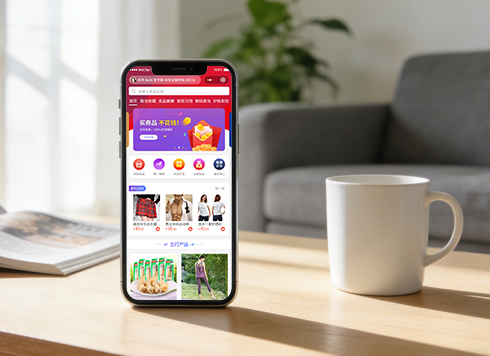 Well-Recognized Custom E-Commerce Mall System Dev
The Good Shopping mini-app is natively buil ...
-
 Anhui Huixiang Vegetable Garden Agricultural Products Mini Program v2.0 Iteration Development
HuiXiang MiniApp V2.0: Upgraded homepage, n ...
-
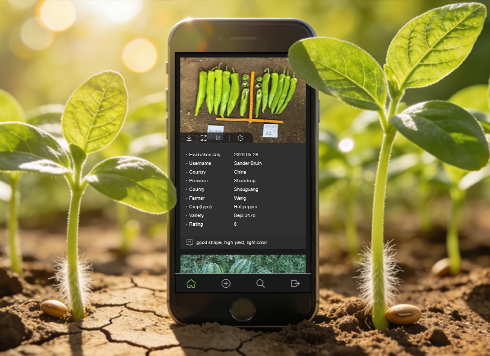 Kunshan TrialBook Mini-Program Custom Development
This project developed an English-only Tria ...
-
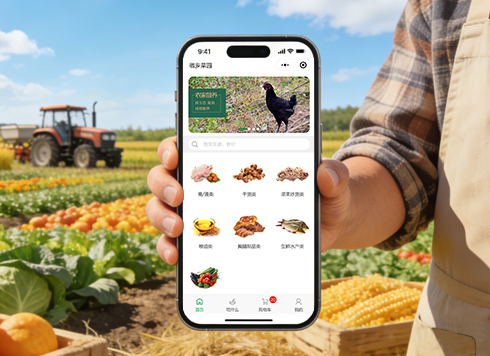 Agricultural Products WeChat Mini Program Custom Development
Lvran Di enhances agricultural sales via a ...
-
Key Facts to Know Before Mini Program Development: Avoiding Budget and Schedule Overruns
Date: Aug 14, 2026 Read: 76
-
Custom Mobile App Development: Process, Technology Selection, and Pitfall Avoidance
Date: Aug 5, 2026 Read: 88
-
How to Develop a Custom Mini Program? A Guide to Process, Tech Selection, and Evaluation
Date: Aug 4, 2026 Read: 91
-
Mobile Custom Software Development Guide: Process, Cost, Technology Selection, and Common Pitfalls
Date: Aug 2, 2026 Read: 113
-
Mini Program Development Solution Selection: A Comprehensive Comparison of Self-Built, SaaS, and Custom Development
Date: Jul 22, 2026 Read: 85