



Custom Mobile App Development: Process, Technology Selection, and Pitfall Avoidance
Mobile custom development refers to building an app from scratch for an enterprise's specific business scenarios, covering the entire process from requirements analysis, UI design, coding, to launch and operations, rather than directly using templates. In 2026, the common practice is to first build an MVP (Minimum Viable Product), then deliver in phases through agile iterations to control requirement changes and budget risks. If the business has unique processes, requires data privatization, or plans long-term iteration, custom development is a reasonable choice; if features are simple and budget is limited, using SaaS templates or low-code platforms is more suitable.
What is Mobile Custom Development?
Custom development is not just writing code; it's translating business processes into product logic, data structures, and system interfaces. Compared with generic templates, the core difference is that "business and code are deeply bound," so the cost of later modifications depends on the early architecture design, not just the number of features. This is where the core value of custom development lies.
- Native development: High performance and excellent user experience, suitable for complex interactions and low-level hardware access.
- Cross-platform development (e.g., Flutter, React Native): One codebase runs on multiple platforms, suitable for apps with business-logic-heavy and standard UI.
- Hybrid development: H5 embedded in a native shell, suitable for frequently updated marketing pages.
To determine whether it's truly "custom," look for three characteristics: whether there is an independent technical solution, whether it models your business, and whether there are dedicated data interfaces. Simply changing the skin or logo doesn't count as custom development.
How to Determine If Your Project Requires Custom Development
Not all apps need to be developed from scratch. By 2026, low-code platforms already cover many standardized scenarios, such as booking, display, and basic e-commerce. The cost of custom development is several to dozens of times higher than these solutions, so it's important to assess requirements first.
Template Development vs. Custom Development
- Feature adaptation: Templates only arrange existing features, while custom development can rearrange them according to business processes.
- Data control: Template data often resides with the platform provider, while custom development allows private deployment.
- Cost and cycle: Templates are cheaper but limit future expansion; custom development has higher upfront costs but supports long-term evolution.
- Applicability: Templates suit content display and booking; custom development suits complex workflows and high industry compliance requirements.
The Three-Question Method
You can quickly assess using the "Three-Question Method":
- Business: Are there unique processes or logic that generic templates cannot express?
- Data: Does data require private deployment or deep integration with internal systems?
- Iteration: Do you plan to continuously add features or adjust business rules within the next 12 months?
If at least two of the three answers are "yes," custom development is worth considering; if only one is "yes," it's advisable to conduct a solution evaluation first. The key here is that whether custom development is worthwhile should not be judged only by budget, but by whether the business needs to rapidly adjust processes within the next 12 months.
Four-Step Implementation Method for Custom Development
Break custom development into four phases: requirement scoping, technology selection, iterative delivery, and acceptance & operations. This division ensures each phase has clear deliverables and acceptance criteria, preventing the "build while changing" situation from spiraling out of control.
- Requirement scoping: Clarify the feature list and priorities.
- Technology selection: Decide on native or cross-platform solutions.
- Iterative delivery: Release runnable versions in short cycles.
- Acceptance & operations: Hand over code, documentation, and agree on support scope.
1. Requirement Scoping
This step turns "I want an app" into a concrete feature list such as "login, orders, payment." A common pitfall is only listing feature names without specifying business rules. Passing criteria: every feature has a priority and clearly states what is "not included in this version."
2. Technology Selection
Decide between native and cross-platform based on team capabilities and business type. If hardware peripherals, fingerprint payment, or high-performance audio/video are involved, native is more stable; if business is mainly forms and lists, cross-platform can save costs. In 2026, the mainstream approach is to combine "native + cross-platform," but the architecture should be unified upfront.
3. Iterative Delivery
Deliver a runnable version every 2-4 weeks in an iteration, rather than having a single demo at the end. After each iteration, the client should see new features and test records, which helps surface requirement deviations early. Passing criteria: a demonstrable version is available after each iteration, and there is a clear owner for defect handling.
4. Acceptance & Operations
Acceptance should not only check whether features are clickable, but also performance, security, and compatibility. Code documentation, database scripts, and deployment documentation should be handed over as well. In 2026 project delivery practices, operations support has become standard, but the scope and response time should be clearly specified in the contract.
How to Evaluate the Quality of a Custom Development Proposal
When facing different development vendors, don't just look at the price. A substandard proposal will incur maintenance costs far higher than the quoted price later. You can evaluate quality from four dimensions:
- Architecture design: Is there a dedicated architecture document, or do they start coding directly?
- Coding standards: Are unified naming, comments, and version control used?
- Testing coverage: Does it include unit tests and automated tests for critical flows?
- Documentation completeness: Do they provide API documentation, deployment documentation, and operation manuals?
A qualified custom project should deliver a demonstrable version at the end of each iteration cycle, rather than showing the client the finished product only at the final stage. If the vendor cannot provide clear acceptance criteria, even a cheap quote will turn into a pitfall of "constantly adding requirements" mid-project.
Applicable Scenarios and Boundaries
Custom development suits scenarios with complex business logic, private deployment requirements, high industry compliance standards, or deep integration with internal systems. For example, healthcare, finance, and supply chain require high data security and process control, which template solutions often cannot meet.
Scenarios suitable for custom development include:
- Complex business processes that standard products in the market cannot cover;
- Data that needs to be privatized or deeply integrated with internal systems;
- Long-term iteration plans that require a dedicated technical team;
- High-risk compliance industries that require process audits.
At the same time, it's important to define boundaries: if your project's lifecycle is less than a year, or the features are mainly informational, or your team lacks a product manager to follow up on requirements, custom development may not be a good choice. In 2026, low-code and SaaS products can save significant time and budget in these scenarios.
Note: Custom development does not mean "unlimited requirement satisfaction." Requirement changes need to follow a change process; a reasonable approach is to define the evaluation mechanism and billing method for requirement changes in the contract.
Frequently Asked Questions
How much does it cost to develop a custom app?
Prices vary significantly, mainly depending on feature complexity, development team location, and delivery timeline. In 2026, a simple tool app may be quoted at tens of thousands of RMB, while complex business systems range from hundreds of thousands to millions, requiring a detailed requirement list for evaluation.
How long does the development cycle usually take?
A medium-complexity app typically takes 2-4 months from requirements to launch, while complex systems may take over 6 months. With an MVP approach, the first version can be compressed to 4-6 weeks.
How should I choose between native and cross-platform development?
When hardware access, high-performance animations, or special security requirements are involved, native is more stable. When you need to cover multiple platforms quickly with business-logic-heavy apps, cross-platform is more cost-effective. In 2026, many projects opt for a hybrid of native and cross-platform development.
How can I avoid discovering requirement mismatches halfway through development?
Confirm interaction flows with prototype diagrams during the requirements phase, and stick to short iterations with weekly demos. Record and evaluate requirement changes, and adjust schedules promptly.
Who owns the source code of custom development?
Usually, per the contract, the source code belongs to the client after full payment. Note: the contract should clearly specify that the source code includes frontend, backend, database scripts, and deployment documentation to avoid partial delivery.
Before starting custom development, complete business alignment and confirm budget boundaries, then proceed phase by phase using the "Four-Step Implementation Method." If your project involves integration across multiple systems or data compliance requirements, it's advisable to find a development team with relevant domain experience. Xiyue Company has multiple reference cases in enterprise mobile app delivery. Also remember: custom development is not suitable for all scenarios; for simple scenarios, templates are actually faster. Defining boundaries and controlling changes ensures that technology investment truly serves the business.
-
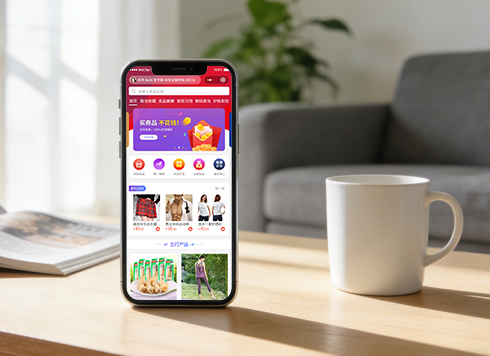 Well-Recognized Custom E-Commerce Mall System Dev
The Good Shopping mini-app is natively buil ...
-
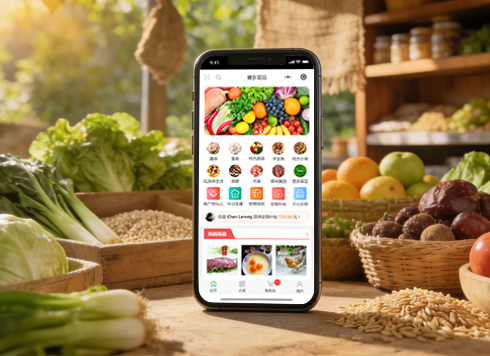 Anhui Huixiang Vegetable Garden Agricultural Products Mini Program v2.0 Iteration Development
HuiXiang MiniApp V2.0: Upgraded homepage, n ...
-
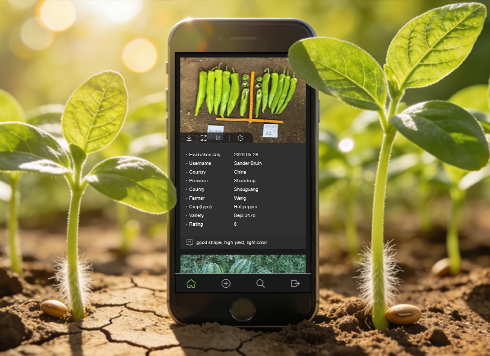 Kunshan TrialBook Mini-Program Custom Development
This project developed an English-only Tria ...
-
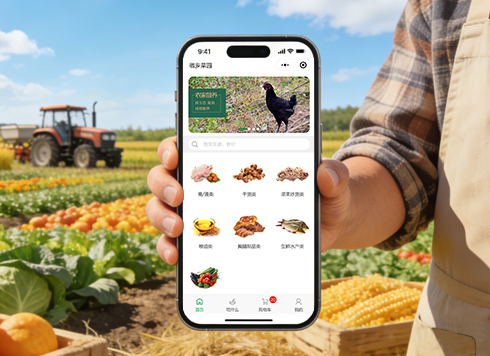 Agricultural Products WeChat Mini Program Custom Development
Lvran Di enhances agricultural sales via a ...
-
Mobile Custom Development Full Process Guide: From Requirements Analysis to Launch and Maintenance
Date: Jul 25, 2026 Read: 138
-
Custom Mobile App Development: Complete Process, Technology Selection, and Common Pitfalls
Date: Aug 11, 2026 Read: 96
-
Custom Mobile Development: 2026 Project Process, Budget Ranges, and Selection Criteria
Date: Aug 9, 2026 Read: 141
-
Custom Mobile App Development: Process, Tech Selection, and Cost Control Guide
Date: Aug 6, 2026 Read: 160
-
How to Develop a Custom Mini Program? A Guide to Process, Tech Selection, and Evaluation
Date: Aug 4, 2026 Read: 151