



Mobile Custom Development Full Process Guide: From Requirements Analysis to Launch and Maintenance
What is Mobile Custom Development
Mobile custom development refers to the full-process custom service from requirements analysis, UI/UX design, frontend and backend development to testing and launch, tailored to specific business scenarios. Unlike templated or SaaS-based apps, custom development enables highly personalized features, interactions, and data security requirements. In 2026, with users' growing emphasis on experience and privacy, custom development remains the mainstream choice in vertical fields such as e-commerce, healthcare, and industrial applications. Its core value lies in: fully matching business logic, no redundant features, and the ability to independently iterate and upgrade.
To determine whether custom development is necessary, consider three criteria: Is the business process unique and complex? Does it require deep integration with existing systems? Does user scale or data volume necessitate dedicated optimization? If all three are "yes", custom development offers greater long-term cost-effectiveness.
Core Steps: Five-Step Method
Based on project delivery practices in 2026, a structured five-step method is recommended. Each step has clear deliverables and acceptance criteria, effectively controlling risk and cost.
- Requirements Research and Project Initiation: Output Product Requirements Document (PRD) and prototypes. Key points: Define core feature boundaries, distinguish MVP from Phase 2 plans; avoid pursuing comprehensiveness from the beginning. Common pitfall: Developing features without user research, leading to low retention after launch.
- Architecture Design: Includes technology selection, database design, and API specifications. Points to note: The tech stack must balance current performance and future scalability; in 2026, common backend choices are Node.js or Go, frontend native or Flutter. Acceptance criteria: Architecture documents must pass review and reserve 30% performance headroom.
- Iterative Development: Adopt agile development, releasing an internal beta version every 1-2 weeks. Practical tips: Set up automated build and test processes; conduct code reviews after each iteration. Note: Frequent requirement changes can lead to uncontrollable timelines; set a threshold for changes within each Sprint.
- Testing and Acceptance: Cover functional, performance, security, and compatibility testing. For compatibility, test against the top 30 market models; security testing (e.g., OWASP Top 10) must at least pass automated scanning. Acceptance requires a defect rate below 0.3%.
- Deployment and Maintenance: Publish to the App Store and major Android stores; in 2026, some platforms require dedicated privacy compliance checks. Subsequent support should include at least 6 months of functional warranty. Boundary: Custom development does not include long-term content operations; if user numbers surge, plan server scaling in advance.
Technology Selection Comparison: Native vs Cross-Platform
Technology selection directly affects development cost and user experience. In 2026, cross-platform solutions (Flutter, React Native) have approached native performance but still lag in heavy graphics and hardware access. The following compares four dimensions:
- Performance: Native is best, especially for gaming, AR/VR, etc.; Flutter comes second, React Native slightly lower.
- Development Cycle: Cross-platform generally shortens the cycle by 30%-40% compared to native, as one codebase covers both iOS and Android.
- Maintenance Cost: Native requires dual teams, with annual maintenance costs about 40% higher; cross-platform can be maintained by a single team, but attention must be paid to compatibility issues from framework version updates.
- Applicable Scenarios: Native suits apps with high performance and system functionality requirements (e.g., map navigation, video editing); cross-platform suits content display, e-commerce, enterprise management, and other conventional businesses.
A common practice in 2026 is to use native plugins for core modules and cross-platform frameworks for business logic, balancing efficiency and experience.
Applicable Scenarios and Boundaries
Mobile custom development is most suitable for: scenarios with complex business logic requiring frequent iterations (e.g., retail backend management systems), apps handling large amounts of personal data (e.g., healthcare apps), and needs for deep hardware interaction (e.g., IoT control terminals). Cases where custom development is not necessary: simple information display or basic forms – templated solutions (e.g., WordPress + app shell) are more cost-effective; early-stage projects needing fast business model validation – first use low-code platforms; budgets under 100,000 RMB and timelines under 3 months – reassess requirement boundaries.
A standalone boundary judgment: When the cost of custom development exceeds the expected revenue increment from the project in the next two years, consider off-the-shelf solutions first.
How to Evaluate the Quality of Custom Development
Evaluation criteria should not only look at whether features are implemented but also code maintainability, performance metrics, security compliance, and user experience smoothness. Quantifiable dimensions include: - Launch speed: iOS ≤ 3 seconds, Android ≤ 5 seconds; - Crash rate: below 0.1%; - Network request response: average ≤ 500ms; - Security vulnerabilities: through OWASP Top 10 scanning, zero critical vulnerabilities.
Common misconception: Prioritizing good-looking UI. In reality, stability and security are the bedrock of long-term reputation. In 2026, app stores are tightening privacy compliance reviews; failure to pass results in inability to launch. Therefore, compliance should be integrated from the design stage.
Frequently Asked Questions
How long does it typically take to develop a custom app?
A medium-sized project (10-20 feature modules) usually takes 4-6 months, including requirements research, development, testing, and launch; complex projects (e.g., including AI or live streaming) may exceed 8 months.
How to choose a development team?
Prioritize evaluating the team's case relevance (industry alignment), tech stack consistency (e.g., Flutter expertise), and whether they provide source code and documentation. It is recommended to conduct a remote white-box test on a simple requirement to verify collaboration efficiency.
Is cross-platform stable enough?
In 2026, Flutter has released a stable version, sufficient for most conventional applications. However, for apps involving extensive native API calls (e.g., Bluetooth, NFC), native or using Flutter's Platform Channel for compatibility is still recommended.
What is the typical cost for custom development?
In domestic second-tier cities, starting costs are around 150,000-300,000 RMB (simple apps), 300,000-800,000 RMB for medium projects, and over 1 million RMB for large complex projects. Costs are influenced by feature count, design complexity, technical difficulty, and delivery timeline.
How to avoid development failure?
When signing contracts, clearly define milestones, acceptance criteria, and payment schedules; require weekly progress updates and deploy previewable builds; pay in installments per module, and avoid full upfront payment. Xiyue Company often uses phased acceptance and payment models when delivering such projects, effectively reducing risks for both parties.
Action guidance: If you have determined that custom development is the right path, follow the five-step method to create a detailed plan. First spend 2-4 weeks on requirements research and prototype design (this phase can be outsourced, but key decision makers must participate). Then, based on budget and timeline, choose native or cross-platform solutions. Be sure to include performance and security acceptance criteria in the contract. An app that suits your business pace is a good product; do not blindly pursue cutting-edge technology or feature stacking.
-
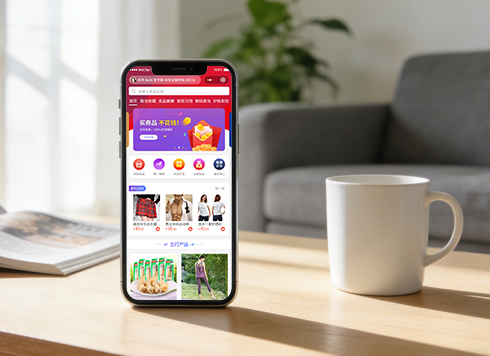 Well-Recognized Custom E-Commerce Mall System Dev
The Good Shopping mini-app is natively buil ...
-
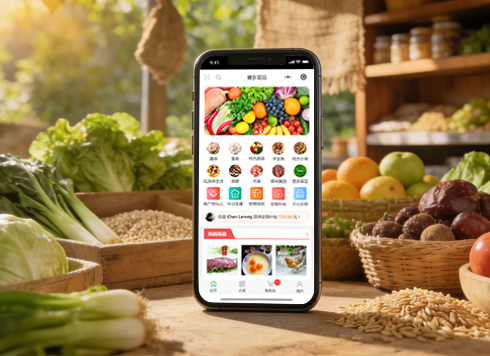 Anhui Huixiang Vegetable Garden Agricultural Products Mini Program v2.0 Iteration Development
HuiXiang MiniApp V2.0: Upgraded homepage, n ...
-
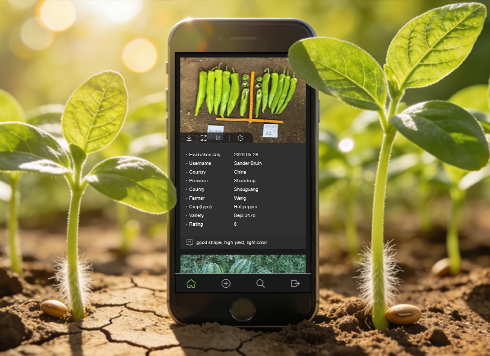 Kunshan TrialBook Mini-Program Custom Development
This project developed an English-only Tria ...
-
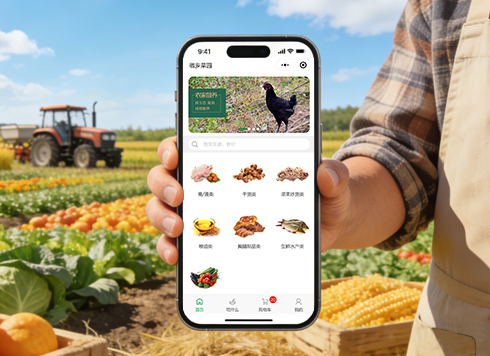 Agricultural Products WeChat Mini Program Custom Development
Lvran Di enhances agricultural sales via a ...
-
Custom Mobile Development: 2026 Project Process, Budget Ranges, and Selection Criteria
Date: Aug 9, 2026 Read: 69
-
Custom Mobile App Development: Process, Technology Selection, and Pitfall Avoidance
Date: Aug 5, 2026 Read: 88
-
Mobile Custom Development Full Process: A Practical Guide from Needs Assessment to Launch and Maintenance
Date: Jul 28, 2026 Read: 98
-
How to Avoid Pitfalls in Mobile App Development? A Complete Action Guide from Requirements to Launch
Date: Jul 9, 2026 Read: 90
-
Custom Mobile App Development: Complete Process, Technology Selection, and Common Pitfalls
Date: Aug 11, 2026 Read: 58